Việt Nam ranks third globally in cassava exports but supply chain faces hurdles
Meeting international sustainability requirements is critical if the cassava sector is to maintain market share and achieve an export turnover of US$2.3-2.5 billion in the coming years.
HÀ NỘI — Việt Nam is the world’s third-largest exporter of cassava, but its supply chain is facing mounting challenges over traceability, land transparency and deforestation-free production, participants heard at a conference in Hà Nội on Wednesday.
Meeting international sustainability requirements is critical if the cassava sector is to maintain market share and achieve an export turnover of US$2.3–2.5 billion in the coming years, industry experts said.
Despite volatility affecting other agricultural exports, Việt Nam’s cassava and cassava-based products have recorded relatively stable growth in recent years.
In 2025, the country’s exports of cassava and cassava-based products topped more than 3.99 million tonnes for nearly $1.27 billion, industry estimates show, making Việt Nam the world’s third-largest cassava exporter and the second-largest consumer of cassava products.
Mainland China remained Việt Nam’s largest export market, accounting for more than 93 per cent of total cassava exports. Exports to other outlets such as Malaysia and Japan recorded strong growth, though volumes remained relatively small. By contrast, shipments to Taiwan (China) and South Korea declined in value, reflecting increased competition and lower export prices.
“The cassava industry plays an important role in stabilising agricultural trade and generating income for rural communities, particularly in mountainous and disadvantaged areas,” Nghiêm Minh Tiến, chairman of the Vietnam Cassava Association, said at the meeting.
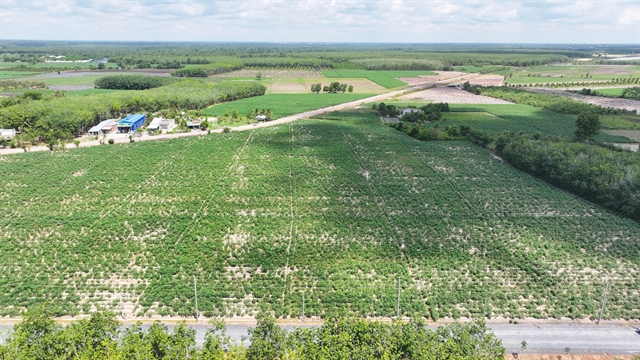
Việt Nam produces more than 18 million tonnes of fresh cassava annually, with around 58 per cent grown domestically from roughly 500,000 hectares of farmland. The remainder is imported, mainly from Laos and Cambodia, added Hà Công Tuấn, chairman of the Vietnam Economic Science Association of Agricultural and Rural Development.
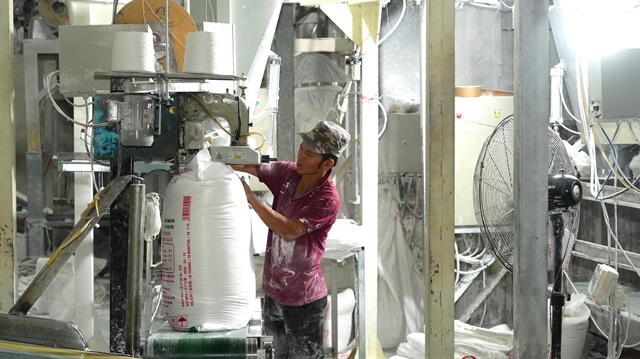
The country has 142 cassava processing plants with a combined capacity of about 11.5 million tonnes per year, making it one of the few agricultural sectors that relies on imported raw materials to meet processing demand. Beyond starch, cassava derivatives are increasingly used in food, animal feed, industrial products and bioenergy.
However, cassava planting areas have declined slightly in recent years due to competition from other crops and labour shortages in agriculture. In some forested regions, cassava cultivation has continued to expand, raising concerns over potential links between industry growth and forest degradation.
One of the main challenges facing the cassava industry is increasingly stringent requirements from international markets on legality, traceability and deforestation-free production, experts said.
The European Union Deforestation Regulation, which requires proof that agricultural products are not linked to deforestation, while currently applied to commodities such as coffee, rubber and timber, is expected to directly or indirectly affect the cassava sector in the coming years.
Other major markets, including the US, the UK, Japan, South Korea and Australia, are also introducing new rules aimed at preventing agricultural and forestry products linked to deforestation or unclear origins from entering their markets.
At the same time, China, Việt Nam’s largest importer of cassava, has also tightened quality and traceability standards, adding pressure on exporters to adapt to retain market access.
Tuấn said the biggest challenge in ensuring traceability in the cassava industry lies at the raw material stage, covering both domestically grown and imported cassava.
Under the roadmap, all agricultural sectors are required to fully comply with traceability requirements from production areas to final products by the end of 2026.
To meet that target, Tuấn suggested authorities swiftly complete the institutional framework and issue cassava-specific regulations on traceability, while reorganising the supply chain to improve transparency and strengthen links between processors, cooperatives and growers.
The intermediate purchasing stage should be managed more strictly and transparently rather than eliminated, he added.
For his part, Nguyễn Vinh Quang, a researcher at Forest Trends, an international environmental research organisation, said the cassava supply chain relies heavily on smallholder farmers, with more than 500,000 households involved, and products often passing through multiple intermediaries. This makes it difficult to ensure transparency on land use, cultivation areas and commercial transactions.
"To meet traceability requirements, the industry will need a comprehensive restructuring of its supply chain, including better land-use controls, improved transparency and the formalisation of informal activities," Quang said.
Chairman Tiến said cassava businesses are committed to building a transparent supply chain that complies with forest protection, environmental and traceability requirements. He added that companies need clearer guidance and appropriate support mechanisms from authorities to effectively implement the new rules. — VNS