Việt Nam pushes for transparent energy market to fuel growth targets
Việt Nam must urgently reform its energy market with transparent pricing and clear regulations to attract the investment needed for double-digit economic growth, industry leaders said.
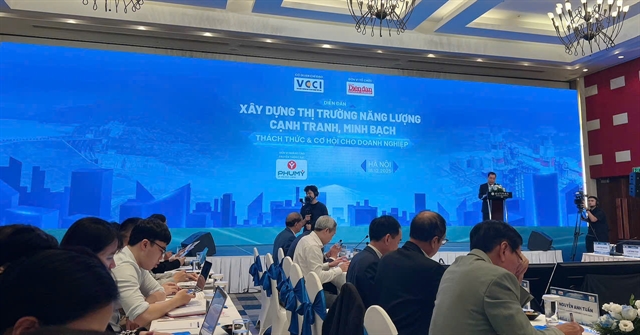
HÀ NỘI — Việt Nam's energy sector, described the 'infrastructure of infrastructure', needs urgent reforms to establish a transparent, competitive market that can attract investment and ensure long-term energy security, experts told a forum in Hà Nội on Thursday.
Held by the Vietnam Chamber of Commerce and Industry (VCCI) and Business Forum Magazine, the forum came after the National Assembly passed a resolution on energy development mechanisms and policies for 2026-30, implementing the Politburo's strategic orientations for the sector.
Hoàng Quang Phòng, VCCI Vice Chairman, emphasised that energy serves as the 'infrastructure of infrastructure', playing a vital role in maintaining operations for the entire economy and social life.
"Energy is not only one step ahead, paving the way, but also plays a role in maintaining and operating our entire economy and social life," Phòng said.
With Việt Nam targeting economic growth above 8 per cent in 2025 and double-digit growth from next year, electricity demand is forecast to grow at double-digit rates for many years ahead, he noted.
While the energy sector has achieved important milestones, it must strictly follow unified market standards to develop sustainably and address current shortcomings, Phòng said.
"We must accelerate restructuring of the energy sector to gradually form a healthy, transparent competitive market while ensuring political and social stability," he added.

Pricing remains key issue
Experts identified pricing mechanisms as a critical bottleneck. Current electricity prices don't fully reflect costs and risks, discouraging investment and innovation, said National Assembly Deputy Nguyễn Quang Huân, chairman of Halcom Vietnam.
Multiple overlapping laws - including those on electricity, planning, investment, land and environment - create legal gaps and complex procedures that complicate business operations, Huân said.
"Việt Nam lacks a complete legal framework for a competitive wholesale electricity market, for direct power purchase agreements (DPPA), or for carbon credit markets," he said.
"Without transparency and healthy competition, the market cannot attract social investment capital."
Nguyễn Quốc Thập, chairman of the Việt Nam Petroleum Association, argued the State should not intervene in pricing but only facilitate and balance investors' interests through tax tools.
"Transparent pricing is the foundation for competition, healthy development and attracting investment," Thập said.
Nguyễn Anh Tuấn, chairman of the Foreign Investment Enterprises Association, noted current electricity prices remain somewhat subsidised, creating a paradox where foreign investors benefit from low costs while national interests may suffer.
He noted the energy sector still faces imbalances between supply and demand, regional distribution issues and investment shortfalls, with the legal framework remaining incomplete and energy prices failing to accurately reflect production input factors.
With GDP growth targeted at 10 per cent or more during 2026-30, electricity demand must grow 12-13 per cent annually, or at least 15 per cent when factoring in digital economy and artificial intelligence needs.
Foreign investors are closely watching Việt Nam's energy market stability and waiting for clear mechanisms and policies before committing capital, Tuấn said.
Reform priorities
Experts said comprehensive revision of the Electricity Law should be the top priority, aiming to establish genuine wholesale and retail competition while clearly separating power generation, transmission and distribution.
Quick issuance of DPPA guidelines is crucial to help enterprises, especially FDI firms, proactively purchase clean electricity from renewable energy plants, Huân said.
From the business community's perspective, a transparent and competitive energy market is not only a requirement for institutional reform but also a prerequisite for enhancing the competitiveness of Vietnamese enterprises, Phòng said.
"When the institutional framework is clear, pricing mechanisms are transparent and market information is fully disclosed, investors will have a more solid basis for making decisions," he said.
Strengthening market management and supervision to protect healthy competition and consumer rights, combined with greater application of digital technology and artificial intelligence for market forecasting and transaction monitoring, are also essential, participants said.
The forum emphasised that stable policies, consistent mechanisms, reasonable risk-sharing and fair access to resources like land, capital, infrastructure and market information are needed to encourage deeper private sector participation in the energy market. — VNS