Việt Nam, Mongolia promote complementary strengths to expand cooperation opportunities
With the Comprehensive Partnership framework in place, Việt Nam and Mongolia should look beyond traditional fields and boldly explore new, long-term areas capable of generating fresh growth momentum, said Vietnamese Ambassador to Mongolia Nguyễn Tuấn Thanh.
HÀ NỘI — More than 70 years after establishing diplomatic relations on November 17, 1954, Việt Nam and Mongolia have promoted strong cooperation across a wide range of areas, with bilateral ties making substantive and comprehensive progress in recent years.
The establishment of the Việt Nam-Mongolia Comprehensive Partnership has opened a new chapter, creating momentum for the two sides to broaden and deepen sustainable cooperation.
Against this backdrop, the upcoming official visit to Mongolia by President of the National Assembly (NA) Trần Thanh Mẫn is expected to help translate high-level commitments and orientations into concrete collaboration, particularly in areas with significant potential.
Việt Nam and Mongolia have enjoyed traditional friendship and mutual support for decades. Mongolia regards Việt Nam as one of its key comprehensive partners in Southeast Asia. Their economic and trade ties have also been strengthened through a number of cooperation agreements.
The first trade agreement between the two countries was signed in 1958, while memoranda of understanding on economic and trade cooperation and sustainable rice trade have provided an important legal framework for expanding bilateral trade.
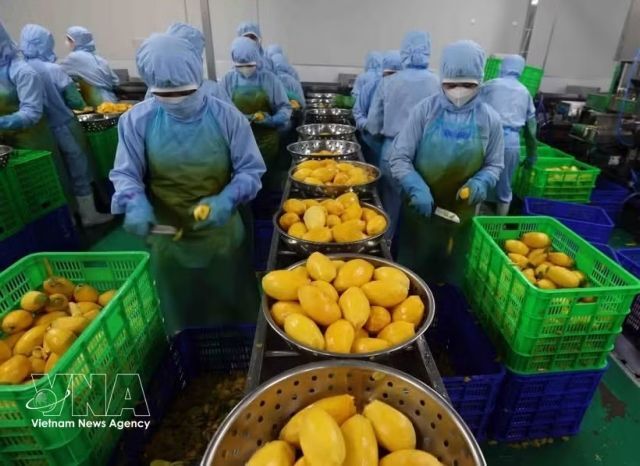
The two sides have expanded agricultural cooperation, with Mongolia supplying goat and sheep meat to Việt Nam, and Việt Nam exporting poultry meat and eggs to the Mongolian market.
Several Việt Namese enterprises have also been implementing large-scale energy projects in Mongolia.
In 2025, two-way trade exceeded US$155 million, with Việt Nam’s exports surpassing $100 million.
Beyond traditional areas, the two countries have begun exploring collaboration in artificial intelligence (AI), e-government building and the digitalisation of public services.
Mongolia is interested in working with Việt Nam in AI development, the digital economy, startups and the application of emerging technologies.
According to experts, the two economies have largely complementary trade structures, creating considerable room for further expansion without significant competition or conflicts of interest.
Việt Nam can further increase exports of agricultural and aquatic products, seafood and pharmaceuticals to Mongolia, while Mongolia’s competitive products, including minerals, coal, wool and felt, have potential in the Việt Namese market. Better tapping these complementary strengths could help double bilateral trade in the coming period.
In investment, the two sides are encouraged to diversify supply chains, particularly in sectors where their strengths and needs complement each other, while facilitating businesses’ access to investment opportunities.
Vietnamese companies can explore opportunities in mining, animal feed processing, meat and dairy production, and leather processing, with projects potentially serving not only the Mongolian market but also neighbouring markets.
The Ministry of Industry and Trade proposed identifying key product groups with strong potential, increasing trade delegations and business promotion activities, and organising regular business-matching programmes, with a view to raising two-way trade to $200 million.
Vietnamese Ambassador to Mongolia Nguyễn Tuấn Thanh said cooperation potential remains substantial, particularly as the two countries enter a new stage of implementing commitments following the upgrade of bilateral ties to a Comprehensive Partnership.
He stressed that priority should be given to translating potential into concrete projects that deliver practical benefits to businesses and people in both countries. The two sides should further facilitate market access, strengthen business connectivity and address bottlenecks in logistics, payments, quality standards and customs procedures.
There is also significant scope for cooperation in livestock production and agriculture. Mongolia’s strengths in animal husbandry can complement Việt Nam’s experience in breeding, veterinary services, food processing and agricultural value chains.
The two countries can also expand collaboration in climate-adaptive agriculture, desertification comba, efficient water use and agricultural science and technology. Such areas match Mongolia’s practical needs while allowing Việt Nam to share its experience.
With the Comprehensive Partnership framework in place, both sides should look beyond traditional fields and boldly explore new, long-term areas capable of generating fresh growth momentum.
If market, logistics and information bottlenecks are removed, bilateral economic cooperation has substantial room for development and can become an important pillar of bilateral relations in the years ahead, Thanh said. — VNA/VNS