Personal income tax revenue forecast to fall 13.6% in 2026: MoF
The ministry attributed the shortfall mainly to changes under the amended Law on Personal Income Tax, including higher family circumstance-based deductions and a reduction in the number of tax brackets from seven to five.
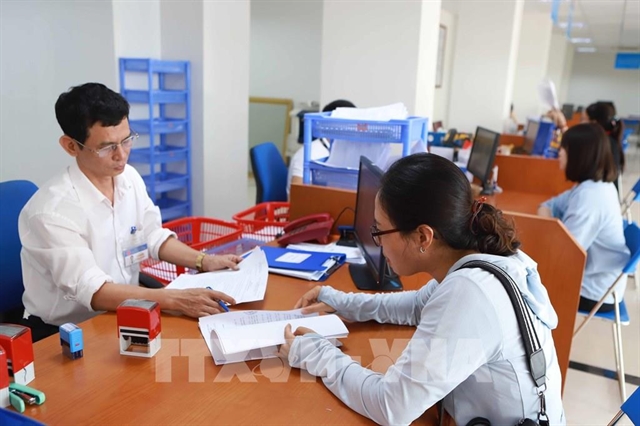
HÀ NỘI — Việt Nam's personal income tax revenue is forecast to reach VNĐ203.2 trillion (US$7.86 billion) in 2026, down 13.6 per cent from last year and 14.3 per cent below the budget estimate, as changes to tax policy and filing schedules weigh on collections.
According to the Ministry of Finance (MoF)'s public budget estimates, the projected revenue would fall short of the annual target by VNĐ33.8 trillion. Collections in the first nine months reached only around two-thirds of the full-year estimate.
The ministry attributed the shortfall mainly to changes under the amended Law on Personal Income Tax, including higher family circumstance-based deductions and a reduction in the number of tax brackets from seven to five.
The shift from monthly to quarterly tax declarations has also affected the timing of revenue collection.
Under the revised law, which took effect on January 1, 2026, the progressive personal income tax schedule was reduced to five brackets.
The lowest rate of 5 per cent applies to monthly taxable income of up to VNĐ10 million, while the highest rate of 35 per cent applies to the portion of monthly taxable income exceeding VNĐ100 million.
The family circumstance-based deduction for taxpayers increased from VNĐ11 million to VNĐ15.5 million per month, while the deduction for each dependent rose from VNĐ4.4 million to VNĐ6.2 million.
These adjustments reduce the amount of income subject to personal income tax for eligible taxpayers and form part of the policy changes affecting collections this year.
Environmental protection tax revenue is also expected to fall significantly short of its budget target, with the Ministry of Finance forecasting a shortfall of approximately VNĐ26.2 trillion, or nearly 60 per cent of the estimate.
The main reason is the reduction of environmental protection tax rates to zero per litre for petrol, excluding ethanol, diesel and aviation fuel from late March. The measure was introduced to help stabilise domestic fuel prices amid volatility in global energy markets associated with the conflict in the Middle East.
Despite the projected shortfalls in these revenue categories, total State budget revenue is estimated at over VNĐ3 quadrillion in 2026, approximately 21 per cent above the annual estimate.
Revenue from the non-State economic sector, foreign-invested enterprises and land-use fees is expected to exceed budget targets.
Land-use fee revenue is projected at around VNĐ640.3 trillion, exceeding the estimate by VNĐ166.2 trillion and representing one of the major contributions to the overall increase in budget revenue.
The MoF said the Government would continue implementing tax, fee and charge exemptions, reductions and payment extensions to support individuals and businesses.
The measures are estimated to amount to around VNĐ360 trillion, including both amounts waived or reduced and payments deferred to a later date.
For 2027, the Government is proposing State budget revenue of approximately VND3.33 quadrillion, an increase of more than 9 per cent from the estimated outturn for 2026. The projection assumes that some tax relief measures will continue to support production and business activities.
Total State budget expenditure next year is projected to exceed VNĐ4 quadrillion, with development investment accounting for nearly VNĐ1.77 quadrillion, or 43 per cent of the total.
The proposed budget deficit is estimated at 4.5 per cent of gross domestic product. The Government has submitted the budget plan to the National Assembly for consideration and decision. — BIZHUB/VNS