Việt Nam maps new strategy to unlock market in Türkiye
Türkiye offers a unique combination of opportunities as both a sizeable domestic consumer market and a regional logistics hub connecting Asia, Europe and the Middle East.
By Ly Ly Cao
HÀ NỘI — Vietnamese food and beverage exporters are being encouraged to take a more market-oriented approach to Türkiye, where growing demand for Halal-certified products is creating fresh opportunities but also raising expectations for quality, traceability and localisation.
Türkiye is seen as both a consumer market of more than 85 million people and a strategic gateway connecting Europe, the Middle East and North Africa, allowing Vietnamese food and beverage producers to access wider regional supply chains.
Speaking at a seminar on developing the market in Türkiye, experts said that businesses need to move beyond traditional export models by tailoring products to Turkish consumer preferences, strengthening Halal compliance and building long-term partnerships with local distributors.
Trade experts identified coffee, tea, spices, processed fruits and vegetables, plant-based foods, processed seafood and herbal beverages as product categories with strong growth potential in Türkiye.
"These products have room to grow, because they combine Việt Nam's strengths in agricultural production with rising demand for healthy, convenient and Halal-compliant food," director of Hanoi Green Cooperative and CEO of HalalViet Bá Thị Nguyệt Thu said.
Türkiye's competitive food market requires exporters to offer more than attractive pricing.
"Halal certification opens the door, but it does not automatically create purchase orders," Thu added.
"Products must match local tastes, pricing expectations, packaging, brand stories and distribution channels."
Industry experts said many Vietnamese companies mistakenly believe that products popular in the domestic market will automatically succeed overseas.
Instead, they recommended selecting only one to three flagship products with clear competitive advantages before investing in market development.
Businesses should evaluate export readiness by reviewing production capacity, product consistency, shelf life, logistics costs, minimum order quantities and documentation before approaching Turkish buyers.
Coffee was highlighted as one of Việt Nam's strongest opportunities.
As the world's second-largest coffee producer, Việt Nam has abundant raw material supplies, while Turkish consumers continue to embrace premium coffee culture alongside traditional Turkish coffee.
Tea, spices and herbal beverages were also identified as products capable of differentiating themselves through authentic Vietnamese ingredients and sustainability stories.
Processed agricultural products were noted as another promising segment.
Rather than exporting fresh produce, speakers encouraged companies to develop higher-value food products such as dried fruits, processed vegetables, ready-to-eat foods and plant-based alternatives, which offer longer shelf life and greater flexibility for international distribution.
Seafood processors were similarly advised to focus on value-added products instead of raw materials.
Việt Nam's seafood exports reached US$11.3 billion in 2025 and are projected to increase further this year, providing a strong production base for expanding into Halal markets, said Ramlan Osman, director of the Vietnam Halal Certification Authority.
Ramlan said Việt Nam currently exports only around $700 million worth of goods to member countries of the Organisation of Islamic Cooperation, representing roughly 2 per cent of the market's estimated potential.
He described Việt Nam as "the new kid on the block" with considerable opportunities across food, non-food products and services.
To capture those opportunities, experts stressed that Halal compliance must extend beyond ingredients.
Exporters should establish comprehensive assurance systems covering raw materials, food additives, processing aids, factory hygiene, warehousing, transportation, traceability and internal monitoring.
Businesses also need to take into account standards issued by the Standards and Metrology Institute for Islamic Countries and verify whether their Halal certification bodies are recognised by Türkiye's Halal Accreditation Agency before signing commercial agreements.
Việt Nam has strengthened its domestic Halal framework through Decree 127/2026/NĐ-CP, which establishes structured requirements for conformity assessment, testing, certification, labelling and traceability while supporting enterprises with Halal certification, testing and trade promotion activities.
Another priority identified by speakers was product localisation.
Food labels, ingredient declarations, importer information and marketing messages should be adapted to Turkish regulatory requirements and consumer expectations.
"Export packaging is part of the compliance dossier, not merely a design element," Thu said, noting that inaccurate translations, inconsistent product information and unsupported health claims could delay market entry.
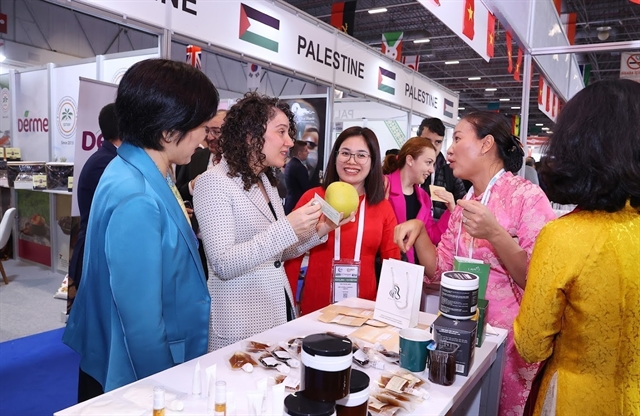
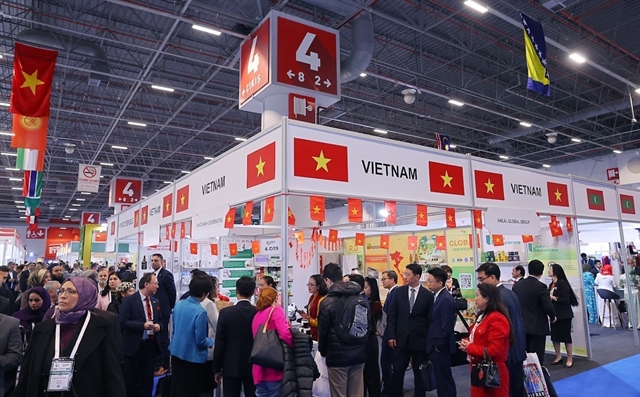
Instead of relying solely on importers, Vietnamese food and beverage companies were encouraged to diversify their market-entry channels by participating in Halal Expo Istanbul and other specialised trade fairs, working with supermarket chains, food distributors and hospitality operators, and testing products through e-commerce platforms and private-label partnerships.
Enterprises also recommended launching pilot shipments before expanding sales nationwide.
According to Thu, initial export orders should be treated as opportunities to measure consumer response, logistics efficiency, retail performance and repeat purchasing, allowing businesses to refine products before scaling up.
"The first shipment is a market test, not simply a sales transaction," Thu said. — BIZHUB/VNS