Việt Nam eyes $10 billion fruit and vegetable exports
Việt Nam’s fruit and vegetable exports are set to reach $10 billion in 2026, driven by durian, coconuts and bananas, with sustainable growth and global demand boosting the sector.
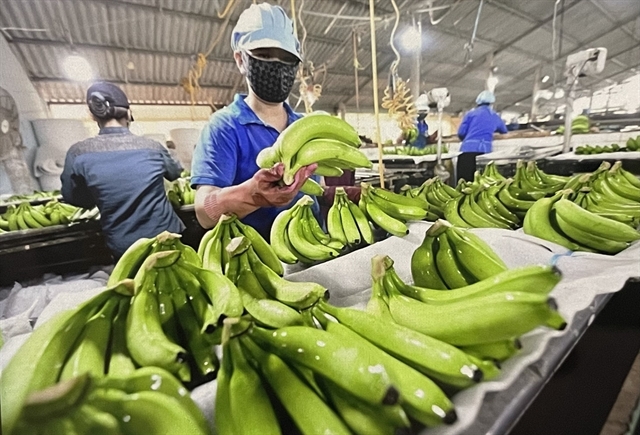
HÀ NỘI — Việt Nam’s fruit and vegetable exports are set to hit a milestone of around US$10 billion in 2026, driven by high-value products such as coconuts and bananas, according to the Việt Nam Fruit and Vegetables Association.
The industry set a record export revenue of $8.5 billion in 2025, a year-on-year increase of nearly 20 per cent, with key products such as durian, banana, mango, jackfruit, coconut and pomelo being developed with planting area codes and traceability systems for official exports.
The strong performance stems from a mix of favourable factors. Demand in major markets such as China, the US, the Republic of Korea, Japan and the EU has recovered significantly. At the same time, more Vietnamese fruits have been granted official export access to demanding markets, opening fresh room for growth.
Nguyễn Thanh Bình, chairman of VINAFRUIT, said export expansion in recent years has moved beyond seasonal surges to form a clear upward trend. A stronger focus on quality, traceability and compliance with market standards is helping Vietnamese produce secure a firmer foothold in global supply chains.
Many products are expected to join the billion-dollar export revenue club this year, the association said.
Durian continued to lead the sector, accounting for nearly half of the total export value. Durian exports in 2025 reached around $4 billion on strong demand in China and expanding access to markets with stricter standards, such as the US, Japan and the EU.
Tighter controls on planting area codes, chemical residues and traceability are expected to promote a shift toward more sustainable growth, the association said.
The association forecast that durian exports could exceed $4 billion in 2026 as planting areas and output continue to expand by 10-20 per cent per year to provide a stable supply.
Coconut has emerged as a major pillar, with export value surpassing $1 billion for the first time in 2024 to reach nearly $1.1 billion. The momentum continued in 2025, with export revenue estimated at $1.1–1.15 billion, supported by expanded official exports, diversified markets and the development of deep-processed products.
Besides durian and coconut, banana is rising as a promising product for the billion-dollar club, the association said.
Despite a modest export value of $380 million in 2025, banana export growth potential is huge thanks to strong global demand and diversified markets, where Việt Nam has significant advantages in production.
Phạm Quốc Liêm, chairman of U&I Agricultural Joint Stock Company, said: “Việt Nam has advantages in developing large-scale plantation areas for exports, including year-round production and proximity to key markets such as China, Japan, the Republic of Korea and the Middle East. Bananas are potential to reach an export value of $1 billion.”
Mango and jackfruit are also expanding in foreign markets with processed products, helping to diversify the export structure and increase added value.
Challenges remain
China remains the largest export market, accounting for a substantial share of total turnover. However, it also presents the most challenges to the industry, VINAFRUIT Chairman Bình noted.
Despite a strong rise in export value, shipments to China still face vulnerabilities. While domestic production – consumption links remain fragile, fragmented and small-scale farming driven by short-term market signals is still common. When the market fluctuates or import policies change, the supply chain is exposed to disruption.
Dr Nguyễn Đình Bích, an agricultural economics expert, held that the sector’s biggest weakness lies in production organisation. While growth is rapid, it is not yet firmly rooted. Without stronger linkages from raw-material zones through processing to distribution, the industry will remain vulnerable if major markets tighten standards or amend regulations.
Lessons from past congestion at border gates therefore remain highly relevant, especially as importing countries continue to raise requirements on quarantine, food safety and sustainability.
Experts stressed the need for comprehensive and long-term solutions, including concentrated farming zones, standardised production unit codes and certified packing facilities aligned with market demand. Diversifying export markets and increasing the share of processed goods are also seen as essential.
Bình added that continued State support in market access, standards harmonisation and credit and logistics infrastructure will be key to ensuring sustainable growth. Crucially, the $10 billion goal must be tied to the quality and resilience of growth since the sector remains vulnerable to climate, disease and market fluctuations
Many enterprises consider this target feasible if existing bottlenecks are addressed. The target is within reach if a number of measures are implemented, including improving quality, strengthening supervision and enforcement, developing sustainable supply chains, completing traceability systems, promoting trade and investing in post-harvest technology, they said. — VNS