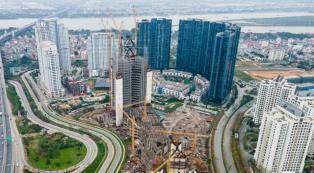
Việt Nam building 27 mega real estate projects worth more than $115 billion, report says
Việt Nam had 27 large-scale urban development projects with combined investment exceeding VNĐ3 quadrillion (US$115 billion) in 2025, according to a report by S&I Ratings, highlighting a nationwide push to build massive new townships.
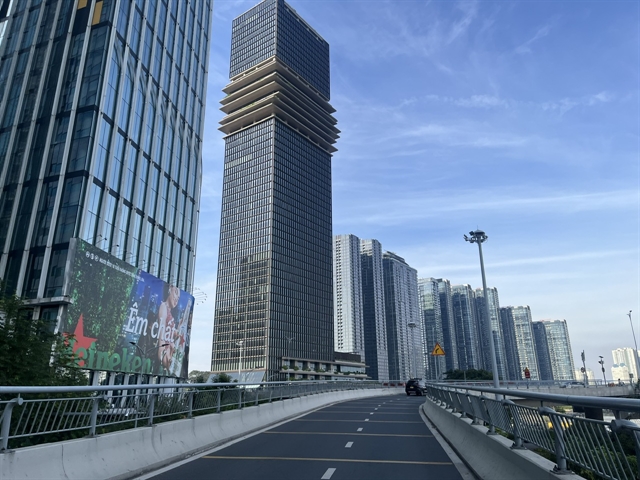
HCM CITY — Việt Nam had 27 large-scale urban development projects with combined investment exceeding VNĐ3 quadrillion (US$115 billion) in 2025, according to a report by S&I Ratings, highlighting a nationwide push to build massive new townships.
The projects, each covering hundreds to thousands of hectares, include developments newly launched, under construction or recently approved for investment across the country.
More than half of the total investment is led by major developers including Vingroup and Sun Group, the report says, reflecting intensifying competition to develop large-scale urban complexes in the real estate market.
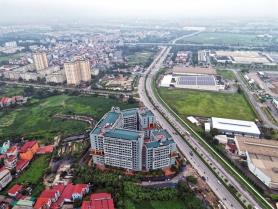
Northern Việt Nam accounts for nine mega projects, mainly in and around Hà Nội as well as Hưng Yên and Quảng Ninh provinces.
The largest project is a proposed Olympic sports urban area in Hà Nội, developed by Vingroup with an estimated investment of about $35.6 billion and spanning more than 9,000 hectares. If completed, it would become the largest urban development in Việt Nam.
Another major development in the north is the Hạ Long Xanh integrated urban project in Quảng Ninh, also by Vingroup, covering more than 4,000 hectares with an estimated investment of about $17.5 billion. The project is planned as a large tourism and service hub linked to Hạ Long Bay.
Central Việt Nam accounts for eight projects, with the largest being the Cam Lâm urban area in Khánh Hòa Province, developed by a consortium led by Vinhomes. The project spans more than 10,000 hectares and has an estimated investment of nearly $11 billion.
Another major development is the Tu Bông new urban area project, developed by a consortium including Sun Group, covering 2,579 hectares with an investment of around $1.5 billion.
Southern Việt Nam has 10 mega projects, half of which are still in the early stage of receiving investment approval.
Among them are three projects by Vingroup, including the Cần Giờ sea-reclamation tourism urban area near HCM City, along with the Phước Vĩnh Tây and Hậu Nghĩa–Đức Hoà developments.
Economist Đinh Trọng Thịnh said new resolutions passed by the National Assembly had helped remove some bottlenecks related to project preparation, land clearance and compensation.
Improved legal frameworks and expanding transport infrastructure helped trigger a new wave of large-scale real estate development.
Nguyễn Văn Đính, chairman of the Vietnam Association of Realtors, said administrative restructuring in some regions had expanded land availability and improved planning connectivity, creating favourable conditions for large urban projects.
However, analysts warn that the rapid rollout of mega developments could raise concerns about the market’s ability to absorb the new supply.
According to the Ministry of Construction, housing prices have risen by an average of 10-15 per cent annually in recent years, with some periods seeing increases of up to 30 per cent.
In Hà Nội, primary apartment prices reached around 100 million dong per square metre last year, up 40 per cent from 2024.
In HCM City, prices rose by 23 per cent year-on-year to about 111 million dong per square metre.
The ministry said the rise in housing prices had significantly outpaced income growth, making property increasingly difficult for many households to afford.
Lê Hoàng Châu, chairman of the HCM City Real Estate Association, said the wave of mega urban developments was reshaping Việt Nam’s property market.
He urged developers to diversify housing products and include more affordable options to avoid oversupply of high-end units.
“Rising lending rates could increase financial pressure on developers, especially if legal procedures delay project timelines,” he said. — VNS