Việt Nam becomes vital player in global semiconductor value chain: Deputy PM
Vietnamese companies have also gradually joined the global value chain by improving their capabilities in chip design, production and related services. Notably, a semiconductor chip manufacturing plant project developed by the Viettel Military Industry and Telecoms Group (Viettel) has already commenced.
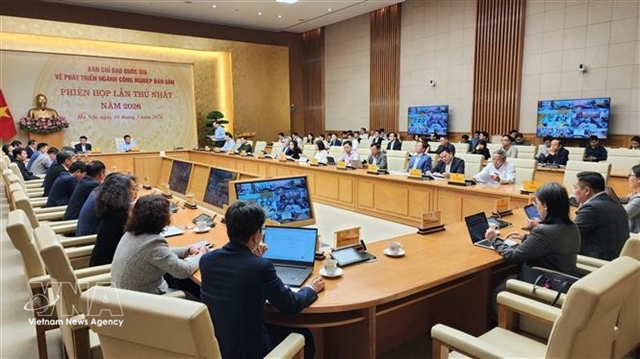
HÀ NỘI — Việt Nam is emerging as an important link in the global semiconductor value chain, particularly in chip packaging and testing, as the country continues to lay key foundations for developing its semiconductor industry, Deputy Prime Minister Nguyễn Chí Dũng has stated.
Deputy PM Dũng, who is head of the National Steering Committee on Semiconductor Industry Development, made the remark while chairing the committee’s first meeting this year in Hà Nội on Tuesday.
He noted that ministries and sectors have actively implemented tasks under the national strategy for developing semiconductor industry and the programme on developing human resources for the industry, focusing on removing institutional bottlenecks, improving the legal framework and creating favourable conditions to attract investment.
According to the Deputy PM, Việt Nam has consistently pursued a balanced approach to developing its semiconductor industry, ensuring harmonious interests and balancing relations with major partners while selectively attracting foreign investment and strengthening the capacity of domestic enterprises.
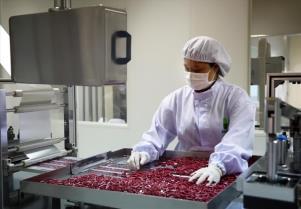
To date, many global technology giants have invested in and expanded their operations in the country, mainly in semiconductor assembly, packaging and testing.
Vietnamese companies have also gradually joined the global value chain by improving their capabilities in chip design, production and related services. Notably, a semiconductor chip manufacturing plant project developed by the Viettel Military Industry and Telecoms Group (Viettel) has already commenced.
However, the Deputy PM pointed out that the industry still faces significant challenges, including shortages of high-quality human resources, limited research and development capacity, infrastructure constraints and the relatively modest participation of domestic enterprises in the global value chain.
At the meeting, members of the Steering Committee reviewed the implementation of assigned tasks and discussed solutions to accelerate the effective and strong development of semiconductor ecosystem in Việt Nam.
According to Permanent Deputy Minister of Science and Technology Vũ Hải Quân, the National Strategy for Semiconductor Development to 2030 with a vision to 2050 assigns 38 tasks and projects to ministries, sectors and localities. So far, 13 tasks have been completed while the remaining 25 are being implemented on schedule. The tasks are being performed in a coordinated manner with the participation of ministries, sectors, localities, organisations, businesses and research institutions.
Regarding the programme on developing human resources for semiconductor industry to 2030 with a vision to 2050, initial progress has been made. Currently, 166 universities in Việt Nam provide training in disciplines related to semiconductor technology. The country now has around 7,000 chip design engineers, more than 6,000 engineers and over 10,000 technicians working in semiconductor packaging, testing and related industries.
Alongside improving the legal framework, the Ministry of Science and Technology is promoting domestic semiconductor production by supporting the implementation of a Vietnamese chip manufacturing plant, the establishment of a national semiconductor manufacturing centre, and chip production activities at companies such as Viettel and FPT. Meanwhile, cooperation with global technology firms such as Samsung, NVIDIA and Qualcomm, as well as investment promotion organisations in Japan, the Republic of Korea and Taiwan (China), has been strengthened.
Minister of Science and Technology Nguyễn Mạnh Hùng noted that the ministry will develop a policy communication plan to better promote the development of the industry.
Meanwhile, Deputy Minister of Finance Nguyễn Đức Tâm said that by March, foreign direct investment in the semiconductor sector had reached nearly US$16 billion across 228 projects. Investors from the RoK accounted for the largest share at 45.3 per cent, followed by the Netherlands with 25.8 per cent and Singapore with 12 per cent. HCM City leads the country with 53 projects.
In his concluding remarks, Deputy PM Dũng said Việt Nam is moving in the right direction and has started to establish essential foundations for developing its semiconductor industry.
He stressed the need to further develop a complete semiconductor ecosystem, expand high-quality human resources and boost research and development.
He requested ministries, localities, research institutions and enterprises to strengthen coordination, improve infrastructure and expand international cooperation to enable the country to participate more deeply in the global semiconductor value chain. — VNA/VNS