Việt Nam aims for pharmaceutical self-reliance, security
A newly approved national programme aims to boost the annual export rate of high-value pharmaceutical products to at least 10 per cent by 2030.
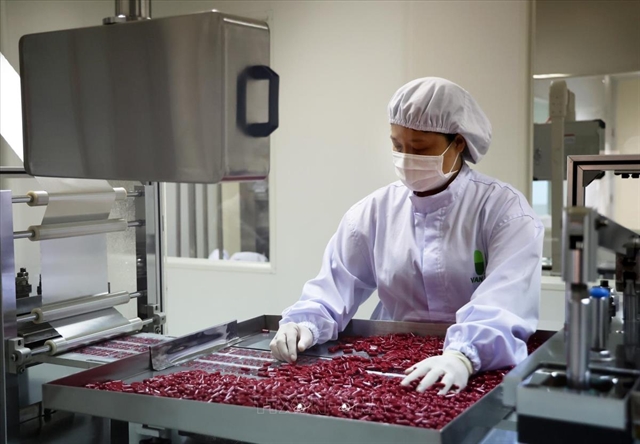
HÀ NỘI — Deputy Prime Minister Phạm Thị Thanh Trà on Thursday signed and issued Decision No. 1954/QĐ-TTg, approving a programme to develop Việt Nam's pharmaceutical industry through 2030 and 2045.
The programme's overarching goal is to transform the pharmaceutical industry into a modern, high-tech sector that generates high added value.
It also aims to enhance capabilities in research and development (R&D) of pharmaceutical raw material production, which will help the country reduce reliance on imports and contribute to national pharmaceutical security.
Specific objectives for 2030 include competitive raw material production, with priorities given to active pharmaceutical ingredients (APIs), starting materials, chemical intermediates and excipients.
The programme strives to meet about 20 per cent of the demand for raw materials used in domestic drug manufacturing, and to establish at least two advanced R&D centres at international standards that can support the commercialisation of pharmaceutical chemistry technologies and products.
It also aims for 100 per cent of domestic facilities producing APIs, excipients and other raw materials to meet the global Good Manufacturing Practices (GMP) quality standards. These must also meet chemical safety requirements, and at least half of them are required to implement digital solutions for production and quality management and traceability.
Annual export growth rate targets of 10 per cent or higher for pharmaceutical products with high added value have been set, gradually developing products for regional and international value chains and markets.
By 2045, the programme aims to transform the pharmaceutical chemical sector into a competitive, high-tech industry with a relatively comprehensive ecosystem for R&D, production and commercialisation, which will enhance Việt Nam's pharmaceutical self-reliance and ensure drug security and resilience against supply chain disruptions.
Moreover, it outlines various tasks and solutions to achieve these objectives.
Efforts will focus on developing foundational and advanced technologies, including synthesis, extraction, purification, biotechnology and peptide technologies, as well as other pharmaceutical chemical technologies capable of generating high-value-added products.
It has ambitious measures for in-depth training in specialties such as synthetic chemistry, process chemistry, biotechnology, peptides and analytical chemistry, as well as in GMP, quality assurance and control (QA/QC), chemical safety and industrial management. — VNS