Việt Nam proposes tripling capacity of national crude oil reserves
Việt Nam is considering tripling the planned capacity of national crude oil reserves as it seeks to raise strategic stocks to 90 days of net imports by 2030, while also expanding petroleum links with Laos.
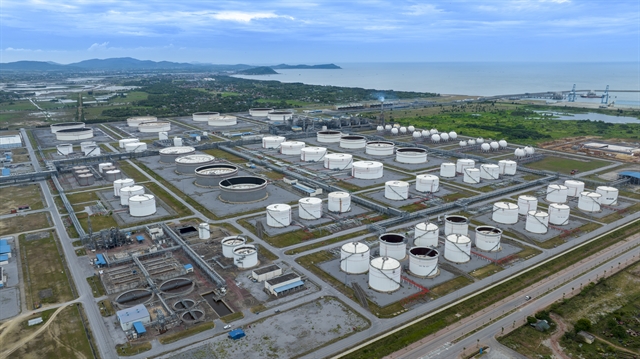
HÀ NỘI — Việt Nam is considering sharply increasing the capacity of its national crude oil reserves as the country seeks to strengthen energy security amid volatile global context.
The Ministry of Industry and Trade has proposed increasing the planned capacity of each national crude oil reserve from about one million tonnes to between one million and three million tonnes under an adjustment to the national petroleum and gas infrastructure plan.
The proposal covers three planned reserve locations in Nghi Sơn in Thanh Hóa Province, Dung Quất in Quảng Ngãi Province and Long Sơn in HCM City.
The ministry said current crude oil and petroleum product reserves were equivalent to only about 33-36 days of net imports, well below the target of around 90 days by 2030 set out in Resolution 70 on energy security.
Under the proposed adjustment, national reserves could also be combined with commercial storage of crude oil and petroleum products at the same facilities. The two components would have to be separated in terms of capacity, ownership, stock and management to ensure that national reserves could be mobilised when needed.
The need to strengthen reserves has become more evident as Việt Nam remains dependent on imported crude oil and petroleum products. Domestic refineries currently meet about 70 per cent of national petroleum demand, while both Nghi Sơn and Dung Quất are reliant on imported crude as domestic crude production declines.
However, none of the national crude oil reserve projects included in the current plan have been developed, according to the ministry. Investment mechanisms, funding sources and arrangements for management and operation have yet to be fully determined.
Against this backdrop, Nghi Sơn Refinery and Petrochemical LLC (NSRP) has proposed locating a national crude oil reserve near its refinery in Thanh Hóa.
The plant’s director Lê Nguyễn Quốc Vinh said the proposed site could use existing crude oil receiving infrastructure, including its single-point mooring (SBM) system and crude oil pipeline, helping reduce capital expenditures compared with building new infrastructure.
NSRP representative said the reserve could also provide the refinery with faster access to crude in the event of supply disruptions. Shipments from the Middle East can take about 21 days to reach Việt Nam, while negotiations and contract arrangements could extend the overall lead time to more than two months.
The proposal comes after NSRP faced disruptions to its traditional crude supply following tensions in the Middle East. From March to August, the refinery processed crude from outside Kuwait and successfully tested ten new crude types, according to the company.
NSRP said it was working with the Government and Thanh Hóa authorities on the possibility of developing the reserve near the refinery.
The proposed adjustment also includes plans to strengthen petroleum supply links with Laos, including 110,000–160,000cu.m of additional storage capacity in Nghệ An Province and a potential 80-100km petroleum pipeline connecting the two countries.
The specific location and route would be determined during the investment preparation stage.
The broader plan also aims to improve the country's ability to respond to external supply shocks as demand for imported crude and petroleum products increases. — BIZHUB/VNS