Vehicle recycling deadline proposed to be pushed back to 2030
The proposed delay is intended to give businesses more time to develop collection systems, recycling infrastructure and the capacity needed to meet their obligations.
HÀ NỘI — A draft revision of the Law on Environmental Protection proposes delaying the mandatory recycling deadline for road vehicles until 2030, scrapping the financial contribution option and expanding mechanisms for collecting and recycling used products and packaging.
Trần Thị Thu Hiền, a representative of the Environment Administration under the Ministry of Agriculture and Environment, spoke about the draft at a forum on Wednesday entitled 'Implementing EPR regulations and promoting responsible business models towards a circular economy'.
Hiền said the draft decree, which guides implementation of the revised law, proposed postponing the deadline for manufacturers and importers to fulfil their extended producer responsibility (EPR) for road vehicle recycling from January 1, 2027 to January 1, 2030.
The proposed delay is intended to give businesses more time to develop collection systems, recycling infrastructure and the capacity needed to meet their obligations.
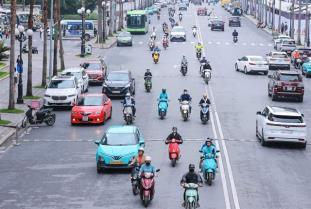
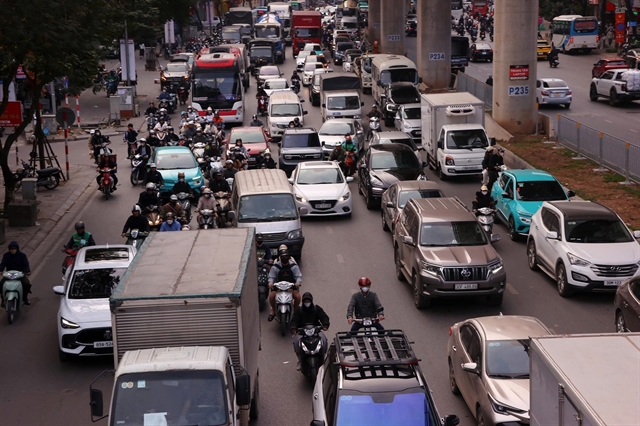
Việt Nam currently has nearly 7.5 million registered cars and more than 79 million registered motorcycles and motorbikes. In 2025 alone, more than 590,000 cars and 2.6 million motorbikes were newly registered, highlighting the growing volume of vehicles that will eventually require proper end-of-life management.
According to the Việt Nam Register, 10,016 cars reached the end of their permitted service life in 2025, including 9,925 goods vehicles and 91 passenger vehicles. HCM City recorded the highest number at 2,151, followed by Hà Nội with 1,558.
Under the 2020 Law on Environmental Protection, manufacturers and importers can fulfil their recycling obligations by organising recycling themselves, hiring recycling service providers or making financial contributions to the Việt Nam Environmental Protection Fund.
The draft amendments propose removing the financial contribution option, requiring businesses to organise the collection and recycling of products themselves or work through qualified recycling entities.
Proposed compliance methods include collecting products for recycling directly or transferring them to recycling facilities, hiring collection and recycling service providers, authorising producer responsibility organisations (PROs), exporting products and packaging to other countries for recycling, or combining these approaches.
From 2033, businesses would only be allowed to fulfil their obligations through direct collection, transfer to recycling facilities or authorisation of intermediary organisations.
The draft law also adds an exemption from waste treatment responsibilities for products and packaging subject to environmental protection tax.
For intermediary organisations, the draft decree introduces additional requirements covering collection capacity, financial resources, data management and separate accounting systems. They would be responsible for monitoring and verifying recycling volumes, reporting results and ensuring that recycling obligations are not counted more than once across businesses.
Recycling facilities, meanwhile, would be required to hold environmental permits, maintain separate records of input materials, ensure their equipment meets recycling specifications and establish electronic databases to enable traceability throughout the recycling process.
They would also have to submit annual reports before April 1, undergo audits and verify recycling volumes with manufacturers, importers or intermediary organisations.
To address difficulties in collecting used products and packaging, the draft allows manufacturers, importers, PROs, recycling facilities and waste treatment operators to jointly establish collection points. These points would be permitted to accept different types of products and packaging regardless of brand.
Administrative procedures for storing, transporting and transferring hazardous waste generated by consumers would also be simplified.
Another proposed change would allow businesses to carry forward outstanding recycling volumes to subsequent years. The carry-over period would be capped at five years for lithium and nickel-metal hydride batteries used in vehicles and electrical and electronic equipment; three years for multi-layer paper, iron, other metals, glass and flexible plastic packaging; and two years for other products and packaging.
For cement packaging, the draft introduces co-processing in cement kilns as an alternative, given the lack of suitable recycling technology for this type of packaging in Việt Nam.
Regarding mandatory recycling rates, the draft proposes a roadmap for two periods, 2029-2031 and 2032-2034, with adjustments of no more than 10 per cent in each three-year cycle.
The draft law amending and supplementing several provisions of the Law on Environmental Protection is expected to be considered and passed by the National Assembly towards the end of its second session of the 16th tenure, scheduled to close on November 20.
Under current regulations, a vehicle's service life is calculated from its year of manufacture. The maximum service life is 25 years for trucks, 20 years for passenger vehicles with nine seats or more and 15 years for four-wheeled motorised passenger vehicles. Vehicles that exceed these limits are no longer permitted to operate on public roads. — VNS