US tariff shifts offer Vietnamese exporters short-term relief but heighten need for preparedness
Analysts said the latest tariff developments present a dual impact on Việt Nam’s exports, creating short-term relief while opening a new phase of strategic adjustment in the medium and long term.
HÀ NỘI — Vietnamese businesses are being urged to prepare for fresh uncertainty in the United States tariff regime after a Supreme Court ruling temporarily blocked the use of so-called reciprocal duties, easing immediate pressure on exporters while signalling a more complex trade environment ahead.
On February 20, the US Supreme Court ruled that the International Emergency Economic Powers Act could not be used as a legal basis for imposing reciprocal tariffs on imports from countries running large trade surpluses with the US. The mechanism had been employed by the administration of President Donald Trump to justify additional duties.
Shortly after the ruling, the White House announced a temporary import duty set at 10 per cent on a wide range of products entering the US, with a signal that it could be increased to 15 per cent. The measure took effect on February 24 for a 150-day period under Section 122 of the Trade Act of 1974.
Analysts say the latest developments present a dual impact for Việt Nam, offering short-term relief while ushering in a new phase of strategic adjustment.
Lê Đức Anh, senior analyst at FinSuccess Investment, said that following the court’s decision, the average tariff applied to Vietnamese goods is estimated at around 18–20 per cent, down from 23–25 per cent previously.
“Overall, Vietnamese enterprises are facing tariff rates about 4 percentage points lower than before, and have an additional 150 days to prepare,” he said.
However, he cautioned that the broader tariff reset creates a mixed landscape. Countries like Việt Nam, Brazil and China may see lower rates than the reciprocal tariff. Meanwhile, partners that previously benefited from relatively lower tariffs, such as the EU, the UK and Singapore, could face notable increases.
Anh said the principal challenge for Việt Nam lies not only in tariff levels but also in its high degree of trade openness. Exports to the US account for more than 32 per cent of Việt Nam’s total export turnover, with shipments to the American market reaching a record US$153 billion despite mounting trade barriers.
He added that the use of Section 122 demonstrates the flexibility and resolve underpinning what he described as a new protectionist phase.
“For Việt Nam, this is a moment of both risk and opportunity. The removal of the 20 per cent reciprocal tariff reduces immediate cost pressure, but the temporary tariff creates a highly uncertain business environment,” Anh said.
In the medium term, he said, exports are likely to enter a more selective adjustment phase in which companies that diversify markets, make effective use of free trade agreements and strengthen their position in global value chains will secure a more durable competitive advantage.
Preparation needed
A representative of the Foreign Markets Department under the Ministry of Industry and Trade was quoted by Tiền Phong newspaper as saying that the court’s ruling had helped Vietnamese exporters avoid an immediate 20 per cent reciprocal tariff shock in 2025, with some products potentially facing even higher rates.
The move has reduced short-term pressure on orders and costs and supported market sentiment.
However, the temporary import duty imposed under Section 122, together with the possibility of investigations under Sections 232 and 301, signals that trade risks are entering a more complex and less predictable phase, particularly for high-value export categories vulnerable to scrutiny over origin and transhipment.
Enterprises should use the 150-day window to review origin compliance, strengthen supply chain transparency and prepare for potential investigations, the official said.
According to Phùng Quốc Mẫn, President of the Handicraft and Wood Industry Association of HCM City, many wood exporters have secured stable orders for the second quarter of 2026, reflecting signs of recovery in the US market. Lower tariff pressure has enabled firms to maintain production plans and improve efficiency.
Mẫn warned, however, that potential investigations under Section 232 could lead to additional duties.
He urged businesses to source more raw materials from the US, maintain robust traceability systems and reinforce supply chain management, while improving productivity and localisation rates to enhance long-term competitiveness.
“Increasing localisation rates, improving productivity and building more flexible supply chains will help businesses reduce risks and sustain growth regardless of how the policy environment changes,” Mẫn said.
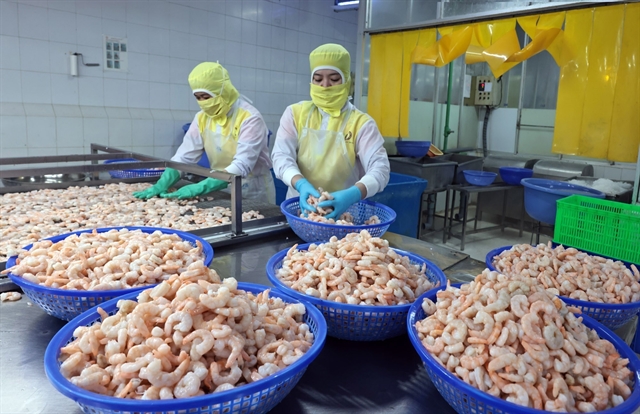
The Việt Nam Association of Seafood Exporters and Producers said the shift from reciprocal tariffs to a temporary import duty had significantly eased pressure on seafood exports.
However, the association cautioned that lower anti-dumping duties do not remove broader trade risks, noting that expanded investigations under Sections 232 and 301 could subject seafood products to stricter scrutiny over origin, subsidies and labour and environmental standards.
Vietnamese seafood exporters should therefore use this period to standardise traceability systems, improve cost transparency, increase domestic value-added content and reduce reliance on input materials carrying origin-related risks, the association said.
Trần Quốc Mạnh, Deputy President of the Vietnam Handicraft Exporters Association, highlighted the uncertainty surrounding US tariff policy and urged exporters to adapt swiftly.
“In the past, businesses could build a stable strategy for the whole year and stick to it. Now they must adopt flexible strategies and always be ready to adjust to fluctuations,” Mạnh said, stressing that the US could introduce further measures to raise tariffs.
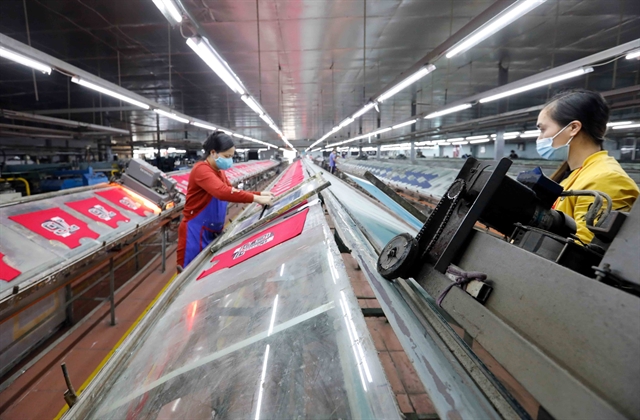
“No one can be certain about developments in the coming period. Businesses need flexible response plans and stronger links with customers to maintain stable production and their workforce after holidays, while domestic policies should remain stable and supportive,” said Phạm Xuân Hồng, President of the HCM City Textile and Garment - Embroidery Association.
Customs statistics show that Việt Nam’s exports to the US continued to expand strongly in 2025, reaching $153 billion, up more than 28 per cent compared with 2024 and accounting for around 32.2 per cent of the country’s total export value, making the US Việt Nam’s largest export market. — VNS