$947 million trade deficit posted in first half of February on rising input imports
Textile and garment exports reached $1.8 billion, up 32.51 per cent, indicating a recovery in orders from several major markets.
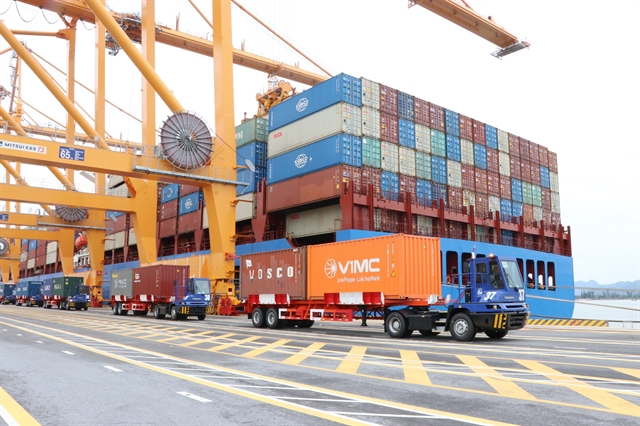
HÀ NỘI — Việt Nam ran a trade deficit of nearly US$947 million in the first half of February as imports of fuel and production material outpaced export growth, according to data from Vietnam Customs.
The total import-export revenue reached $41.67 billion in the first two weeks of February, up 31.77 per cent over the same period last year and bringing the total trade revenue to $130.18 billion as of February 15. The increases demonstrate recovery of global trade, the department said.
From February 1-15, exports totalled $20.36 billion, an increase of 12.79 per cent compared to the first half of January, driven by processed and manufactured goods, particularly high-tech products.
Shipments of phones and components posted a significant increase, rising by 32.7 per cent to $668.36 million. Machinery, equipment, tools and spare parts rose to $346.59 million, up 16.19 per cent, while computers, electronic products and components increased by 4.41 per cent to $186.43 million.
Textile and garment exports reached $1.8 billion, up 32.51 per cent, indicating a recovery in orders from several major markets.
Of note, exports of coal surged more than tenfold compared to the first half of January to $8.74 million, marking the fastest growth among export categories in the period. Fertilizer exports also climbed 167.21 per cent.
Foreign direct investment (FDI) firms continued to dominate export performance with an export value of $15.8 billion, accounting for nearly 78% of the country’s total exports.
Imports totalled $21.31 billion in the 15-day period, up more than 40 per cent from a year ago, reflecting strong demand for fuel and raw materials.
Petroleum imports rose 90.6 per cent to $519.74 million, while liquefied petroleum gas imports jumped over 121 per cent to $145.69 million, underscoring rising energy demand for production and consumption amid global price volatility.
The FDI sector accounted for more than 72 per cent of total imports. — VNS