Twelve banks roll out $15.5 billion preferential credit for SMEs, growth drivers
The rapid rollout of the programmes reflects banks' efforts to channel credit towards sectors considered key drivers of economic growth while providing greater support to SMEs.
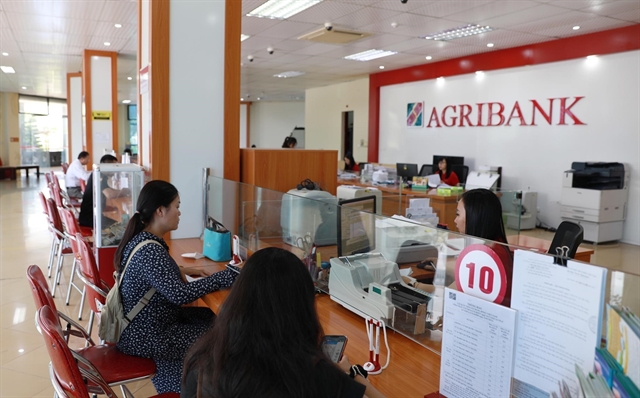
HÀ NỘI — Twelve commercial banks have announced preferential lending programmes worth a total of around VNĐ408 trillion (US$15.5 billion) to support small- and medium-sized enterprises (SMEs) and priority sectors.
The programmes were launched shortly after the State Bank of Vietnam (SBV) issued a directive on August 7 asking commercial banks to develop suitable credit products and packages to help businesses access capital, including through preferential interest rates and fees, to support the country’s double-digit growth target.
Out of 12 banks, four state-owned commercial banks have officially registered the programmes with the SBV, with total planned lending of VNĐ220 trillion at rates lower than the average rates of the similar terms.
Agribank has committed VNĐ70 trillion, while BIDV, Vietcombank and VietinBank have each registered VNĐ50 trillion.
The rapid rollout of the programmes reflects banks' efforts to channel credit towards sectors considered key drivers of economic growth while providing greater support to SMEs, the SBV said.
However, early disbursement of the preferential loans is needed to help businesses, particularly SMEs, address capital shortage, one of their biggest constraints, said Mạc Quốc Anh, deputy chairman the Hanoi Association of SMEs.
Timely funding will allow companies to invest more proactively in production and business, particularly in science and technology, he said.
The financing can also help businesses expand markets, develop distribution while strengthening production capacity and enabling them to participate more deeply in regional and global value chains and supply chains, he added.
Quốc Anh also noted that it is necessary to increase the share of unsecured lending to around 25-30 per cent of total outstanding corporate loans to reduce their reliance on collateral.
Banks should gradually shift from lending based mainly on collateral towards assessments based on cash flows and data, while expanding lending based on business plans, orders and value chains, he said.
In many developed and developing countries, banks can assess repayment capacity based on cash flows, transaction data and companies' records of purchasing raw materials and selling products, Anh said, adding that this approach should be promoted as digitalisation and data become increasingly important in credit activities. — BIZHUB/VNS