Bank credit for real estate business rises to nearly $94.7 billion
Outstanding loans for urban area investment and housing development projects remained the largest category, reaching VNĐ833.6 trillion by the end of June, up 6.33 per cent from the end of March.
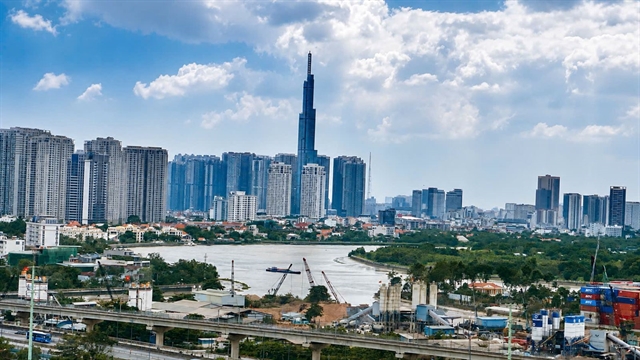
HÀ NỘI — Outstanding loans for real estate business activities rose to more than VNĐ2.5 quadrillion (nearly US$95 billion) as of June 30.
The Ministry of Construction's report on housing and the real estate market for the second quarter of 2026 showed that compared to the end of March 2026, the loans rose by more than VNĐ284 trillion. They were up more than VNĐ518 trillion compared to the end of 2025.
According to the report, outstanding loans for urban area investment and housing development projects remained the largest category, reaching VNĐ833.6 trillion by the end of June, up 6.33 per cent from the end of March.
Loans for land-use right acquisitions surged by more than 23 per cent to VNĐ314.5 trillion, while loans for industrial zone and export processing zone construction projects hit VNĐ184.2 trillion, an increase of over 32 per cent.
Conversely, loans for eco-tourism and resort projects declined by more than 4 per cent to VNĐ80.6 trillion.
According to the Ministry of Construction, real estate credit in the second quarter continued to be managed in a cautious and selective manner, prioritising capital for projects with full legal compliance and the capacity for implementation and completion, thus generating actual market supply.
Access to capital varies among real estate enterprises. Developers with strong financial standing, viable business plans and stable cash flows enjoy more favourable conditions for securing credit, whereas projects facing legal hurdles or low liquidity continue to struggle.
From an investment perspective, Tạ Mỹ Bách, head of property consulting firm Jones Lang Lasalle Vietnam’s capital markets division, noted a shift in investor appetite from strategies driven primarily by expectations of price hikes toward an emphasis on asset quality and actual operational performance. This indicates that an asset's cash-generating potential and operational efficiency are playing an increasingly critical role in investment decisions.
The developments in the first half of the year showed that bank capital continued to play a vital role in the real estate market, but access to such capital is becoming increasingly differentiated.
A developer's financial strength, a project's legal status, performance and ability to generate cash flow are emerging as key factors determining its appeal to both credit institutions and investors. — BIZHUB/VNS