Transparent land valuation key to unlocking investment, experts say
The 2024 Land Law has abolished the long-standing land price framework and requires local authorities to issue annual land price tables that more closely reflect market values.
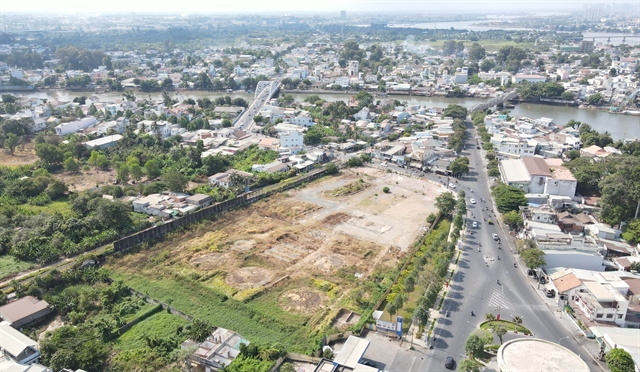
HÀ NỘI — Developing a transparent, market-based land valuation system and a comprehensive property price database is becoming increasingly critical for Việt Nam to prevent delays to investment projects and support the sustainable development of the real estate market, experts said at a conference organised by MarketTimes magazine on May 12.
The 2024 Land Law has abolished the long-standing land price framework and requires local authorities to issue annual land price tables that more closely reflect market values.
However, significant challenges remain in implementing the new framework, including fragmented market data, lengthy valuation procedures and legal uncertainties that continue to delay projects and drive up costs.
“Real estate valuation is no longer merely a technical issue. It has become an institutional bottleneck affecting investment, credit, equitisation, auctions, compensation, housing development and capital markets,” said Nguyễn Văn Khôi, president of the Vietnam Real Estate Association.
According to Khôi, one of the biggest challenges is the mismatch between rapidly changing market conditions and the pace of official valuation procedures. While land prices can fluctuate quickly, data collection, appraisal and approval processes often take much longer.
He noted that delays in determining land prices have stalled numerous housing, urban development and infrastructure projects, constraining new supply and increasing financing costs for developers.
Those additional costs are often passed on to homebuyers in the form of higher housing prices, he said.
Experts also highlighted persistent weaknesses in the country’s property transaction data. Transfer prices are frequently declared below actual transaction values, while information remains fragmented across tax authorities, land registries, banks, notary offices and property exchanges.
Without reliable market data, valuation results are more vulnerable to disputes and legal challenges, said Nguyễn Thế Phượng, deputy president of the Vietnam Valuation Association.
He noted that delays in collecting information, conducting appraisals and securing approvals often result in land prices being determined using outdated market data, disrupting project financial plans and investment decisions.
Phượng added that concerns over legal liability have made consultants, valuation firms and approving authorities increasingly cautious. Setting prices too low may raise concerns about losses to the State, while excessively high valuations can undermine project viability and reduce housing affordability.
In addition, the current framework does not adequately address emerging property segments such as resort developments, data centres, green industrial parks and long-term rental housing, all of which have distinct revenue structures, operating costs and risk profiles.
Phượng also pointed out that local authorities continue to face difficulties in applying land-price adjustment coefficients, as it remains challenging to quantify factors such as market fluctuations, planning changes and infrastructure conditions.
According to Dương Thị Mỹ Lạng, deputy president of the Vietnam Valuation Association, local governments have only a limited timeframe to prepare adjustment coefficients. At the same time, the new methodology for calculating these coefficients is more complex, as it must incorporate market movements, planning factors and a range of local conditions.
Proposed solutions

Experts said the recovery of the real estate market will remain difficult without a transparent, independent and data-driven valuation mechanism, stressing that such reforms are essential to strengthen investor confidence, facilitate credit flows and support Việt Nam’s long-term growth ambitions.
Khôi proposed launching pilot “sandbox” programmes between 2026 and 2028 in major property markets, including Hà Nội, HCM City, Đà Nẵng, Hải Phòng and Cần Thơ.
The pilots would test a range of measures, including verified transaction-price databases, digital land-price maps, automated valuation tools subject to independent verification, parallel assessments by multiple valuation firms, and the public disclosure of reference price ranges before official land prices are issued.
He also proposed a multi-layered valuation mechanism for large-scale projects and projects involving State assets. Under the proposal, at least two or three independent valuation firms would conduct separate assessments, while appraisal councils would review the results and establish an appropriate valuation range before the competent authorities make a final decision.
Khôi further called for the establishment of a national property-price database integrating information from land authorities, tax agencies, banks, notary offices, auction centres, real estate exchanges and construction licensing agencies. Reliable market data, he said, is the foundation of accurate and credible land valuation.
He also recommended developing separate valuation standards for different property segments, including commercial housing, social housing, industrial parks, logistics facilities, resort developments, data centres, agricultural real estate and future assets.
According to Phượng, legal safeguards should be introduced for consultants, appraisers and appraisal council members who comply with regulations, use legitimate data sources and act without personal gain.
For social housing, worker housing and long-term rental housing, Phượng proposed a dedicated valuation mechanism based on social welfare objectives rather than purely commercial considerations. — VNS