Toll operators suspend planned e-wallet fees, consider more appropriate options
VETC and Viettel Money, whose e-wallet is linked to ePass transport accounts, have suspended a plan to charge individual users VNĐ6,600 (US$0.25) a month and organisations VNĐ66,000.
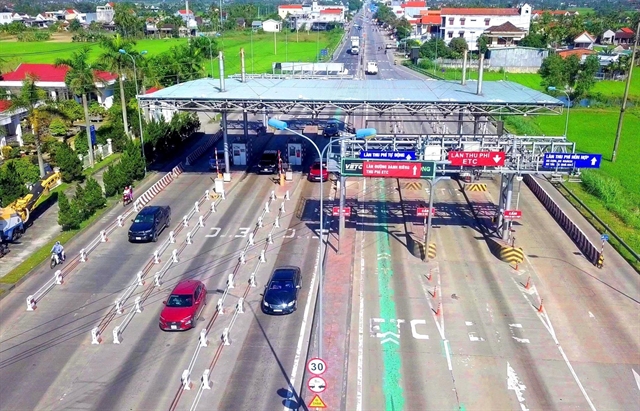
HÀ NỘI — Việt Nam's two major electronic toll collection service providers, VETC and Viettel Money, have suspended plans to charge monthly fees for e-wallet services linked to transport accounts following a backlash from vehicle owners.
VETC said on August 20 that it would not carry out the policy for now, and would suspend its rollout to review the proposal, gather more customer feedback and develop a more suitable solution. It said it had not collected any account fees to date.
Viettel Money, whose e-wallet is linked to the ePass platform operated by the Vietnam Digital Transport Corporation (VDTC), also announced that it would suspend transaction processing fees for customers.
VETC and Viettel Money had planned to charge individual users VNĐ6,600 (US$0.25) a month and organisations VNĐ66,000 from August. No fee would have been charged in months without transactions.
The Vietnam Road Administration (VRA) had earlier asked the companies to halt the planned charges and review their fee policies.
Some vehicle owners said that they already paid service costs through toll and expressway charges, while others raised concerns about limited competition in the electronic toll collection market and the lack of alternative providers.
The VRA said the proposed charges were fees for using payment instruments under banking and payment regulations, rather than road-use fees or charges for maintaining transport accounts.
Under Government Decree 119/2024/NĐ-CP on electronic payments in road transport, from October 1, 2024, transport accounts must be linked to cashless payment methods such as e-wallets, credit cards or bank accounts.
Transport accounts store information about vehicles and their owners but do not hold money. Payments are deducted directly from the cashless payment method chosen by the account holder when a transaction takes place.
The VRA said e-wallet service providers are legally entitled to charge fees for their services under regulations on non-cash payments and intermediary payment services. Fee levels, collection methods and adjustments must be set out in agreements between service providers and customers.
The VRA asked VETC and the VDTC to suspend the fees and review the policy, urging them to consider alternative pricing models better suited to different customer needs and usage frequencies, such as charges based on the number or value of transactions.
It also called on service providers to expand cashless payment options, improve value-added services and optimise their operations to reduce costs for users.
According to VETC, e-wallets are licensed and regulated payment intermediary services overseen by the State Bank of Vietnam.
The e-wallet is not a deposit account. Under current regulations, VETC cannot pay interest on customers' wallet balances or use the funds for lending, investment or its own business activities.
VETC said that providing the service requires the company to invest in technology systems, conduct electronic know-your-customer procedures, ensure security and data protection, operate and reconcile transactions around the clock, connect with banks and pay fees to banks and payment switching providers, while keeping all customer balances in separate payment guarantee accounts.
VETC said it would conduct a comprehensive review and assess the specific needs and usage patterns of different customer groups to develop a more suitable solution.
The company will also clearly disclose available payment methods and related costs and develop a roadmap to connect additional payment methods, giving customers greater choice.
At the end of 2025, VETC had 4.3 million customers using its app, including three million users of its VETC e-wallet, out of an estimated six million car owners and users nationwide.
Viettel said ePass had nearly three million subscribers and processed more than one billion vehicle passages through toll stations during the year. By mid-2026, the service had surpassed 3.2 million subscribers, accounting for 43 per cent of the nationwide market. — VNS