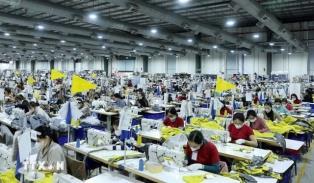
Textile exports rise, but orders weaken
Order volumes in the second quarter are expected to decline sharply by 20–25 per cent compared to the same period last year.
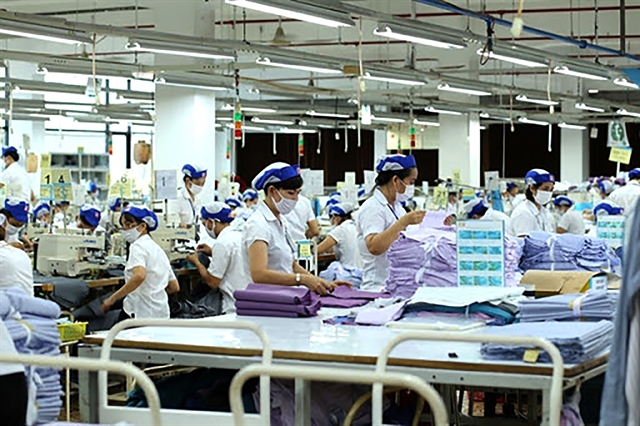
HÀ NỘI — Despite continued export growth, the textile and garment industry is facing the risk of a downturn as second-quarter orders are forecast to fall sharply by 20–25 per cent.
The latest statistics from the Vietnam Textile and Apparel Association (Vitas) show that the country’s textile and garment exports reached US$14.53 billion in the first four months of this year, up 4.3 per cent year-on-year.
The yarn and fibre segment posted strong growth with export revenue of $2.62 billion, an increase of 20.1 per cent, while garment exports reached $11.9 billion, up slightly by 1.3 per cent.
In the US market, Việt Nam continued to maintain its leading position with a 21.4 per cent market share.
These figures indicate that the textile and garment industry has maintained growth momentum despite ongoing volatility in the global economy. However, in reality, the sector is facing numerous challenges.
The Đại đoàn kết (Great Unity) newspapers quoted Nguyễn Hùng Quý, general director of Vinatex Textile and Garment Southern Corporation Limited Liability Company, as saying that weakening global demand had caused new orders to come in very slowly, while some buyers had even reduced or cancelled orders.
Order volumes in the second quarter were expected to decline sharply by 20–25 per cent compared to the same period last year, he said.
In addition, imported raw material supply chains from China had faced repeated delays. As a result, manufacturers had to ramp up overtime shifts to meet increasingly tight delivery schedules.
Lê Tiến Trường, chairman of the Vietnam National Textile and Garment Group (Vinatex), noted that the industry was currently facing a paradox, with business performance in the first four months of the year remaining positive even as macroeconomic indicators and consumer demand in key import markets became increasingly unstable.
Even orders already secured through the third quarter remain uncertain, according to Trường. This warning highlights that the textile and garment industry’s biggest challenge lies not only in finding orders but also in managing volatility in a rapidly changing and unpredictable market.
Speaking about the remaining months of 2026, Cao Hữu Hiếu, Vinatex general director, said that significant uncertainties remained and could materially affect business and production results.
Therefore, enterprises needed to develop production plans focused on maximising productivity and efficiency during the second quarter to create growth momentum for the final months of the year, while closely monitoring market developments to promptly implement response measures, he said.
Hiếu also emphasised that companies should continue maximising profits while they still benefit from relatively low raw material prices, and maintain close market surveillance to achieve better business outcomes.
Meanwhile, Vitas Chairman Vũ Đức Giang said that to achieve the target of approximately $50 billion in export turnover this year, the remaining months of the year could not simply be viewed as a period for “maintaining orders”.
Instead, they must serve as a pivotal phase for the textile and garment industry to undertake deeper restructuring in terms of markets, products, and technology, he said.
At the same time, diversifying export markets and customer bases must be placed at the centre of the industry’s long-term development strategy, he added. — VNS