Technology, digitalisation key to turning ESG commitments into action
ESG is not merely a corporate assessment framework but a development approach that links economic growth with environmental protection, social progress and improved governance.

Ly Ly Cao
HÀ NỘI — Science, technology, innovation and digital transformation are being positioned as decisive drivers for sustainable development and effective environmental, social and governance (ESG) implementation, according to Nguyễn Thị Hà, deputy minister of Home Affairs.
Speaking at the Vietnam ESG Forum 2025, organised by Dân Trí (People's Intellect) newspaper on December 22, Hà said the timing was significant as Việt Nam moves into the first year of implementing the new national development resolutions, following the Politburo's Resolution No. 57 on breakthroughs in science, technology, innovation and national digital transformation.
She described the coming period as one that requires strategic vision and strong, decisive actions to ensure stable and prosperous development.
"In practice, science, technology, innovation and digital transformation have been determining factors for a country's position, competitiveness and sustainable development, and Việt Nam is no exception," Hà said.
She stressed that sustainable growth can no longer rely on resource exploitation, scale expansion or low-cost advantages but must be grounded in knowledge, technology, human-centred governance and social responsibility.
Against that backdrop, ESG was described not merely as a corporate assessment framework, but as a development approach that links economic growth with environmental protection, social progress and improved governance.
Hà said that ESG commitments alone are insufficient without technological capabilities to translate them into measurable actions.
"Technology enables us to accurately measure environmental impacts, manage data transparently and enhance corporate governance efficiency," she said, adding that digital tools also help optimise resource allocation and create more sustainable business models.
Hà emphasised that science and technology serve as a "bridge" to move ESG from strategic vision to concrete, measurable action, while also supporting the State in policy formulation and development management to balance economic growth, social advancement and environmental protection.
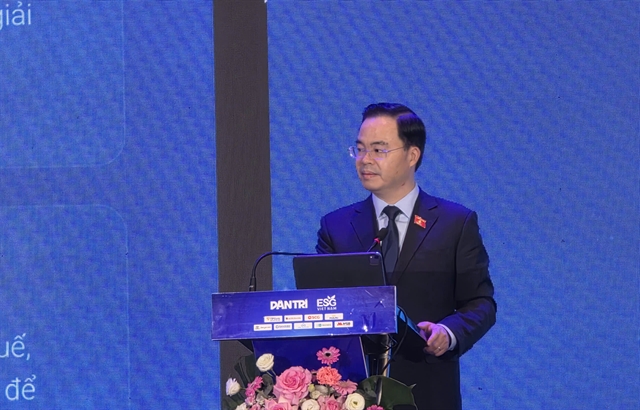
Her remarks echoed the views presented by Dr Trần Văn Khải, vice chairman of the National Assembly's Committee on Science, Technology and Environment, who underscored that Resolution 57 provides a critical political foundation for advancing ESG in Việt Nam.
According to Khải, science, technology and digital transformation are central levers enabling rapid and sustainable development, while ESG acts as a connector that turns policy momentum into tangible outcomes such as transparent governance, efficient resource use and stronger social responsibility.
Khải also cautioned against superficial ESG practices, warning of the risks of "greenwashing" through glossy reports unsupported by verifiable data.
He stressed that transparent, digitised and auditable ESG data are essential to building investor trust and enhancing the international standing of Vietnamese enterprises.
Examples from the business sector illustrated how technology-led ESG is being applied in practice.
At TPBank, ESG has been embedded into daily operations through digital transformation. The bank reported green credit and investment exposure of more than VNĐ7.37 trillion (US$280 million), including financing for renewable energy projects and electric vehicle purchases.
By digitising internal processes, TPBank reduced its greenhouse gas emission intensity from 1.16 tonnes of carbon dioxide (CO2) equivalent per billion đồng of revenue in 2023 to 0.87 tonnes in 2024, demonstrating how data-driven management can turn ESG from commitment into operational reality, said Nguyễn Hưng, CEO of TPBank.
In the manufacturing sector, plastic producer Duy Tan Plastics, a member of SCG Group, has leveraged digital tools to monitor and optimise ESG performance across its supply chain.
According to Võ Đình Trung, vice president of the company's Innovation and Sustainability Centre, digitalisation allows standardised data collection on energy, water, waste, recycling and carbon emissions, enabling the calculation of product carbon footprints that meet the requirements of EU and US customers.
Solar rooftop systems installed at Duy Tan's plants have helped cut thousands of tonnes of CO2 emissions annually, while circular design and recycled materials reduce plastic waste and production costs.
From a broader sustainability perspective, Nguyễn Công Minh Bảo, country manager of the Global Reporting Initiative (GRI) and country head of the ESG Institute in Việt Nam, highlighted mounting regulatory and market pressures on enterprises, particularly small- and medium-sized firms, to comply with ESG standards.
He noted that supply chains account for more than 90 per cent of environmental impacts in many consumer goods industries, making transparent reporting systems and digital tools critical for managing risks and maintaining access to global markets.
Together, the policy direction outlined by government leaders and the concrete actions taken by enterprises underscore a shared emphasis on science, technology and digital transformation as enablers of ESG implementation in Việt Nam's next development phase. — BIZHUB/VNS
Also as part of the Vietnam ESG Forum, the Vietnam ESG Awards celebrated its inaugural ceremony, showcasing outstanding organisations committed to ESG practices.
The event recognised 32 honourees, highlighting their contributions to sustainable development in the country.
This year's awards featured a special recognition for the top ten companies demonstrating comprehensive ESG implementation strategies.
The Vietnam ESG Awards 2025 focused on recognising substantial efforts in various areas: Top Five Pioneer Companies in Technology, Environmental (E) Award, Social (S) Award, Governance (G) Award and Top Ten Comprehensive ESG Implementers.