Đồng Nai advances green livestock development aligned with Net Zero goals
Under the plan for the 2026–30 period, the province aims to industrialise and modernise livestock production, ensuring sustainable growth and enhanced competitiveness.
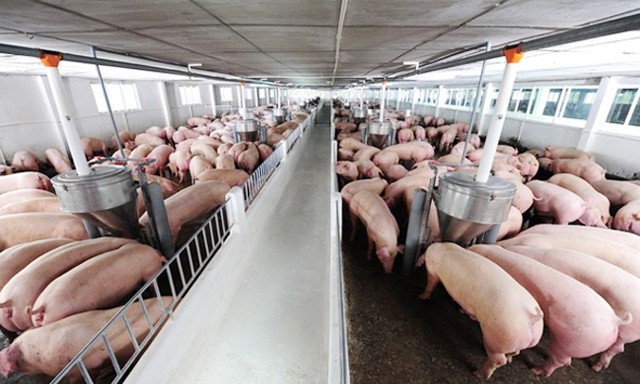
ĐỒNG NAI — Đồng Nai Province is steering its livestock sector towards greener, lower-emission development in line with Việt Nam’s net zero commitment, while building and completing closed value chains from farming and processing to consumption and eventual export.
These objectives are set out in the province’s newly issued livestock development plan for the 2026–30 period, which prioritises sustainable growth, emission reduction and higher value-added production across the livestock industry.
Under the plan, the province aims to industrialise and modernise livestock production, ensuring sustainable growth and enhanced competitiveness.
Commercial livestock products will be produced primarily in concentrated farming facilities that meet biosecurity and disease-safety standards, are environmentally friendly, apply humane animal welfare practices, and comply with stringent quality and food safety requirements for both domestic consumption and export markets.
By 2030, the province targets a pig herd of around five million head and a poultry population of 48 million birds.
Total carcass meat output is expected to reach approximately 1.3 million tonnes, while egg production is projected at two billion eggs annually.
A key pillar of the plan is the formation of fully integrated livestock value chains, coupled with a shift towards organic farming and disease-free production models.
These systems are designed to meet international food safety standards such as GlobalG.A.P., ISO 22000, HACCP and BRCGS, paving the way for deeper participation in global markets, including Halal-certified segments.
To achieve these goals, Đồng Nai is restructuring livestock production by adjusting provincial planning to align with newly reorganised administrative boundaries and broader development orientations.
Land areas deemed unsuitable or economically inefficient for other uses will be optimised for livestock farming, particularly large-scale and high-tech models.
The province is also stepping up efforts to attract major domestic and foreign enterprises capable of investing in high-tech livestock production based on circular economy principles.
Environmental protection is a central requirement: 100 per cent of concentrated livestock facilities must be equipped with standard-compliant waste and wastewater treatment systems.
By 2030, all gas generated from biogas digesters will be fully reused for on-site farming activities or flared under controlled conditions, with no uncontrolled emissions released into the environment.
Alongside this, Đồng Nai plans to develop export-oriented livestock clusters and high-tech farming complexes that meet international standards.
Advanced waste treatment technologies will be promoted in tandem with the production of organic fertilisers and aquaculture feed additives, contributing to the broader development of a circular livestock economy.
Financial and policy incentives form another important component of the strategy.
The province will prioritise low-interest credit packages for biosecure farming, waste treatment and on-farm renewable energy projects.
Mandatory disease insurance will be rolled out in designated disease-free zones, while pilot programmes for carbon credits derived from biogas and emission-reduction projects at livestock clusters will also be implemented.
Often described as the country’s livestock “capital,” the province currently maintains a pig population of around 4.2 million head, a poultry flock of approximately 36.5 million birds, and a cattle and buffalo herd of about 170,000 head.
The province is home to roughly 2,000 livestock farms.
Of these, large-scale farm-based pig production accounts for 92 per cent of the total pig herd, while farm-scale poultry production represents 84 per cent of the total chicken population.
In 2025 alone, Đồng Nai supplied the market with 859,281 tonnes of pork, 277,229 tonnes of poultry meat and around 1.7 billion poultry eggs, underscoring its pivotal role in ensuring national food security while advancing towards a greener, lower-carbon livestock sector. — VNS