Tây Ninh, Vĩnh Long court stronger partnerships with China's Hong Kong
Tây Ninh and Vĩnh Long each have distinct strengths and opportunities, while Hong Kong offers international connectivity, financial capacity, logistics capabilities and professional services.
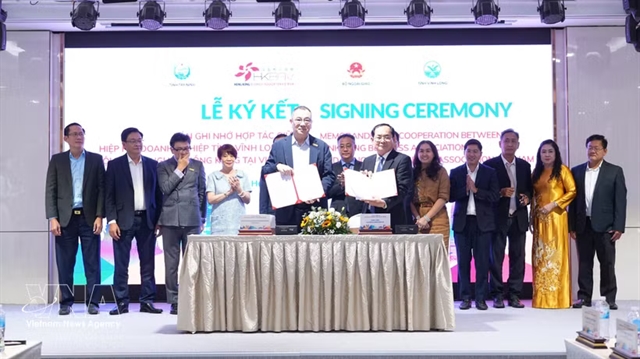
TÂY NINH — Authorities from Việt Nam’s southern provinces of Tây Ninh and Vĩnh Long, in coordination with the Ministry of Foreign Affairs and the Hong Kong Business Association Vietnam (HKBAV), held a dialogue in HCM City on Monday, seeking to draw investment, widen markets and deepen business ties.
The two provinces used the forum to pitch their advantages, development plans and priority investment areas. Hong Kong companies scouted opportunities in agriculture, food processing, industry, logistics, renewable energy and supply chains.
Phạm Dứt Điểm, director of the HCM City Department of Foreign Affairs, said Việt Nam-Hong Kong (China) ties have flourished, with economy, trade, investment and tourism the standouts. Việt Nam is now Hong Kong’s second largest trade partner in ASEAN and seventh largest globally, while Hong Kong is Việt Nam’s seventh largest trade partner and fifth largest foreign investor.
He said Việt Nam is pursuing rapid, sustainable growth while keeping the macroeconomy stable amid fast, complex changes in the global economy. It is targeting double-digit growth in 2026-30, with science-technology, innovation and digital transformation as the bedrock.
Việt Nam is seeking investment in advanced technology, R&D, modern management and skilled labour, with stronger links to domestic firms, Điểm said. He called on Hong Kong companies to explore opportunities in agriculture, processing, exports, logistics, finance and high-tech, green industrial parks in Tây Ninh and Vĩnh Long. He also urged the localities to improve infrastructure, land clearance, workforce quality and the business climate to facilitate investment.
Xu Zhou, acting consul general of China in HCM City, said Hong Kong’s strengths lie in finance, trade, maritime transport, professional services and a broad international business network, making it a bridge between mainland China and global markets.
Tây Ninh and Vĩnh Long, meanwhile, have strong agricultural bases and industrial ambitions, along with a growing need to upgrade logistics and supply chain capacity. That leaves room for cooperation in agricultural processing, exports, manufacturing and infrastructure.
Xu said a growing number of Hong Kong firms have invested, launched startups and operated in southern Việt Nam in warehousing, logistics, agriculture and manufacturing. The projects have created jobs, supported local growth and used Hong Kong’s connectivity networks to carry Vietnamese products to international markets.
The Consulate General stands ready to support economic, trade, cultural and people-to-people exchanges between Hong Kong and Vietnamese localities, Xu said, urging companies on both sides to play to their complementary strengths, pinpoint specific opportunities and turn discussions into projects.
Tây Ninh and Vĩnh Long, for their part, named wider international cooperation, quality investment attraction and better competitiveness as priorities for their new growth phase.
Đặng Văn Chính, standing vice chairman of the Vĩnh Long provincial People’s Committee, said the province aims to become a marine economy and renewable energy export hub in the Mekong Delta. It is prioritising green agriculture, deep processing, industrial park infrastructure, logistics, renewable energy and trade.
Vĩnh Long’s exports to Hong Kong reached US$8.9 million last year, up 14 per cent from a year earlier, and totaled $8.2 million in the first nine months of this year, up 22.94 per cent. Main products were footwear, apparel, seafood, coconut water and coconut milk.
According to Chính, trade remains small relative to the local potential. Vĩnh Long wants direct links with Hong Kong importers, distributors and service providers to widen consumer markets and advance trade finance, payment services and e-commerce.
The province also seeks partners to develop raw-material zones and upgrade preservation, processing, packaging and traceability, as well as investment in logistics hubs, cold storage and distribution systems. In energy, it is looking for capital for nearshore and offshore wind power and green projects tied to technological innovation and digital transformation.
To back those goals, Vĩnh Long pledged an open, transparent and stable investment environment, public disclosure of planning information, project lists and land-access conditions, faster administrative reform and hands-on support for investors from site survey through project launch.
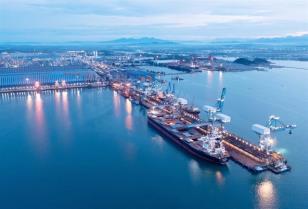
Trương Thanh Liêm, vice chairman of the Tây Ninh provincial People’s Committee, said the local geographical location, border gate system and links to Long An International Port give it an edge in industry, logistics, border gate economy and trade with Cambodia and ASEAN.
Tây Ninh’s economy topped $14 billion last year, and its gross regional domestic product (GRDP) grew 10.3 per cent in the first nine months of 2026. The province has attracted more than 2,100 foreign direct investment (FDI) projects from 50 countries and territories, with registered capital above $27 billion.
It targets annual GRDP growth of 10-10.5 per cent through 2030, with the digital economy making up 30 per cent of output. To realise the goal, it plans to reorganise its economic space, expand its network of industrial clusters and foster links among production, urban areas, border gates and ports.
Priority sectors include electronic components, semiconductors, precision engineering, agricultural processing, pharmaceuticals, medical equipment and biotechnology, along with urban development, trade, services, logistics, ecotourism, spiritual tourism and high-tech agriculture. The province also plans to diversify energy supply, develop renewables and step up cooperation on quality workforce training.
Tây Ninh pledges to support investors from initial scouting through project rollout and operation, supply information on planning and investment sites, guide them through procedures and work to clear obstacles in line with regulations, Liem said.
HKBAV Chairman Michael Chiu Kam Kwong said Tây Ninh and Vĩnh Long each have distinct strengths and opportunities, while Hong Kong offers international connectivity, financial capacity, logistics capabilities and professional services. Pairing them would open practical opportunities in trade, investment, food processing, infrastructure and supply chains.
Chiu said he hopes the dialogue will help companies find suitable partners, share information and build long-term ties. HKBAV will keep acting as a bridge, helping Hong Kong and Vietnamese enterprises expand their networks and tap opportunities in global and regional markets.
Tây Ninh and Vĩnh Long hope that the dialogue will deepen ties with Hong Kong companies and turn their advantages in location, raw materials, industry and energy into concrete projects. The goal is to widen markets, add value to products and support greener, more sustainable growth. — VNA/VNS