Tây Ninh transport firms seek relief amid fuel price volatility
Rising fuel prices in recent months have placed mounting pressure on businesses and households, with impacts spreading across multiple sectors of the economy.
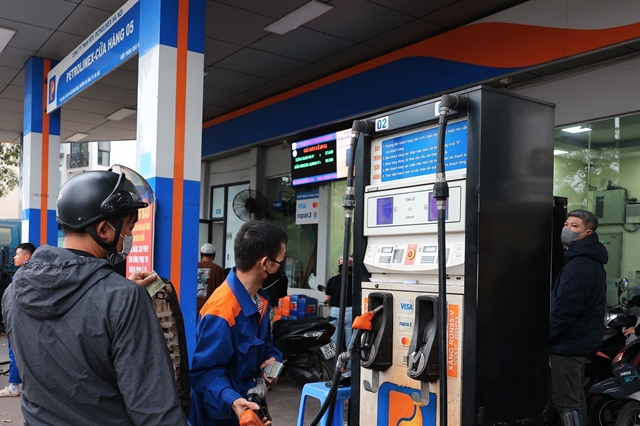
TÂY NINH — Rising fuel prices in recent months have placed mounting pressure on businesses and households, with impacts spreading across multiple sectors of the economy.
In Tây Ninh Province, industries ranging from transport to construction and daily consumption are grappling with higher input costs, eroding business efficiency and prompting urgent calls for flexible and coordinated policy responses.
The transport sector has been among the hardest hit, as fuel costs directly influence operating expenses.
Nguyễn Văn Hạnh, a driver on bus route 628 connecting Long An and Chợ Lớn, said diesel prices have surged to over VNĐ44,000 (US$1.8) per litre, while ticket fares have only risen from VNĐ30,000 ($1.2) to VNĐ38,000 ($1.5), failing to keep pace with escalating costs.
With high fuel consumption, each trip now costs approximately VNĐ1.1 million ($44), excluding other operational expenses.
On days with fewer passengers, losses are almost inevitable, forcing operators to absorb costs and maintain services despite shrinking margins.
The burden is also being felt by commuters. Nguyễn Thị Thuận, a resident in Long An ward, noted that higher bus fares have increased her daily travel expenses, even as her income remains unchanged.
Rising fuel prices have also pushed up the cost of essential goods, from food to household necessities, placing additional financial strain on workers.
In freight transport and logistics, cost pressures are even more pronounced.
Nguyễn Ngọc Cường, director of Tân Hưng Cường Company in Tân Biên area, said fuel accounts for a significant share of total transport costs, meaning each price hike directly reduces profitability.
Beyond fuel, businesses are also facing higher expenses for maintenance, labour and warehousing.
Maintaining stable supply chains while keeping prices competitive has become increasingly challenging.
To cope, many firms have adjusted service prices in a flexible manner while attempting to share the burden with customers to retain contracts.
At the same time, they are implementing efficiency measures such as optimising transport routes, reducing empty runs and applying digital technologies to improve fleet management and save fuel.
Nguyễn Hoàng Vũ, representing Ưu Việt Transport Trading Import Export Company in Mộc Bài Border Gate Economic Zone, said fluctuating fuel prices and rising input costs have significantly narrowed profit margins.
The company has responded by adjusting freight rates cautiously and enhancing operational efficiency through route optimisation and technology adoption.
Passenger transport operators are facing similar challenges.
Nguyễn Thị Mai Trâm, director of Thảo Kim Ngân Company, said fuel costs now account for a large proportion of total operating expenses.
Each increase in fuel prices pushes up the cost per trip, while companies must still maintain service frequency to meet travel demand.
If fuel prices continue to rise, businesses plan to further optimise operations and adjust fares gradually.
Conversely, if prices fall, they are prepared to lower ticket prices and introduce promotional programmes to stimulate demand.
Trâm also called on authorities to implement fuel price stabilisation measures or support mechanisms during periods of sharp fluctuations.
She urged simplified procedures for fare adjustments, stronger market oversight to ensure fair competition and improved access to financing for fleet upgrades.
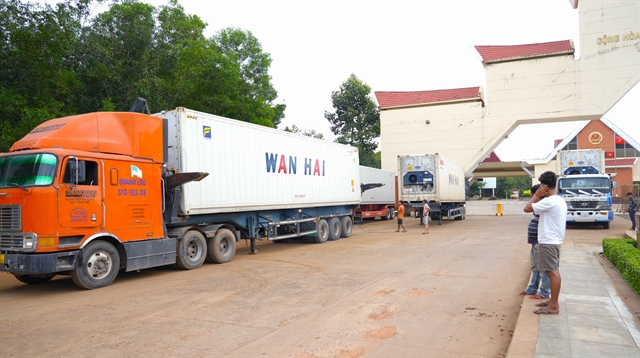
Need for coordinated and flexible policy measures
Local authorities have acknowledged the widespread impact of fuel price volatility and are proposing solutions.
Trương Văn Liếp, director of the provincial Department of Finance, said global market fluctuations have affected energy supply, driving up fuel and construction material prices.
This has directly impacted project implementation and public investment disbursement, with some key projects at risk of delays without timely intervention.
He stressed the need for coordinated solutions to stabilise prices and ensure project progress.
Strengthening market monitoring and promptly addressing speculation and price manipulation are also essential. At the same time, authorities must balance supply and demand and prioritise materials for key projects.
For non budget projects, investors are encouraged to actively monitor price changes and adjust timelines accordingly.
For public investment projects, accelerating construction progress, disbursement and site clearance remains critical.
According to Châu Thị Lệ, deputy director of the provincial Department of Industry and Trade, the province currently has a fuel storage capacity of approximately 99,850cu.m, including depots and retail stations.
At full capacity, reserves can meet demand for about 30 days.
The province has five fuel depots with a combined capacity of nearly 29,850cu.m and 845 out of 893 retail outlets in operation, with total storage of around 70,000cu.m. Monthly consumption ranges from 76,770 to 102,360cu.m, indicating that short term supply remains relatively stable.
However, amid ongoing volatility in global energy markets, authorities emphasised the importance of stronger coordination across sectors in price management and supply regulation.
For businesses, proactive adaptation, operational restructuring, improved management efficiency and greater use of technology are seen as key to enhancing resilience. — VNS