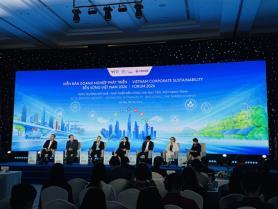
Tây Ninh advances green, smart manufacturing
Tây Ninh Province is promoting green production and digital transformation to improve industrial efficiency and strengthen competitiveness amid rising environmental standards.
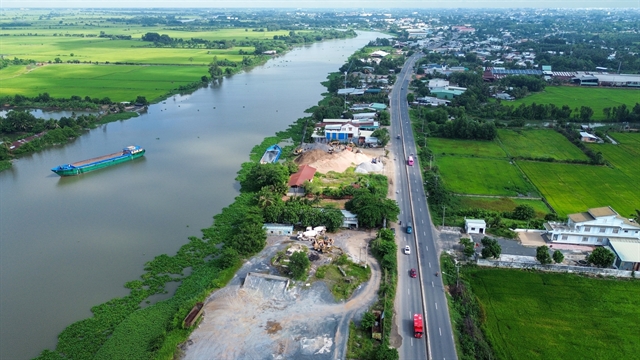
TÂY NINH —Tây Ninh Province is promoting green production and digital transformation to improve industrial efficiency and strengthen competitiveness amid rising environmental standards.
The expansion of industrial space is creating new growth opportunities for Tây Ninh, while requiring businesses to adopt more efficient and sustainable production models.
As markets tighten standards on emissions, energy use and traceability, modern factories must combine technological innovation with effective resource and environmental management.
The province aims for average annual economic growth of 10-10.5 per cent in 2026-30, with industry and construction accounting for 55-56 per cent of its economic structure by 2030.
Under its environmental protection plan for the period, Tây Ninh targets an 8-9 per cent reduction in greenhouse gas emissions and aims to ensure that all industrial parks and clusters have centralised wastewater treatment systems meeting environmental standards.
It also plans to develop at least three eco-industrial parks and one green industrial park by 2030.
According to Trương Tấn Sơn, director of the provincial Department of Industry and Trade, about 40 per cent of industrial establishments are expected to adopt green production practices, while 70-75 per cent of industrial enterprises are expected to implement energy-saving and efficiency solutions during 2026-30.
Businesses are responding through automation, digital data management, traceability and energy optimisation.
Trần Bỉnh Kha, head of the representative office of Kyouwa Vietnam Co Ltd, said automation had reduced labour requirements in some pre-treatment processes from six to eight workers to one or two.
Automated packaging systems had also helped reduce labour requirements by 60-70 per cent and minimise material losses.
At Sato Vietnam Solutions Co Ltd, systems linking machinery with printing equipment, barcode scanners and QR-code readers record production data in real time, including raw material quantities, lot numbers, product codes and pallet codes.
According to sales director Yuki Aoyagi, the data is standardised under GS1 Digital Link to support traceability.
Felix Chan, head of Sustainable Digital Technology and leader of the East Asia Decarbonization, Climate and Sustainability Expert Network, said digitalised operating systems could help businesses adjust energy consumption to actual demand. Optimising chiller and HVAC systems, he said, could reduce electricity consumption by about 10 per cent.
Smarter industrial infrastructure
The transition towards green production is also changing the requirements for industrial park infrastructure.
Investors are increasingly looking beyond land, utilities and transport to consider clean energy, environmental management, digital systems, automation and supply-chain connectivity.
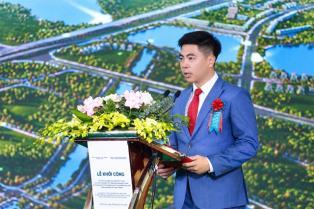
Lê Văn Hẳn, chairman of the Tây Ninh People's Committee, has stressed that industrial development must be linked to green transformation, technological innovation and digital transformation to achieve sustainable growth, higher added value and stronger competitiveness.
Long Hậu Industrial Park, in Cần Giuộc Commune, Tây Ninh, is developing towards a green and smart model based on green growth and digital transformation.
Its environmental management system operates under ISO 14001:2015, while green space accounts for about 17 per cent of the park's area.
The operator has also invested in centralised wastewater treatment, water supply and solar energy solutions, and developed factory buildings to meet LEED standards.
The park is deploying Internet of Things-based management platforms, cameras and sensors to monitor environmental conditions in real time. It plans to expand monitoring of energy use, environmental data and ESG indicators across the park.
Bùi Lê Anh Hiếu, director of marketing and business development at Long Hậu Corporation, said investors were increasingly interested in infrastructure capable of supporting automated production, digital data systems and emissions-reduction standards.
For Tây Ninh, the task is not only to expand industrial space but also to improve its quality through greener, smarter and more connected production. — VNS