Businesses key to Việt Nam’s sustainable growth ambitions
As Việt Nam seeks to achieve double-digit economic growth while ensuring long-term sustainability, businesses are under growing pressure to improve productivity, strengthen governance and turn investment in technology and innovation into tangible economic value.
As Việt Nam seeks to achieve double-digit economic growth while ensuring long-term sustainability, businesses are under growing pressure to improve productivity, strengthen governance and turn investment in technology and innovation into tangible economic value. Ahead of Vietnamese Entrepreneurs’ Day on October 13, business leaders spoke with Việt Nam News reporters Vũ Hoa, Mai Linh and Ly Ly Cao about how enterprises can help drive high-quality growth, strengthen competitiveness and contribute to the country’s sustainable development.
Nestlé Vietnam Chairman and CEO Binu Jacob
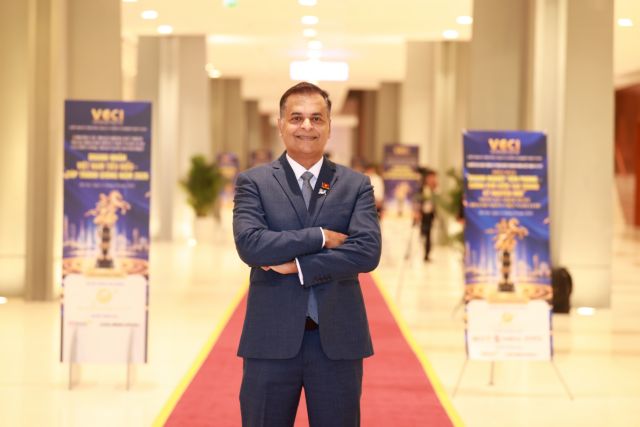
For FDI enterprises to contribute to Việt Nam’s goal of achieving double-digit economic growth while ensuring sustainable development, I believe we need to move beyond the misconception that growth and sustainability are competing priorities. In fact, the two can reinforce each other. Sustainability often starts with operational efficiency – using less water, energy and raw materials while reducing waste. This is not simply a compliance cost, but also an opportunity to save resources, improve productivity and reduce long-term risks.
Another important contribution FDI enterprises can make is developing personnel and enhancing people’s capabilities. We can also help build an ecosystem in which foreign-invested companies work not only with one another, but also alongside domestic small and medium-sized enterprises to strengthen their capabilities and competitiveness.
Beyond capital, FDI enterprises can bring technology, expertise and international experience to Việt Nam. This can help domestic businesses grow and create a stronger foundation for sustainable economic development.
At this stage, we have made several strategic choices.
First, during the COVID-19 pandemic, when many businesses were scaling back their operations, we decided to continue investing. Over the past five years, Nestlé has invested US$500 million to expand its production capacity, including at our coffee factories. As a result, our coffee exports have more than tripled over the past four years.
We are also focusing on promoting regenerative agriculture to help secure a high-quality, sustainable supply of coffee.
Finally, we have expanded our exports to 44 countries. By investing in deeper processing and expanding our international markets, we aim to increase the value of Vietnamese coffee beans and ensure that more of that value stays in Việt Nam.
Eximbank CEO Phạm Thị Huyền Trang

Businesses play a critical role in helping Việt Nam achieve high and sustainable economic growth. In my view, this requires progress across three key pillars: strengthening internal capabilities, enhancing corporate governance and actively contributing to improvements in the business environment.
First, businesses must strengthen their internal capabilities through higher productivity and continuous innovation. This requires long-term investment in technology, workers and research and development, which will enable companies to build technological expertise and deliver greater value to customers. Improved productivity not only supports more efficient growth and higher employee incomes, but also helps reduce pressure on natural resources, contributing to more sustainable development.
Companies must also strengthen corporate governance and foster a corporate culture. As firms expand, their governance systems must evolve, with greater emphasis on financial transparency, risk management, talent development and responsible business practices. Strong governance enables businesses to use capital efficiently, build trust and remain resilient in the face of uncertainty.
Next, businesses should engage more actively in public–private dialogue and contribute to improving the institutional framework. Drawing on their practical experience, companies can help identify regulatory barriers, propose workable solutions and participate in piloting new business models within applicable legal frameworks. Constructive engagement between the public and private sectors can help build a more transparent and predictable business environment that promotes fair competition, encourages innovation and supports long-term investment.
Việt Nam’s sustainable growth depends on the ability of businesses to continuously improve their capabilities, strengthen governance and work alongside the Government to create a more enabling business environment.
By advancing these three pillars together, businesses can achieve stronger and more sustainable growth while creating lasting value for customers, employees and the wider economy.
HEINEKEN Việt Nam Senior Director of Corporate Affairs James Crampton
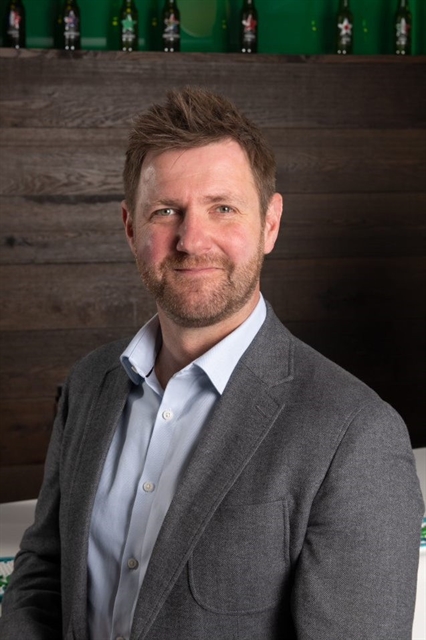
I believe foreign-invested enterprises can contribute to Việt Nam’s goal of achieving double-digit economic growth while ensuring sustainable development by investing in local capabilities, developing domestic suppliers and talent, driving innovation and creating value across the entire value chain.
At HEINEKEN Việt Nam, we believe that businesses can only succeed when Việt Nam succeeds. Over the past 35 years, we have made sustainability central to our business and production activities, recognising that it can help improve efficiency, promote innovation and lay the foundation for long-term, high-quality growth. Through our global EverGreen 2030 strategy, we place sustainability and responsibility alongside financial targets, focusing on responsible consumption, the environment and society.
Our approach is reflected in our continued investment in technology, automation and resource optimisation, which enables our breweries to increase capacity, operate more efficiently and reduce environmental impacts. Equally important is building local capabilities. At our Vũng Tàu brewery, Vietnamese teams have developed the expertise to independently operate, maintain and upgrade advanced systems. In 2025, our teams also contributed 28 new water and energy efficiency practices to HEINEKEN’s global network.
We also aim to create value throughout the domestic economy. In 2025, HEINEKEN Việt Nam spent nearly VNĐ22 trillion procuring goods and services from local businesses, contributed the equivalent of 0.5 per cent of national GDP and paid more than VNĐ27 trillion in taxes. For every direct job at our company, another 58 indirect jobs are supported across the economy.
Beyond our operations, partnerships with Government agencies, WWF Việt Nam and local partners in water conservation demonstrate how businesses can work with stakeholders to address environmental challenges and support national development priorities.
Ultimately, high-quality FDI is about more than production and investment capital. It is about building capabilities in Việt Nam, empowering local partners and helping the entire business ecosystem grow. We believe economic growth and sustainable development can go hand in hand, contributing to Việt Nam’s long-term prosperity.
CMC Corporation Chairman Nguyễn Trung Chính
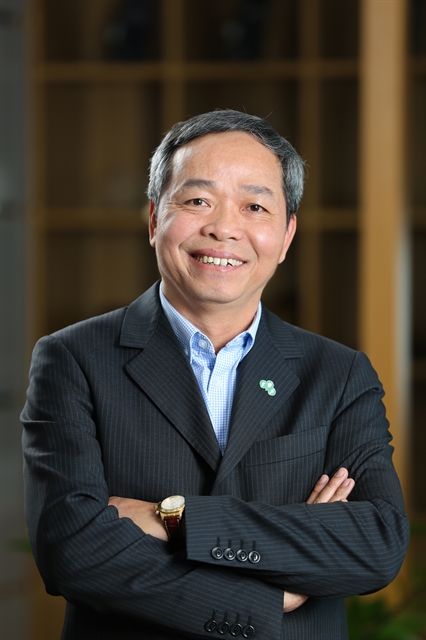
Vietnamese businesses need to shift their focus from expanding in size to strengthening technological capabilities, fostering innovation and creating tangible value for customers, partners and the wider economy. Growth should be measured not only by business scale or financial performance, but also by contributions to productivity, digital transformation and Việt Nam's competitiveness.
For technology companies, this means mastering core technologies and developing products and solutions researched and developed by Vietnamese engineers, while strengthening their ability to compete internationally.
At CMC Corporation, we are pursuing this direction under the 'Make in Vietnam – Made by CMC' approach, with AI as a central growth driver and the ambition of becoming a global AI-X enterprise. We are developing Vietnamese-owned AI products, platforms and solutions while investing in digital infrastructure, strategic technologies and research and development (R&D).
These efforts aim to meet the digital transformation needs of domestic and international organisations, create higher-value products and services and enable Vietnamese technology companies to participate more deeply in global value chains.
As scientific and technological advances accelerate, businesses cannot rely solely on their existing advantages. They must anticipate emerging trends, strengthen R&D capabilities and progressively master, develop and commercialise their own technologies rather than depend exclusively on solutions developed elsewhere. Technology investment should be directed towards practical business needs and deliver measurable value to customers and the wider economy.
At the same time, technological progress must go hand in hand with investment in people. High-quality workers are essential to developing and applying technology effectively. Businesses thus need to strengthen corporate governance, attract and develop skilled personnel, encourage creativity and collaboration, and build a shared commitment to long-term goals. International cooperation is also important in expanding technological capabilities, accessing expertise and improving competitiveness. A strong workforce, effective management and a culture of innovation enable enterprises to turn technological investment into practical outcomes.
Beyond their own commercial performance, businesses have a responsibility to contribute to the country's development. By integrating technology into production and business operations, developing solutions that address real market demands and improving productivity and value creation, Vietnamese enterprises can help make innovation a driver of sustainable growth through 2030.
Trần Quốc Bảo, deputy general director of Hateco Group and general director of Đông Anh Trading and Services JSC
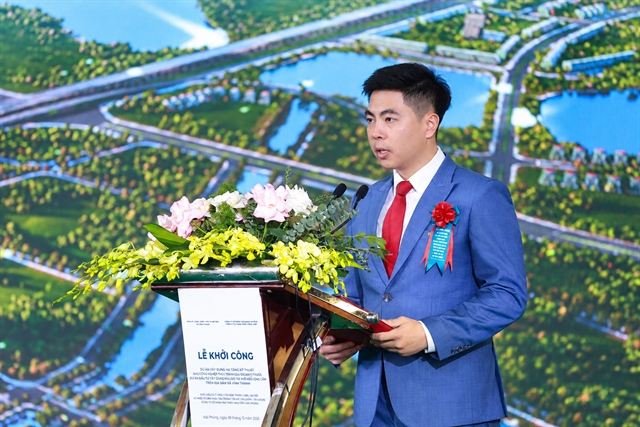
Achieving double-digit economic growth is not just a numerical target, but a statement of Việt Nam’s ambition and determination to reach new heights. Delivering rapid and sustainable growth requires the business community to look beyond profits and take greater responsibility for the country’s development.
Businesses can contribute in different ways depending on their size and capabilities. Small and medium-sized enterprises can focus on niche markets, digital transformation and quality job creation, while larger companies should invest in key economic sectors and infrastructure.
Việt Nam’s advantages include its workforce, improving digital infrastructure, natural resources and long coastline, which offers potential for maritime trade. At Hateco, these factors have shaped our investments in real estate, industrial parks, seaports and logistics.
Our projects include the Bắc Tiền Phong Industrial Park, developed with Belgium’s DEEP C Group, berths 5 and 6 at Lạch Huyện port in Hải Phòng, and port projects in Đà Nẵng and Quảng Ninh. Such investments can help strengthen supply chains and support the development of trade infrastructure.
I believe businesses need to focus on three priorities.
First, investment should take a long-term view rather than prioritising short-term returns. Infrastructure, logistics and technology require substantial resources and time, but can generate broader economic benefits.
In real estate, Hateco is developing Intercentral, a 43.ha urban project in Hà Nội’s Vĩnh Thanh Commune. Planned around a transit-oriented development (TOD) model, it aims to integrate urban living with public transport while supporting construction, services and employment.
Second, innovation requires transparent management and international standards. Businesses should digitalise their operations and improve financial and operational transparency to strengthen their ability to work with international partners.
Hateco has worked with global logistics group AP Moller–Maersk and partnered with Nasdaq-listed EHang Holdings to explore an unmanned aerial vehicle ecosystem in Việt Nam. Such cooperation provides opportunities to learn from international experience and improve operational capabilities.
Finally, businesses must also integrate sustainability into their operations. At Bắc Tiền Phong Industrial Park, we focus on energy-efficient infrastructure for foreign investors. At Hateco Hải Phòng International Container Terminal, electrically powered cranes help reduce reliance on fossil fuels.
In urban development, the TOD model can also help ease congestion and reduce carbon emissions. Intercentral’s plan incorporates green spaces and water features, with the aim of meeting LEED and EDGE green building certification requirements.
Businesses cannot achieve sustainable growth in isolation. Their long-term contribution depends on investing responsibly, improving competitiveness and creating value that extends beyond their own operations. — VNS