Tax overhaul prompts call for simpler compliance for household businesses
The Institute of Resources and Environmental Economics has proposed restoring presumptive taxation for small household businesses to reduce compliance costs and support their transition to the new system.
HÀ NỘI — Calls to simplify tax compliance for household businesses have grown after experts proposed allowing smaller traders to continue paying tax under a simplified presumptive regime, as Việt Nam rolls out sweeping tax reforms.
This comes six months after Việt Nam scrapped the longstanding presumptive tax regime on January 1, requiring all household businesses to declare revenue and pay taxes based on actual earnings as part of a broader effort to improve transparency and modernise tax administration.
The Institute of Resources and Environmental Economics in May submitted recommendations to the Prime Minister, including a proposal to study restoring presumptive taxation for household businesses with annual revenue below VNĐ5 billion (US$190,000) to reduce compliance costs and ease the transition to the new system.
Deputy Prime Minister Nguyễn Văn Thắng has recently asked the Ministry of Finance to study the recommendations, signalling that policymakers remain open to feedback as the reforms are underway.
Experts remain divided on the issue. While most agree that the removal of the presumptive tax regime is necessary to improve transparency and fairness, opinions differ on the pace of transition for smaller businesses.
According to Nguyễn Quang Huy from Nguyễn Trãi University's Faculty of Finance and Banking, the key issue is not whether to return to presumptive taxation, but how to build a mechanism that both minimises compliance costs for businesses and meets modern tax management requirements.
Huy said the focus should be on designing the simplest compliance mechanism and called for simplified declaration procedures supported by free software, digital tools and a gradual implementation roadmap.
"Tax policy should balance ease of compliance, fairness among businesses and effective administration while supporting economic development," he said.
Instead of restoring the old system, some experts believe Việt Nam should raise revenue thresholds for tax exemption and simplify compliance rules under the current framework.
“Rather than reverting to presumptive taxation, it is better to address existing bottlenecks directly,” said lawyer Nguyễn Văn Được, director of Trọng Tín Accounting and Tax Consulting Company.
He said that revenue thresholds could be adjusted to better reflect business realities and reduce administrative pressure on small businesses.
For example, the current VNĐ1 billion revenue threshold could be reviewed and increased to VNĐ3 billion or VNĐ5 billion. The exemption threshold for household businesses to calculate tax based on revenue minus expenses could also be raised from current VNĐ3 billion to even VNĐ10 billion to reduce compliance costs.
Được also suggested simplifying invoicing requirements. Where all transactions are made through bank transfers and tax authorities can monitor payment flows, businesses could be allowed to issue consolidated invoices at the end of each day instead of separate invoices for every transaction, he said.

Nguyễn Ngọc Tịnh, vice chairman of the HCM City Tax Consultants and Agents Association, said any proposal to raise the revenue threshold should be supported by detailed data, including how many household businesses fall below or above any proposed threshold and assessing the impact on State budget revenue before making policy changes.
Tịnh also said that different sectors should not be subject to the same revenue threshold because trading, manufacturing and service businesses operate with significantly different profit margins.
Revenue alone would not reflect a household business's actual income, he stressed, adding that a business generating VNĐ1 billion in annual revenue may earn only about VNĐ150 million after deducting operating costs, leaving relatively modest disposable income for a family-run business.
Lê Văn Tuấn, director of Keytas Tax Accounting Co., said the transition period had been too short, adding that household businesses needed to be given more time to adapt.
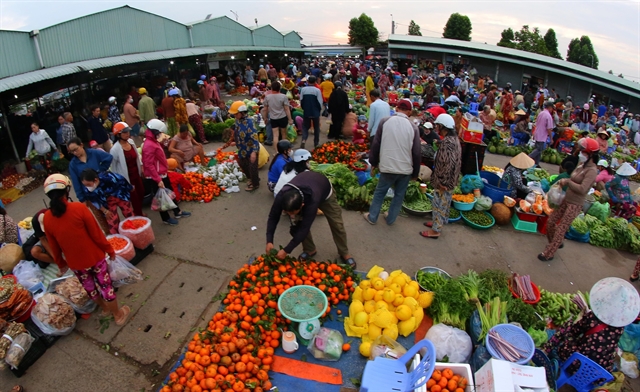
Tuấn suggested allowing the presumptive tax regime for certain sectors, such as street vendors and traders at traditional wet markets.
He also proposed gradually narrowing eligibility by lowering revenue thresholds and limiting eligible sectors as electronic invoicing and cashless payments become more widespread.
For other sectors, declaration-based taxation should remain the long-term approach, but household businesses should be given more time to adapt, Tuấn said.
He suggested allowing household businesses in 2026 and possibly 2027 to choose whether to calculate tax based on a percentage of revenue or profit, before making profit-based taxation mandatory for businesses with annual revenue of VNĐ3 billion or more.
In the longer term, policies should encourage household businesses to voluntarily transition into formal enterprises rather than relying solely on incentives, he said.
Tuấn proposed introducing personal tax allowances for household businesses and applying progressive tax rates of 5-35 per cent on profits to ensure greater fairness.
Mai Sơn, deputy head of the Department of Taxation under the Ministry of Finance, recently said that the tax authorities would continue to review and refine the policy to make compliance easier for taxpayers. — VNS