


The success of the fourth Partnership for Green Growth and the Global Goals 2030 (P4G) Summit demonstrated the value of multilateral cooperation in advancing green transformation and sustainable development, said Prime Minister Phạm Minh Chính.
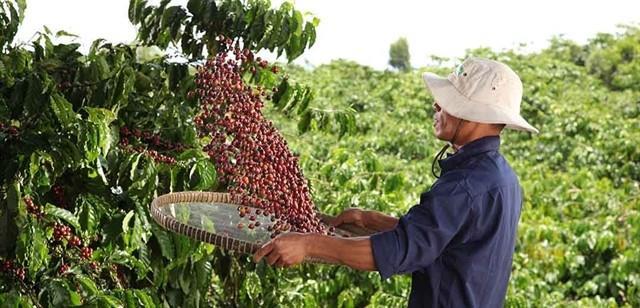
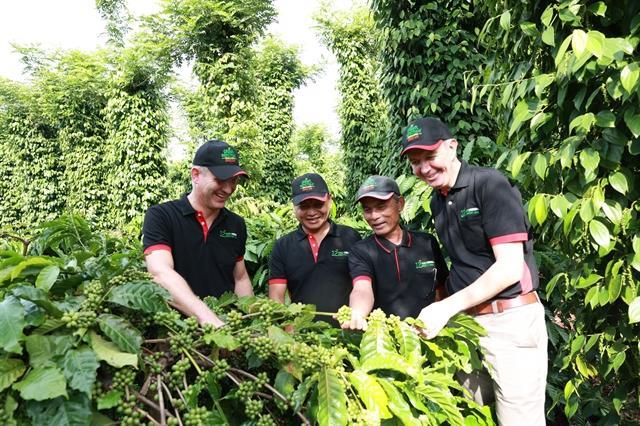
The adoption of regenerative agricultural practices has improved productivity and reduced greenhouse gas (GHG) emissions, according to second NESCAFÉ Plan 2030 progress report released by NESCAFÉ - the largest coffee brand of Nestlé Group and one of the world''s favourite...
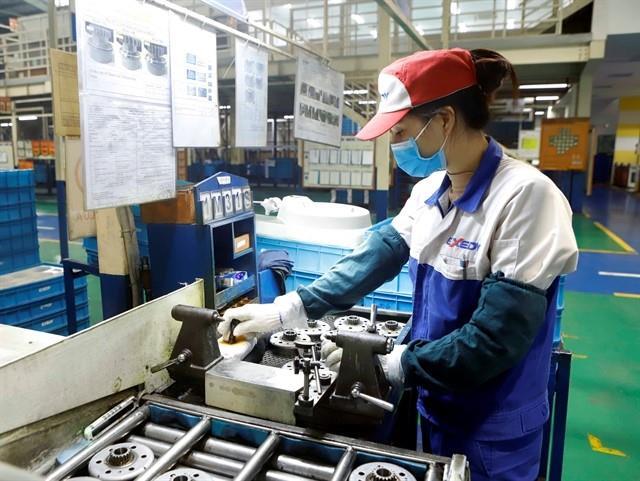
According to the Việt Nam Association of Supporting Industries (VASI), Vĩnh Phúc now has 16 domestic enterprises becoming tier-1 suppliers in the supply chains of electronic products, automobiles and motorbikes of FDI companies in Việt Nam.
Minister of Planning and Investment Nguyễn Chí Dũng discusses the pivotal role of three strategic breakthroughs - institutions, infrastructure, and human resources - in Việt Nam''s vision to become a developed country with high income by 2030 and 2045.
The transformation of traditional industrial parks into sustainable green ones is achieved by promoting green production, efficient use of resources, and exchanging energy and by-products among enterprises within the parks.
As Viet Nam is integrating into the global economy, and becomes a member of the World Trade Organisation (WTO), ASEAN, and the Asia-Pacific Economic Cooperation (APEC) forum, as well as new-generation free trade agreements, the country has to observe stringent...
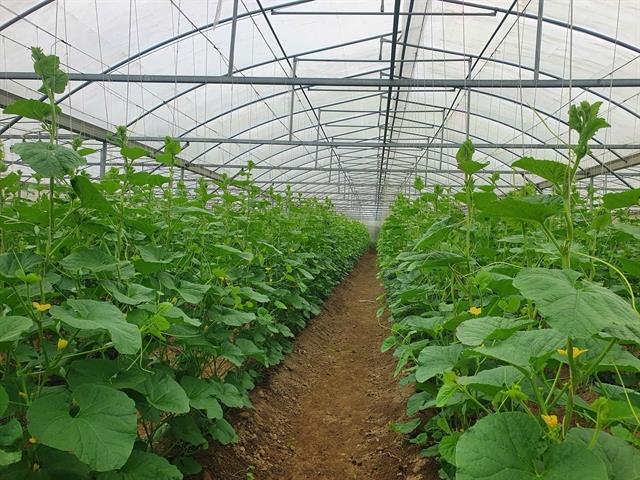
Regenerative agriculture is a farming system that aims to conserve and restore farmlands and eco-systems, and is vital for combating climate change, according to Nestlé Group, which has identified the practice as a key part of its net zero roadmap.
We do not consider Viet Nam as a mere trading partner, but as a reciprocal and complementary economic partner. We are committed not to change our beliefs about Viet Nam as well as our investment strategy.
NESCAFÉ, Nestlé’s largest coffee brand, will invest over one billion Swiss francs (over US$1 billion) by 2030 in NESCAFÉ Plan 2030, a programme to help make coffee farming more sustainable.
Viet Nam’s residential area per capita is expected to reach about 27 sq.m by 2025 and to surge to 30 sq.m by 2030, according to the draft national housing development strategy.
The Ministry of Industry and Trade (MoIT) is drafting the National Strategy on Industrial Development through 2030 with a vision to 2045 to submit to the Government in the next quarter.