Hà Nội seeks to streamline SOEs, cut total to 17 by 2030
To address those issues, the Hanoi Department of Finance has proposed restructuring SOEs during 2026-30, aiming to reduce their number to 17.
HÀ NỘI — Hà Nội plans to reduce the number of State-owned enterprises (SOEs) to 17 by 2030 and complete divestment from joint-stock companies by 2028 as part of a broader effort to build larger, more competitive firms capable of driving economic growth.
Lê Hồng Hạnh, head of the Business Registration and Corporate Finance Division under the Hanoi Department of Finance, said the city currently exercises ownership rights over 53 SOEs.
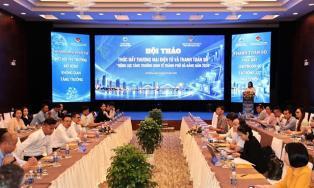
Most of the enterprises remain small, with fragmented resources, weak management capacity and limited technological capabilities, preventing them from playing a leading role in the economy during the 2021-25 period, Hạnh told a recent conference in Hà Nội.
She said obstacles involving land use, asset valuation and incomplete legal documentation had delayed the restructuring process.
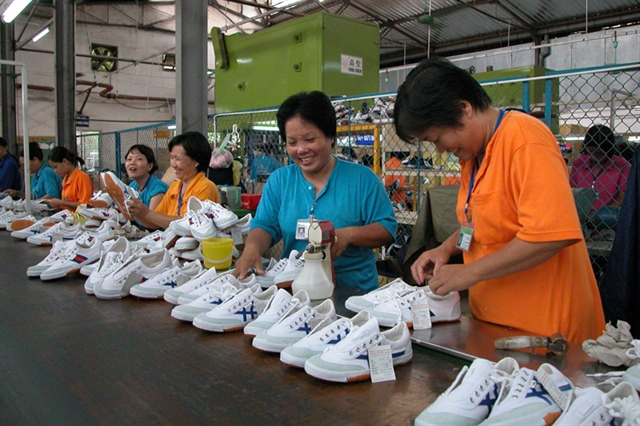
Previously, the Government's Decision No 1479 required Hà Nội to fully divest state capital from 23 enterprises. One of the completed transactions was the sale of the city's remaining stake in Thuong Dinh Footwear Co at the end of 2025.
However, many others such as Hanoi Book Co, Tran Phu Electric Mechanical Co and Thuy Khue Shoe, continued to face challenges such as outstanding debts and unfinished investment projects.
To address those issues, the Hanoi Department of Finance has proposed restructuring SOEs during 2026-30, aiming to reduce their number to 17, she said.
The city has established nine principles to guide the process, including complying with legal regulations, ensuring production and business operations are not disrupted, protecting employees' rights and restructuring enterprises based on industry rather than applying a uniform approach.
Authorities also plan to resolve financial backlogs, improve transparency under market-based accounting principles and increase enterprise scale to attract strategic investors, Hạnh said.
Doãn Thanh Tuấn, deputy director of the Ministry of Finance's State-Enterprise Development Department, said decisions on whether to retain, merge or divest enterprises would be based on their ability to fulfil strategic objectives and contribute to economic development.
Under Action Programme No 09, Hà Nội expects SOEs to act as seed capital, helping mobilise private investment and other social resources to support economic development.
The city plans to concentrate SOEs in six priority areas, including green urban infrastructure, multimodal transport, energy and strategic technologies. It also targets average annual revenue and profit growth of more than 12 per cent while accelerating digital transformation and the adoption of green technologies.
The programme also calls for more efficient and transparent management of state resources, including land, natural resources, public assets, infrastructure and budget funds.
It envisages restructuring SOEs, credit institutions and public service units through leaner governance models, greater transparency and accountability, and increased operational autonomy, with socio-economic performance serving as the key measure of effectiveness.
Expert Nguyễn Minh Phong said streamlining SOEs would help eliminate overlapping administrative layers and speed up decision-making, but said restructuring should be accompanied by stronger corporate governance and clearer accountability.
Hoàng Văn Cường, former vice rector of the National Economics University, said the objective should be to build SOEs capable of competing internationally rather than simply resolving legacy problems.
Cường suggested the Government to clearly separate its roles as regulator and shareholder to avoid conflicts of interest, and classify SOEs into three groups: national defence and security, public services and market-oriented businesses.
He said State capital should be used as a strategic investment tool rather than being managed under traditional administrative approaches.
The city's restructuring plan follows broader policy changes under Politburo Resolution 79, which redefines the role of SOEs by concentrating State capital in strategic sectors rather than spreading it across a wide range of businesses.
Resolution 79 makes no attempt to hide its ambition in setting clear targets: by 2030, around 50 SOEs are expected to rank among Southeast Asia’s 500 largest companies, with one to three entering the global top 500. All SOEs are targeted to operate on fully digital platforms adhering to OECD governance standards. — VNS