Supporting industry clusters needed for global supply chains
The supporting industry clusters help SMEs shorten the time to upgrade their capabilities and significantly reduce initial investment costs.
HÀ NỘI — To enable domestic enterprises to participate in the global supply chains, supporting industries need to shift from a mindset of individual investment to a cluster model, in which shared infrastructure and services are considered key factors, experts said.
Although global orders are witnessing a change in momentum, not all Vietnamese supporting enterprises can receive them. As multinational corporations continuously raise supplier standards, advantages in low costs or simple processing capabilities are no longer sufficient to compete.
Experts say if enterprises raise standards individually or invest independently, they may still miss out on potential sales, and instead need to work together to create a supportive ecosystem.
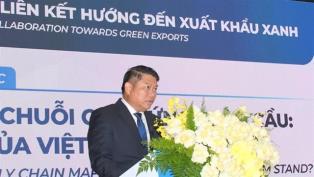
Đặng Tấn Đức, Director of the R&D Institute of Becamex Group, emphasised that the biggest bottleneck currently lies not only in individual businesses but also in the infrastructure of the entire supporting industrial ecosystem.
According to Đức, small- and medium-sized enterprises (SMEs) are simultaneously lacking four layers of infrastructure: standard production facilities; technical infrastructure such as clean electricity and wastewater treatment; digital infrastructure; and shared services such as testing, inspection, certification, and sample processing.
He argued that if each enterprise invested in all these items independently, it would be almost economically inefficient.
Đức said that many enterprises have production capacity but still fail to pass assessments by FDI clients due to a lack of standard factories, testing laboratories, or necessary certifications.
He believes a shift in mindset to a cluster investment model is required as infrastructure and shared services are considered key factors.
Đức proposed to pilot the supporting industry cluster model, which allocates land and factory space at affordable costs for SMEs, while also establishing shared R&D, testing and certification centres. When businesses can access these services at lower costs, the process of obtaining international certifications will also be faster.
More importantly, Đức believes that the supporting industry cluster will become a bridge between domestic businesses and FDI corporations. FDI enterprises will announce their component needs and technical standards. Domestic businesses will be directly connected to participate in the supply chain instead of having to search for opportunities on their own as before.
In addition, this model also supports businesses in green transformation through shared infrastructure for energy, environmental treatment and emission measurement.
“This is a direction that helps SMEs shorten the time to upgrade their capabilities and significantly reduce initial investment costs”, Đức said.
From a policy perspective, Lê Nguyễn Thiên Nga, Director of the Institute for Policy and Development Strategy Management under the Vietnam Union of Science and Technology Associations, believes that the supporting industry needs a more synchronised development environment.
It is necessary to continue improving tax, customs, investment, and trade policies to reduce compliance costs for businesses. At the same time, it is essential to effectively utilise new-generation FTAs such as CPTPP, EVFTA, UKVFTA, and RCEP to expand markets, Nga said.
Nga also proposed building a unified information portal on tax, investment, and incentive policies, helping businesses access information more quickly and transparently.
Besides, she believes that regulatory agencies also need to strengthen dialogue with domestic businesses, FDI enterprises, and international organisations to ensure policies closely align with practical needs.
To adapt to the new competitive landscape, Nguyễn Minh Tâm, head of the HCM City Department of Industry and Trade’s Industrial Management Department, recommends that supporting industrial enterprises focus on six core competencies.
These include automation and precision machining, adoption of international standards and lean manufacturing and real-time digital management. Simultaneously, businesses need to build sustainable finances, improve product design and innovation and meet ESG standards. — VNS/BIZHUB