Record H1 GDP growth provides solid foundation for double-digit target: NSO
The 8.18 per cent growth achieved in the first half is a positive result and provides an important foundation for striving to meet this year's development targets.
HÀ NỘI — The Vietnamese economy expanded at its fastest pace in more than two decades in the first six months of 2026, providing a strong foundation for the Government's ambition of achieving double-digit growth this year, although officials warned that global uncertainty continues to pose significant risks.
Gross domestic product (GDP) grew 8.18 per cent from January to June, accelerating from 7.63 per cent in the same period of 2025, according to a recent update from the National Statistics Office (NSO). The figure marked the strongest first-half expansion since the NSO began publishing comparable data in the early 2000s.
Second-quarter GDP rose an estimated 8.39 per cent year-on-year, reflecting broad-based gains across industry, construction and services.
NSO Director Nguyễn Thị Hương said the first-half performance demonstrated the economy's resilience despite continued global headwinds.
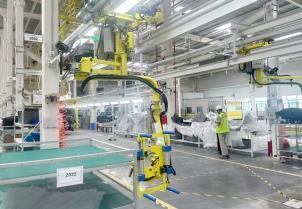
Industry and construction remained the main drivers of growth in the first six months, with the industrial sector up 9.86 per cent compared to a year earlier.
Manufacturing also increased by 10.23 per cent on-year, as export orders recovered and public investment continued to support industrial activity.
Construction grew 9.51 per cent, while electricity production and distribution rose 9.34 per cent. Mining rebounded with growth of 6.67 per cent, and water supply and waste management increased 7.72 per cent.
Agriculture, forestry and fisheries maintained steady expansion, rising by 3.57 per cent on-year as domestic food demand remained stable and agricultural exports continued to diversify into new markets.
The services sector also posted solid growth of 8.09 per cent, supported by stronger consumer spending, vibrant retail activity, transportation and tourism.
Trade remained another bright spot.
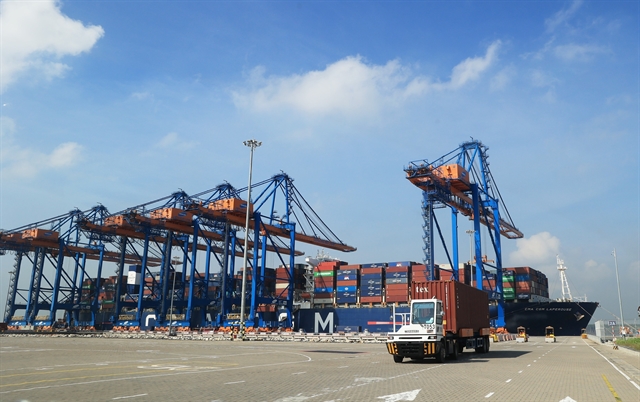
Total trade of goods reached US$549.69 billion in the first half, up 27.1 per cent from a year earlier. Exports increased 21 per cent, while imports rose 33.4 per cent.
The stronger growth in imports suggested rising demand for production inputs and reflected the continued recovery of manufacturing activity, the NSO said.
Because imports outpaced exports, Việt Nam recorded a trade deficit of $16.65 billion during the six-month period.
The US remained Việt Nam's largest export market, with shipments worth $86.5 billion, while China continued to be the country's biggest source of imports at $115.2 billion.
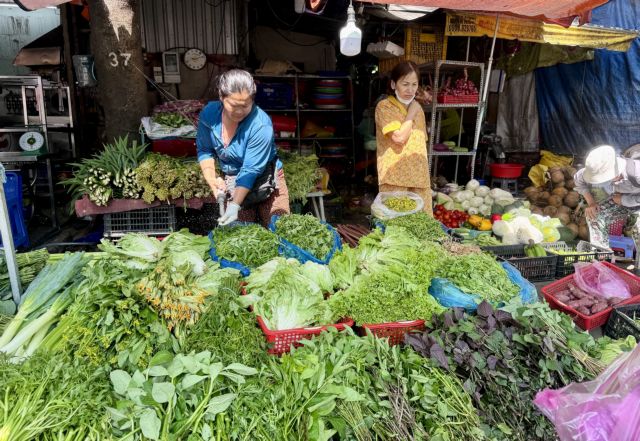
Inflation remained broadly under control despite robust economic expansion.
The consumer price index (CPI) rose 4.38 per cent in the first six months, allowing policymakers to continue pursuing growth while maintaining macroeconomic stability, the NSO said.
"The 8.18 per cent growth achieved in the first half is a positive result and provides an important foundation for striving to meet this year's development targets," Hương said.
However, Hương cautioned that the road ahead to achieve double-digit GDP growth remains challenging as external risks intensify.
The International Monetary Fund, the United Nations and Fitch Ratings have each cut their global growth forecasts by 0.2 percentage points, while the Organisation for Economic Co-operation and Development and the World Bank reduced theirs by 0.1 percentage point, forecasting global economic growth this year between 2.4 per cent and 3.1 per cent.
Despite the weaker global outlook, international organisations continue to expect Việt Nam to remain Southeast Asia's fastest-growing major economy, with growth forecasts ranging from 6.5 per cent to 7.2 per cent, compared with 4.7-5.2 per cent for Indonesia, 4.2-4.7 per cent for Malaysia, 3.2-4.4 per cent for the Philippines, 3.0-3.5 per cent for Singapore and 1.5-1.8 per cent for Thailand.
Still, as one of the world's most open economies, Việt Nam will likely continue to face the impact of unpredictable developments in the global economy, geopolitical tensions, disease outbreaks and natural disasters, Hương said.
Achieving the Government's double-digit growth target for 2026 would therefore require coordinated efforts by the Government, local authorities, businesses and the public, together with continued support from international partners.
Hương urged ministries, sectors and local authorities to strengthen economic forecasting and remain flexible in policy implementation to respond promptly to changing global conditions.
Close monitoring of global economic and political developments is critical to update growth and inflation scenarios in a timely manner, maintain flexible fuel price management and avoid simultaneous increases in State-managed prices to ease inflationary pressure.
Việt Nam should continue to speed up institutional reforms to create new development space, while enhancing regional connectivity to improve resource allocation and the effectiveness of public administration, Hương said.
As the global economy shifts towards digitalisation, artificial intelligence and green growth, Việt Nam should seize the opportunity to move up the value chain and restructure its economy to meet evolving international market requirements, she added.
With sustained economic growth and rising income levels, Việt Nam has been reclassified as an upper middle-income country by the World Bank. The nation’s gross national income per capita reached $4,970 in 2025, exceeding the institution’s $4,636 threshold for upper middle-income economies.
The NSO said the World Bank's reclassification reflected years of sustained economic growth and rising incomes, but should not be interpreted as the country having become a developed economy.
Việt Nam still needs to improve labour productivity and strengthen its competitiveness, while deepening international integration, attracting higher-quality investment and moving further up global value chains.
It must also accelerate the transition from a growth model based on capital and labour to one driven by science, technology and innovation. — VNS