Supervision mechanisms, operational standards critical for piloting crypto asset market
While digital assets are widely viewed as a promising sector that could contribute to economic growth, concerns remain among investors about transparency and safety in a transitional regulatory environment.
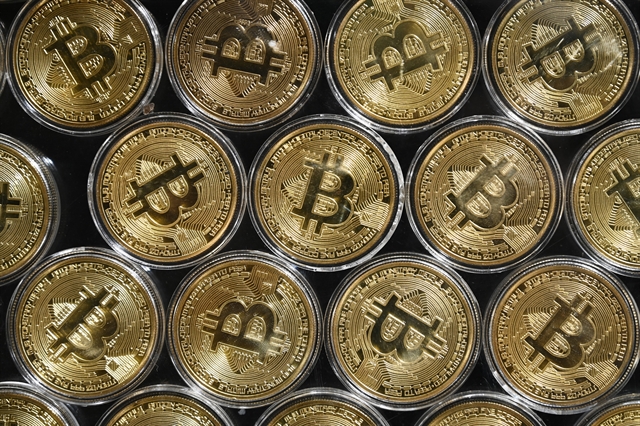
HÀ NỘI — Việt Nam is moving cautiously to pilot a regulated crypto asset market, as experts warn of significant risks posed by weak oversight and call for clear supervision mechanisms and operational standards.
Phan Đức Trung, president of the Vietnam Blockchain and Digital Assets Association (VBA), said the market is highly sensitive to macro-economic fluctuations and investor sentiment.
While digital assets are widely seen as a sector that could support economic growth, concerns remain over transparency and safety in a transitional regulatory environment, Trung said.
He noted that major global exchanges and financial institutions are awaiting clearer policy signals and concrete steps from Việt Nam to participate in the country’s US$200 billion digital asset market.
“Developing a digital asset market presents both opportunities and challenges for regulators, businesses and investors,” he said.
“However, if an appropriate regulatory framework is established, the sector could become an important driver of economic growth while strengthening market confidence.”
Hoàng Ngọc Bách from the Department of Cybersecurity and High-Tech Crime Prevention (A05) under the Ministry of Public Security warned that the lack of comprehensive regulation has created significant risks.
Authorities have uncovered numerous fake exchanges and investment schemes designed to lure investors before misappropriating their funds, while the anonymity of cyberspace makes tracking offenders difficult, he said.
As Việt Nam considers domestic crypto exchanges, effective mechanisms must be put in place from the outset to protect investors, Bách said.
Licensed exchange operators will need robust technology systems capable of preventing cyberattacks and ensuring high-level information security.
He added that exchanges should verify the source of investment funds, as current regulations do not clearly determine the legality of capital flows, leaving a gap that could facilitate money laundering.
Drawing on experience from developed markets such as the US and Europe, Bách emphasised that building a comprehensive legal framework is essential, with policies carefully adapted to Việt Nam’s conditions.
He also urged all stakeholders to participate, advising investors to equip themselves with sufficient knowledge and exchanges to adopt transparent operating procedures.
A capability test
Regulatory supervision provides the foundation, but technology infrastructure and skilled personnel will determine how digital asset exchanges operate.
Tô Trần Hòa, deputy head of the Crypto Asset Market Management Board under the State Securities Commission (SSC), said operational capacity will be assessed alongside charter capital and shareholder structure, including the quality of technology systems, management experience and transparency.
“This is a new market with many potential risks, so regulators will adopt a cautious, step-by-step approach,” Hòa said.
He also stressed the importance of separating customer assets from those of the exchange, describing it as a fundamental safeguard for investors even if a platform ceases operations.

From a technical perspective, Nguyễn Lê Thành, founder of cybersecurity firm Verichains, said requiring crypto exchanges to meet Level-4 information security standards is necessary. By comparison, stock exchanges currently require Level-3 security.
He stressed that system security should not be seen merely as obtaining certification but as a continuous operational process involving real-time monitoring, regular testing and rapid incident response.
“The biggest risks often do not come from external attacks but from internal systems and the connection points between blockchain environments and an exchange’s operational infrastructure,” Thành said.
Đoàn Mai Hạnh, chief executive of Techcom Crypto Exchange (TCEX), one of the potential candidates for the pilot programme, said the biggest challenge in the preparation stage is not only technology but also human resources.
“The market currently lacks personnel who combine financial expertise with blockchain technology knowledge, which is essential for safe and compliant operations,” Hạnh said.
Building investor trust
Lê Sỹ Nguyên, director of Bitget Việt Nam, said key factors that would encourage Vietnamese investors to trade on domestic exchanges include strong liquidity, a user-friendly trading experience, diversified products and robust security.
He stressed that systems must operate stably from day one, noting that even minor technical incidents could quickly erode investor confidence and take a long time to rebuild.
Hoàng Quảng Minh from Marketing Web3 said Vietnamese exchanges could learn from international platforms but should not attempt to replicate them entirely.
“Domestic exchanges should position themselves as the most suitable option for local users, leveraging their understanding of the Vietnamese market, their connections with the domestic banking system and the country’s legal framework,” Minh said.
According to Trung, building investor confidence will be one of the biggest challenges during the pilot phase.
Exchange operators will need to maintain transparent business models, provide guidance to investors on risk management and develop suitable product ecosystems to attract users, he said.
To date, five of seven applications to participate in the pilot crypto asset exchange have been deemed complete and valid, including VIX Crypto Asset Exchange, Lộc Phát Việt Nam Crypto Asset Exchange, Vietnam Prosperity Crypto Asset Exchange, Techcom Crypto Asset Exchange and Vietnam Digital Assets. — VNS