Strategy promotes sustainable growth of dairy processing industry
The strategy aims to build a sustainably developed dairy processing industry with a complete value chain, from dairy herd development and increased raw milk output to high value-added processed products.
HÀ NỘI — Deputy Prime Minister Bùi Thanh Sơn signed Decision No. 309/QĐ-TTg on February 23, approving the Strategy for Dairy Industry Development through 2030, with a vision to 2045.
The strategy aims to build a sustainably developed dairy processing industry with a complete value chain, from dairy herd development and increased raw milk output to high value-added processed products.
The industry is expected to largely meet rising domestic demand while integrating more deeply into regional and global dairy value and supply chains.
Growth targets through 2045
Under the strategy, by 2030, the dairy industry is projected to grow by 12–14 per cent annually. Processed liquid milk output is expected to reach about 4.2 billion litres per year, while domestic fresh milk production is forecast at roughly 2.6 billion litres, meeting 60–65 per cent of processing demand.
Milk powder output is projected to grow by 7–8 per cent annually to around 245,000 tonnes, with per capita milk consumption reaching 40 litres per year.
By 2045, the industry is expected to grow by 5–6 per cent annually. Processed liquid milk output is projected at approximately 9.7 billion litres, domestic fresh milk production at about 8 billion litres, meeting 80–85 per cent of processing demand.
Milk powder output is forecast at around 415,000 tonnes, while per capita milk consumption is targeted at about 100 litres per year.
The strategy prioritises building a dairy farming chain that ensures disease safety and food safety in line with international standards. It seeks to expand the domestic dairy herd to capitalise on Việt Nam’s agricultural strengths, increase domestic raw milk supply and gradually reduce reliance on imports.
Dairy herd development will be promoted through large-scale farms combined with cooperative and household-based farming, in line with agricultural and rural modernisation goals.
Product diversification will go hand in hand with improvements in quality, design and packaging. The strategy encourages the application of digital technologies, blockchain and AI in herd management, traceability and distribution to boost productivity, quality and economic efficiency, while increasing the share of high value-added dairy products.

Promoting high-value, innovative products
Market research will be strengthened alongside the development of ingredients and additives for the dairy industry, supporting new products aligned with consumer preferences and global trends.
Priority will be given to high value-added dairy products, including formula milk tailored to different life stages and specialised consumer needs. School milk programmes will use only fresh milk, with priority for disadvantaged areas, poor children and ethnic minority students.
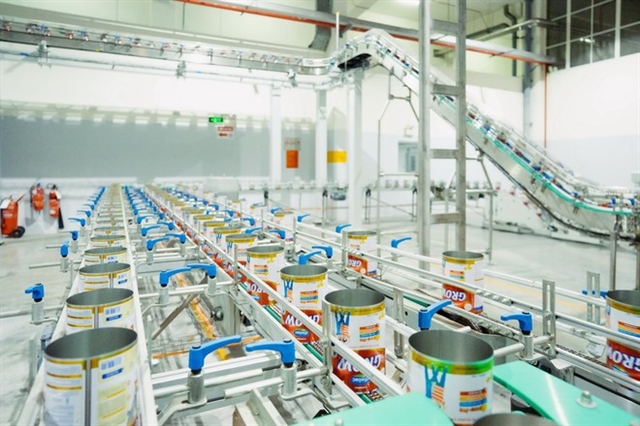
The strategy also promotes innovation and investment in advanced, automated production lines with low energy and material consumption, high efficiency and environmental friendliness across the entire dairy value chain.
Developing large-scale dairy enterprises
Enterprises are encouraged to expand dairy herds, increase raw milk output and enhance processing capacity through upgrading existing projects and investing in modern, highly automated technologies. Priority will be given to integrated value-chain projects ensuring food safety and compliance with environmental regulations.
Organisational restructuring and governance reform will be promoted to form large-scale dairy groups and corporations capable of enhancing competitiveness and strengthening Việt Nam’s position in regional and global dairy value and supply chains.
Sustainable development of raw milk producers will be supported through improved herd genetics, greater domestic self-sufficiency, and stronger linkages among enterprises, farmers and processors to stabilise the market and enhance the competitiveness of Vietnamese dairy brands. — VNA/VNS