Emission quotas officially applied to 110 production facilities
The Ministry of Agriculture and Environment has been assigned to take the lead, in coordination with the Ministry of Industry and Trade and the Ministry of Construction, to allocate the above emission quotas to each production facility participating in the pilot programme.
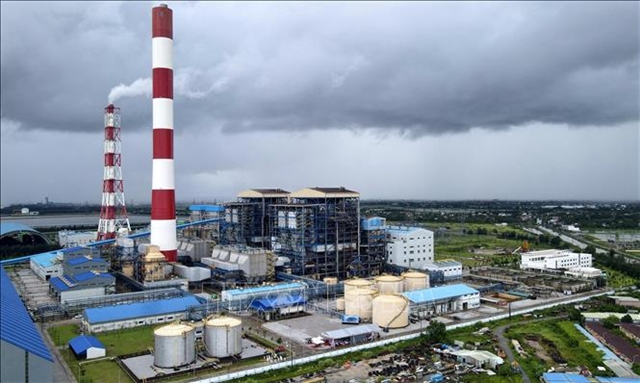
HÀ NỘI — Việt Nam has taken a major step towards building a carbon market, as Deputy Prime Minister Trần Hồng Hà approved pilot greenhouse gas emission quotas for key industrial sectors in 2025 and 2026, tightening limits on some of the country’s biggest emitters.
Under Decision No 263/QĐ-TTg signed by the Deputy Prime Minister, a total of 110 production facilities will be subject to emission caps during the pilot phase. These include 34 thermal power plants, 51 cement manufacturers and 25 iron and steel producers. Together, they will be allocated a total emission quota of more than 243 million tonnes of carbon dioxide equivalent for 2025 and nearly 268.4 million tonnes for 2026.
The Ministry of Agriculture and Environment has been assigned to lead the implementation, coordinating with the Ministry of Industry and Trade and the Ministry of Construction to allocate emission quotas to each participating facility.
Greenhouse gas emission quotas are defined as limits on the amount of greenhouse gases that may be released into the environment by a country, sector or specific enterprise within a given period.
Facilities receiving quotas are required to implement measures to reduce emission intensity to ensure emissions do not exceed permitted limits.
If emissions surpass the assigned quota, facilities may face penalties or be required to purchase additional quotas or carbon credits at a prescribed ratio to offset excess emissions.
Conversely, facilities that emit less than their allocated quotas may sell surplus allowances to other participants. In this way, emission quotas form the foundation for establishing a mandatory carbon credit trading market.
At a working session late last year, Deputy PM Hà noted that piloting greenhouse gas emission quotas is not simply about setting numerical limits, but about developing a comprehensive system to support their implementation.
This includes improving tools for measurement, inventory, verification and reporting of emission reduction results, alongside addressing related legal and technical issues.
He stressed that the methodologies applied must be scientifically sound and aligned with international standards, ensuring that the quota system supports Việt Nam’s commitment to achieving net-zero emissions. — VNS