South America still offers room for Vietnamese exports amid global uncertainty
Diversifying export markets has become a strategic necessity rather than an option for Vietnamese businesses amid global trade conditions.
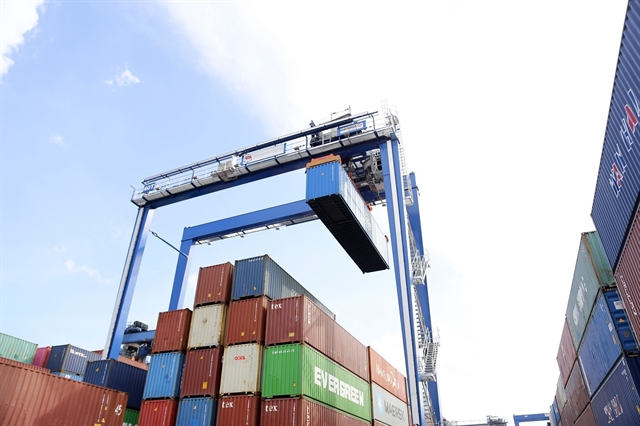
HÀ NỘI — South America remains a promising export destination for Việt Nam despite mounting pressure from inflation, currency volatility, and rising logistics costs linked to global economic uncertainty, officials and trade experts said at a conference on Thursday.
Organised by the Vietnam Trade Promotion Agency under the Ministry of Industry and Trade, the conference discussed opportunities and challenges for expanding Vietnamese exports into South American markets.
Nguyễn Thị Thu Thủy, deputy director of the Trade Promotion and Investment Support Centre, said diversifying export markets has become a strategic necessity rather than an option for Vietnamese businesses amid global trade conditions.
South America is considered an attractive market due to its large population, diverse consumer demand, abundant natural resources and growing economic engagement with the Asia-Pacific region, she said.
Bilateral trade between Việt Nam and South American countries has continued to increase steadily in recent years, reaching tens of billions of US dollars annually, but this figure is still modest compared to trade potential, Thuỷ said.
As Chile and Peru are both members of the Comprehensive and Progressive Agreement for Trans-Pacific Partnership (CPTPP), Vietnamese exporters enjoy tariff advantages in these markets. Ongoing cooperation between Việt Nam and the Mercosur bloc is also expected to further strengthen regional trade links.
However, Thuỷ noted businesses continue to face significant barriers, including high logistics costs, long shipping times, language differences and complex technical and customs regulations.
Head of the Vietnam Trade Office in Argentina Ngô Mạnh Khôi said South American economies are heavily affected by geopolitical tensions and global monetary tightening.
Rising energy prices and capital flows back into the US dollar have forced many South American countries to maintain high interest rates to stabilise exchange rates and control inflation, which has also weakened consumption and investment.
“The depreciation of local currencies is creating imported inflation, making foreign goods, including Vietnamese products, more expensive for South American consumers,” Khôi said.
He pointed out that Argentina, which has struggled with chronic inflation for years, is implementing large-scale economic reforms aimed at reducing inflation, cutting budget deficits and promoting trade liberalisation. But tighter fiscal and monetary policies have also weakened short-term consumer demand.
Statistics show that retail sales in Argentina fell 5.7 per cent year-on-year in the first quarter of 2026, while sales in March alone dropped 13.3 per cent, according to Khôi.
Khôi also warned that foreign exchange controls restricting access to US dollars in Argentina have increased payment risks and slowed transaction processes for exporters.
Beyond financial risks, logistics remain a major challenge, as shipping disruptions linked to instability in the Middle East continue to extend delivery times and raise transportation costs.
Still, South America offers substantial long-term potential for Vietnamese exports, Khôi said, adding that demand in Argentina remains strong for electronics, textiles, footwear, coffee and technology components, while local production capacity has not fully met domestic consumption and industrial needs.
The launch of negotiations for a free trade agreement between Việt Nam and Mercosur represents a strategically important step for businesses on both sides.
Khôi urged Vietnamese businesses to adopt more flexible market strategies, with a focus on increasing the share of products serving industrial production, manufacturing and essential domestic demand in local markets.
Aside from Argentina and Brazil, smaller economies with relatively stable purchasing power, such as Uruguay and Paraguay, are increasingly viewed as promising destinations for Vietnamese goods in the next few years.
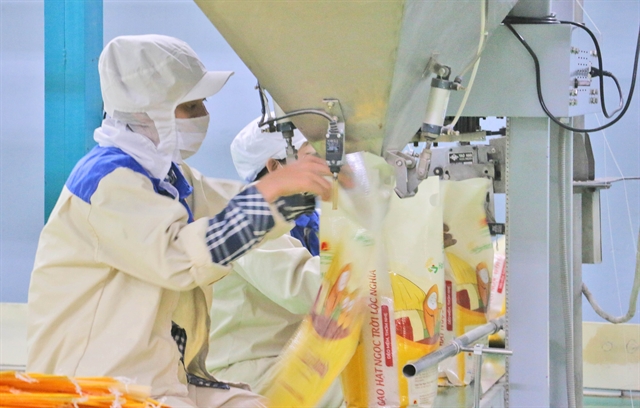
Chile is also seen as an increasingly important gateway into South America.
Ngô Thu Hương, trade counsellor at the Vietnam Trade Office in Chile, said the country is one of Latin America’s most open economies, with 35 free trade agreements covering more than 60 countries and territories.
Although Chile has a population of just over 20 million people, its relatively high income levels create strong demand for consumer goods, processed foods and higher-value products, she said.
Thanks to the Việt Nam-Chile Free Trade Agreement and CPTPP, most tariffs between the two countries have already been reduced to zero.
Bilateral trade between Việt Nam and Chile totalled US$2 billion in 2025, up more than 40 per cent from a year earlier, with Vietnamese exports accounting for more than $1.7 billion.
However, Vietnamese goods still account for only around 2 per cent of Chile’s total imports, indicating significant room for expansion.
Hương said Chilean consumers increasingly favour environmentally friendly products with traceable origins and higher added value.
Demand for high-quality rice, specialty coffee, processed seafood, furniture and mid-range consumer products is growing rapidly, while Vietnamese coffee, particularly robusta and specialty coffee varieties, has received positive feedback from Chilean buyers.
She urged Vietnamese businesses to improve product quality, green standards, packaging and compliance with international regulations rather than competing mainly on price.
“If Vietnamese businesses prepare well in terms of long-term market strategy and standards compliance, Chile can become an important gateway for expanding deeper into South America,” Hương said. — VNS