PM sets six priorities to remove business bottlenecks, drive double-digit growth
Prime Minister Lê Minh Hưng called for a shift from removing business bottlenecks to building a stronger institutional framework, unveiling six priority tasks to foster a more transparent and predictable business environment.
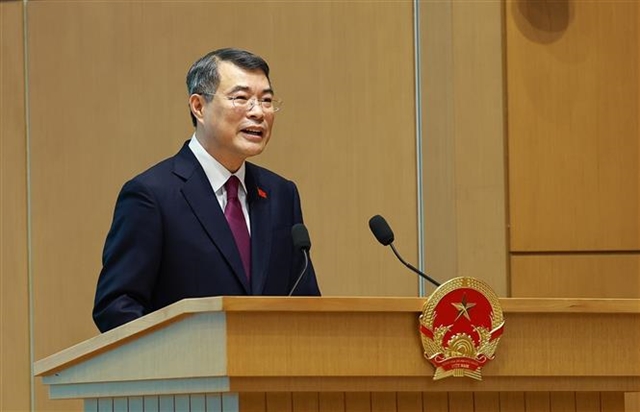
HÀ NỘI — Prime Minister Lê Minh Hưng has outlined six priority tasks for ministries, sectors and local authorities to strengthen Việt Nam's business environment, while ordering all business complaints to be resolved and official responses made public.
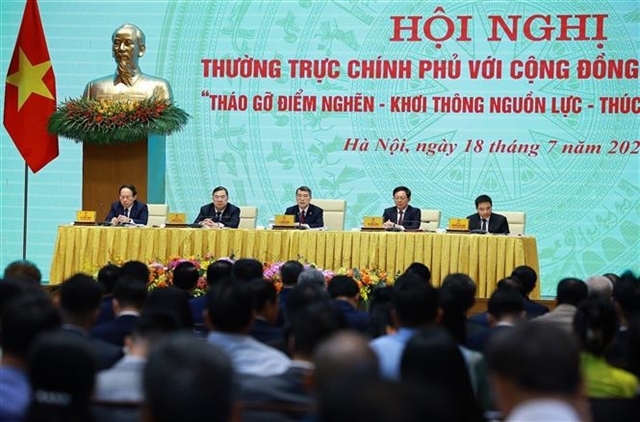
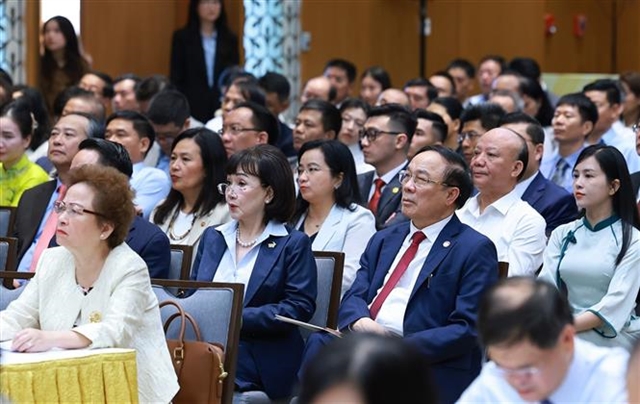
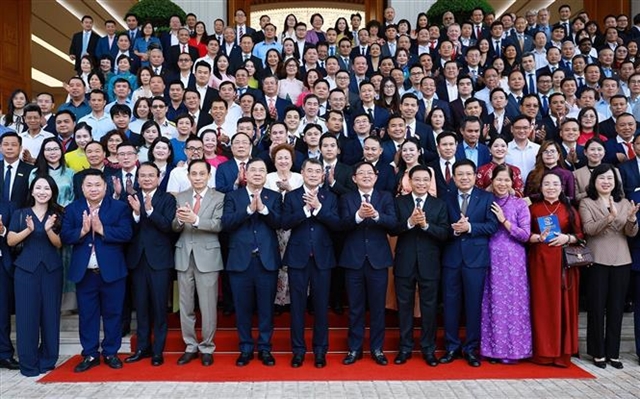
Speaking at the first meeting between the new Government Standing Committee and the business community on Saturday, the PM described the business community as the decisive force behind Việt Nam's ambition to achieve double-digit economic growth.
Hưng said the Government's priority is to create a transparent, stable and predictable business environment that supports business development and production.
"All legitimate difficulties and obstacles raised by businesses will be followed through and addressed, ensuring the Government delivers on its commitments with tangible and effective results," the PM said.
The six priorities are: accelerating institutional reforms and administrative simplification; improving access to capital, land and investment resources; reducing business costs while expanding markets; promoting innovation, digital transformation and a skilled workforce; strengthening links among State-owned, private and foreign-invested enterprises; and improving policy implementation and administrative discipline.
The Government will continue reviewing laws on investment, land, planning, construction, taxation, customs and specialised inspections to eliminate overlapping regulations and inconsistent enforcement.
Ministries were instructed to submit implementing decrees and circulars alongside draft laws to prevent legal gaps after legislation is passed.
Heads of ministries, agencies and local governments will be held personally accountable for delayed administrative procedures or the creation of unnecessary requirements beyond existing regulations.
As for financing, the Government pledged to develop healthier capital and corporate bond markets while improving businesses' access to bank credit, particularly for small and medium-sized enterprises (SMEs).
Authorities were also instructed to speed up the resolution of long-delayed investment projects, land clearance, tax refunds and public investment disbursement to prevent businesses' capital from being tied up by administrative delays.
The PM also ordered ministries to reduce logistics costs, simplify specialised inspections and minimise regulatory compliance costs.
Trade promotion programmes should be measured by actual contracts, export orders and market share rather than activities alone, while overseas trade offices were told to work more closely with businesses in expanding export markets under Việt Nam's free trade agreements.
Innovation and digital transformation were identified as another pillar of future growth.
Ministries were tasked with developing policies to encourage investment in research and development, artificial intelligence, digital transformation and green technologies while strengthening cooperation between universities, research institutes and businesses.
The Government also aims to foster more large domestic enterprises capable of competing regionally and globally.
Regarding enterprise development, Hưng said State-owned enterprises should take the lead in strategic industries, infrastructure and digital transformation, while private firms should become a major driver of economic growth through greater innovation and stronger participation in supply chains.
Foreign direct investment, meanwhile, should shift from prioritising quantity to quality, with greater emphasis on technology transfer, localisation and workforce development.
The priorities were outlined after the Government reviewed 53 groups of concerns and recommendations raised by businesses, many of which have yet to be fully resolved.
Hưng instructed ministries and local authorities to immediately address issues already within their legal authority, while proposing solutions for matters requiring legislative amendments or higher-level approval.
He stressed that all official responses to business petitions must be made public on the Government portal as well as the websites of relevant ministries and the Vietnam Chamber of Commerce and Industry, allowing businesses and the public to assess whether concerns have been adequately resolved.
The PM said the Government would shift "from dialogue to decisive action, from commitments to concrete results", with success ultimately measured by whether businesses experience lower compliance costs, shorter processing times and greater confidence in Việt Nam's investment climate.
By the end of June, Việt Nam had more than one million active enterprises with combined registered capital exceeding VNĐ30 quadrillion. The business sector contributes more than 60 per cent of GDP, accounts for 55 per cent of State budget revenue and employs over 17.6 million workers.
Despite the progress, he acknowledged persistent weaknesses across all three business sectors.
State-owned enterprises have yet to fully realise their potential, private firms remain dominated by SMEs with limited capital and technological capacity, and foreign-invested enterprises continue to show weak links with domestic suppliers.
He also pointed to regulatory inconsistencies and uneven policy implementation as continuing barriers to business growth.
To address those shortcomings, Hưng said the Government would continue improving the institutional framework to ensure a transparent, stable and predictable business environment, while encouraging innovation, digital transformation, green growth and fair access to resources for businesses.
"Institutions are no longer the economy's bottleneck. The challenge now is to continue improving them so they become a stronger foundation for development," the PM said.
He noted that the National Assembly would hold both extraordinary and regular sessions later this year, with institutional reform high on the legislative agenda, and urged businesses to actively contribute feedback to ministries.
Hưng expressed confidence that closer cooperation between the Government and the business community would help unlock resources, strengthen competitiveness and support the country's goal of achieving sustainable double-digit economic growth. — VNS