Skyrocketing cost of housing key issue for Việt Nam
Despite the recent completion of 886 housing projects with 757,338 apartments, the cost of housing in key Vietnamese cities has skyrocketed to around VNĐ100 million (US$4,000) per square metre – too high for people in low- and middle-income groups, as well as labourers and public servants.
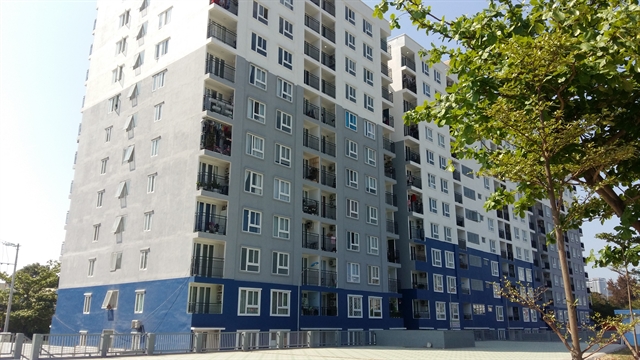
ĐÀ NẴNG — Despite the recent completion of 886 housing projects with 757,338 apartments, the cost of housing in key Vietnamese cities has skyrocketed to around VNĐ100 million (US$3,800) per square metre – too high for people in low- and middle-income groups, as well as labourers and public servants.
Phạm Thị Thu Hà from the Ministry of Construction made the statement at a recent conference in Đà Nẵng on inclusive housing in Việt Nam and beyond, noting that many families need to save up for around 20 years to buy a house.

She added that the cost of social housing is still high, with prices ranging from VNĐ16 million ($608) to VNĐ22 million ($835) per square metre, while rental prices for apartments can fluctuate from VNĐ7 million ($266) to VNĐ30 million ($1,100) per month.
“The Government has been speeding up the construction schedule for completing the National Target Programme to build one million apartments, and changing policies to help residents applying for affordable accommodation," Hà said.
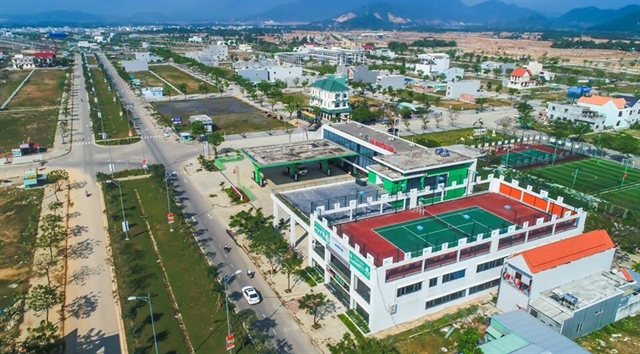
“The Law on Housing was updated in 2005, 2014 and 2023 to take into account current living conditions for various groups of people. However, it needs a flexible solution to account for supply and demand in line with price controls, as well as offer different options for house buyers or low-cost housing beneficiaries,” she suggested.
She said at least VNĐ24.7 trillion ($938 million) had been allocated to build 334,234 new houses and repair unsafe houses.
According to Habitat for Humanity Việt Nam, the country’s housing sector is seeing rising affordability challenges, rapid urbanisation and increasing climate risks.
The conference coincides with accelerated Government efforts to expand social housing, improve housing policy implementation, eliminate temporary and dilapidated shelters and collaborate with markets to support the needs of low-income households.
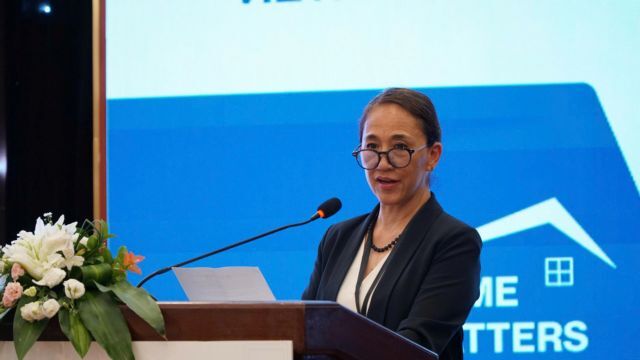
At the conference in Đà Nẵng, Habitat for Humanity's Area Vice President for Asia and the Pacific Elizabeth Satow said: “Across cultures, there is a shared understanding that home is the foundation on which people build their lives. In Việt Nam, this is beautifully captured in the saying an cư lạc nghiệp (stable housing enables stable lives).
“Việt Nam has made remarkable progress in reducing poverty, strengthening social protection systems and improving housing conditions for millions of people."
She went on to note: "At the same time, national housing strategies, multidimensional poverty reduction measures and large-scale efforts to eliminate inadequate housing create a timely opportunity to position it more deliberately within broader agendas for poverty reduction, climate adaptation and inclusion in ethnic minority communities."
Satow said a recent evaluation of Habitat Việt Nam’s programmes reinforces this point. The findings show a strong relationship between improved housing conditions and sustained contributions to safety, hygiene, well-being and resilience.
“Among surveyed households, 96.3 per cent reported better protection from wind and storms, while 73.6 per cent improved household hygiene conditions as well as 92.9 per cent reported better comfort, sleep or daily functioning,” she said.
Challenges ahead are becoming more complex as climate change is increasing the frequency and severity of disasters, according to Satow. She added that urbanisation is accelerating pressure on land, infrastructure, and services, and many of the most vulnerable families still face barriers to accessing safe and minimally adequate housing.
“At Habitat for Humanity, we believe that housing is not just about shelter; it is a system. Families can organise, save and invest, but if land tenure is insecure, finance is misaligned or building materials are inaccessible, progress remains fragile. The next phase of progress must focus not only on building homes, but on strengthening systems that make those homes possible for everyone."
“Here in Việt Nam, where Habitat has worked for 25 years, we have partnered with communities, Government and the private sector to support inclusive housing solutions. We have seen firsthand what works and where we must come together more strongly to provide support," she added.
Việt Nam, one of the countries most at risk globally, saw over 300,000 homes affected by disasters such as Typhoon Yagi in 2024, underscoring the urgent need for resilient and adaptive housing solutions for low-income and vulnerable communities.
Since 2001, Habitat Việt Nam has helped build or improve more than 36,000 homes nationwide, while also supported thousands of families through housing finance, safe housing training and climate resilience initiatives. — VNS