Seven strategic technologies proposed to turn Hà Nội into innovation hub
Experts at Techfest Việt Nam 2025 have urged Hà Nội to focus on seven strategic technology groups and adopt breakthrough mechanisms to drive innovation-led growth and become a national innovation hub.
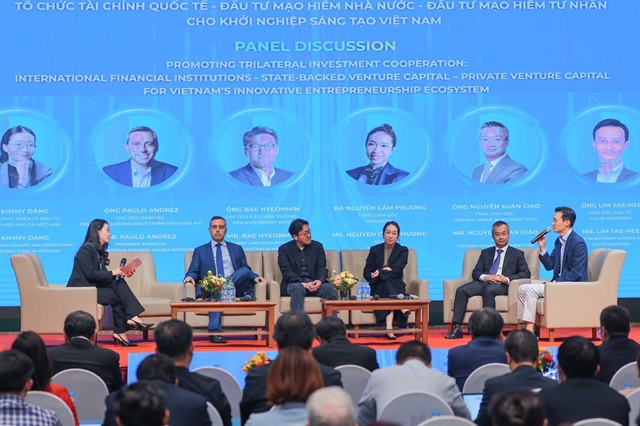
HÀ NỘI — Hà Nội should prioritise seven strategic technology groups to drive innovation-led growth and position itself as a leading innovation hub, experts said at the Capital Strategic Technology Development Forum held on Saturday as part of Techfest Việt Nam 2025.
Co-hosted by the Ministry of Science and Technology and the Hà Nội People’s Committee, the forum brought together investors, technology corporations, deep-tech start-ups, and domestic and overseas experts to discuss development pathways for the capital in the 2026-35 period, with a longer-term vision to 2045.
Participants proposed that Hà Nội focus on seven strategic technology groups, including artificial intelligence and machine learning, semiconductors and microchips, robotics and smart automation, digital twin technologies, smart cities and big data, clean and sustainable energy, and virtual and augmented reality applications linked to cultural industries and tourism. These sectors were widely seen as aligning with the capital’s high-quality human resources and its ambition to build a digital, green and knowledge-based economy.
Many delegates stressed that combining advanced technology with cultural industries and cultural tourism could become a distinctive growth model for Hà Nội.
Nguyễn Hồng Nhung, a representative of XRZone, said immersive technologies could unlock an entirely new economic sector for the capital.
“Virtual reality will open up a new growth space for Hà Nội. Innovative start-ups need experimental environments to expand technology applications in tourism, education and heritage, alongside public-sector technology procurement policies and funds to support the commercialisation of cultural and technological products,” she said.
Discussing industrial development, Phạm Thị Nhung of VTI Group said smart factories would be essential if Hà Nội aims to lead next-generation manufacturing. She highlighted the need to build industrial AI infrastructure and support enterprises in digitally transforming production lines, alongside pilot clusters for smart factories.
From a digital governance perspective, Nguyễn Trọng Tú of FPT Software said that strategic data is the foundation of strategic technologies. “Without a data strategy, it is impossible to build a truly smart city,” he said, proposing that Hà Nội develop a shared data platform and pilot AI applications in traffic management, public administration, construction licensing and urban feedback systems.
On international integration, Lê Khắc Hiệp of ADT International said Hà Nội needs stronger links with the global innovation ecosystem to accelerate its development. He suggested establishing an online Capital Digital Technology Academy and expanding exchange programmes for overseas Vietnamese technology experts.
Experts also called for institutional breakthroughs to support innovation.
Nguyễn Quang Huy, Chairman of 9S Union and VNSIF, said deep-tech start-ups require tailored venture capital mechanisms and faster technology trial policies. He proposed that the city allocate land and infrastructure for private innovation centres, allow pilot operation of venture capital funds under international standards, and strengthen policies to attract talent, technology and financial resources from the overseas Vietnamese community.
To support these goals, participants recommended three breakthrough mechanisms including a deep-tech sandbox allowing new technologies to be piloted for 36 to 48 months in selected areas; the establishment of a Hà Nội technology venture capital fund with a target size of up to US$500 million by 2030 under a public–private partnership model; and policies enabling businesses to invest in public research infrastructure in exchange for priority commercialisation rights. — VNS