SBV’s dollar purchases offer liquidity boost, with inflation risks in focus
The SBV’s outright dollar purchases will inject đồng liquidity into the banking system while adding to foreign exchange reserves, creating a new channel to support banks’ funding and ease pressure on interest rates.
Compiled by Mai Hương
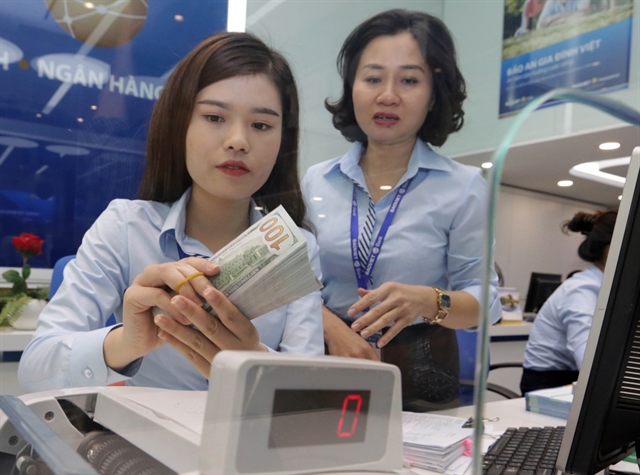
HÀ NỘI — The State Bank of Vietnam (SBV) has started buying US dollars directly from commercial banks, adding another channel to inject Vietnamese đồng liquidity into the banking system while rebuilding foreign exchange reserves.
The move, effective from November 11, complements the central bank's existing foreign exchange swap and open market operations (OMO), as banks face rising funding needs towards the year-end.
Under the programme, the SBV buys dollars at 25,500 đồng per dollar from banks with positive foreign currency positions, with purchases scheduled twice a week. Unlike foreign exchange swaps, outright purchases provide đồng liquidity without requiring repayment at a fixed maturity date.
At the intervention rate, every US$1 billion purchased would inject around VNĐ25.5 trillion into the banking system. However, the actual amount will depend on the volume of dollars banks are willing and able to sell. The SBV has not announced a purchase quota for each session.
The new measure comes as the banking system faces seasonal funding pressures from year-end business settlements, credit demand and preparations for the coming Lunar New Year.
The SBV has also introduced a six-month foreign exchange swap programme, with a maximum size of $2 billion. The operation provided nearly VNĐ50 trillion to the banking system on November 9, according to the central bank.
The two instruments serve different purposes. While swap transactions provide temporary funding that must be reversed at maturity, outright dollar purchases inject đồng without a predetermined repayment date.
Vũ Minh Trường, deputy general director of Vietnam Prosperity Bank (VPBank), said extending the swap tenor to six months was important for banking system liquidity as it covered the year-end settlement period and the 2027 Lunar New Year.
He said the swap cost of 2.25 per cent was relatively reasonable and lower than the actual cost of raising funds in international markets at the time. The operation would therefore help banks manage funding costs and create conditions for lending rates to decline.
Banks' capacity to sell dollars varies
However, the amount of liquidity generated through the new programme will depend partly on banks' foreign currency positions.
Third-quarter 2026 financial statements show that 15 of 26 banks with identifiable on-balance-sheet US dollar positions recorded negative balances at September 30. The combined position of the 26 banks was positive by around VNĐ15.5 trillion, largely concentrated at VietinBank and Vietcombank.
The figures change considerably when off-balance-sheet transactions are included. Among 18 banks with information on both components, the combined dollar position was positive by only around VNĐ2.4 trillion, with 11 banks recording negative positions.
Although these figures reflect positions at September 30 and may have changed since then, they highlight the varying capacity of banks to sell dollars to the SBV.
The central bank's actual purchases will be determined by each institution's foreign currency position on the working day before the transaction, taking into account both on- and off-balance-sheet positions.
Exchange rate conditions provide room for purchases
The đồng's recent strength against the US dollar has provided more room for the SBV to purchase foreign currency. According to Virtus Prosperity, the USD/VND exchange rate, which had traded around 26,200-26,300 over the past year, has fallen to approximately 25,500.
At the same time, rebuilding foreign exchange reserves remains a priority. Việt Nam's reserves stood at around $87.6 billion as of June 18, 2026, down $24.2 billion from their peak of $111.8 billion in January 2022. This was equivalent to about 1.85 months of imports, below the International Monetary Fund's commonly used benchmark of three months.
The fourth quarter, traditionally supported by export receipts and year-end remittances, could provide a favourable window for the SBV to accumulate foreign currency while supplying đồng liquidity to banks.
In a statement sent to Việt Nam News, Trần Trọng Đức, founder and chief executive officer of Virtus Prosperity, said the SBV's dollar purchases could help stabilise exchange rate expectations and narrow the gap between official and unofficial rates.
He said the key point was that the central bank was injecting đồng liquidity against actual US dollar inflows.
"If VND is issued without corresponding US dollar inflows, inflation could surge," he said.
The purchases could also help limit further appreciation of the đồng, supporting exporters, although a weaker domestic currency could increase the cost of imported goods, raw materials and energy.
For the SBV, the challenge is to balance foreign reserve accumulation and liquidity support with the need to maintain exchange rate and price stability.
Potential impact on interest rates and financial markets
The scale of the programme will be a key factor in determining its impact on financial markets.
ABS Securities has outlined three scenarios for the SBV's dollar purchases. Under its low-case scenario, purchases of $2 billion would inject around VNĐ51 trillion into the banking system. Its base case assumes purchases of $6 billion, equivalent to VNĐ153 trillion, while the high case involves $10 billion, or VNĐ255 trillion.
According to ABS, every $1 billion purchased would be equivalent to around 20 per cent of the banking system's outstanding open market operations (OMO) balance.
Under the base-case scenario, the additional liquidity could exceed the current outstanding OMO balance, potentially allowing the SBV to reduce its OMO offerings and easing pressure on overnight interbank rates.
The brokerage expects the USD/VND exchange rate to trade within a range of 25,500-26,000 towards the end of the year. It also expects the central bank to maintain policy interest rates while using foreign currency purchases and OMO operations to manage liquidity.
Virtus Prosperity also sees potential benefits for financial markets. Đức cited historical data showing that the VN-Index rose in 11 of 13 observations one month after previous SBV dollar purchases, with an average gain of 4.35 per cent.
However, the relatively small sample does not establish a direct causal relationship between foreign currency purchases and stock market performance.
ABS also expects the latest measure to provide some support for equities through improved liquidity and more stable exchange rate expectations, although its impact could be smaller than historical averages.
Inflation remains a constraint
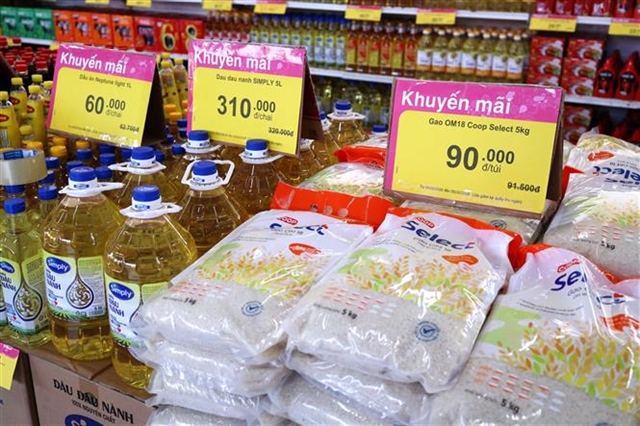
Despite the potential benefits, injecting additional đồng into the banking system could increase inflationary pressure if liquidity is not managed carefully.
The SBV therefore faces the task of balancing support for banks and businesses with its inflation-control objectives. It can use OMO and other monetary instruments to absorb excess liquidity when necessary.
In his statement, Đức said the central bank needed to coordinate exchange rate management with monetary policy to prevent the additional money supply from creating further inflationary pressure.
For the market, the key indicators to watch will be the actual volume of dollars purchased, movements in interbank interest rates and the lending rates offered by commercial banks.
The new programme provides the SBV with another tool to support liquidity and rebuild foreign reserves. Its longer-term impact, however, will depend on the amount of foreign currency absorbed and the central bank's ability to manage the resulting đồng liquidity without compromising price stability. — VNS