SBV moves to scrap gold jewellery licences
Under existing regulations, businesses must satisfy various requirements regarding facilities, equipment and operational conditions before receiving certification.
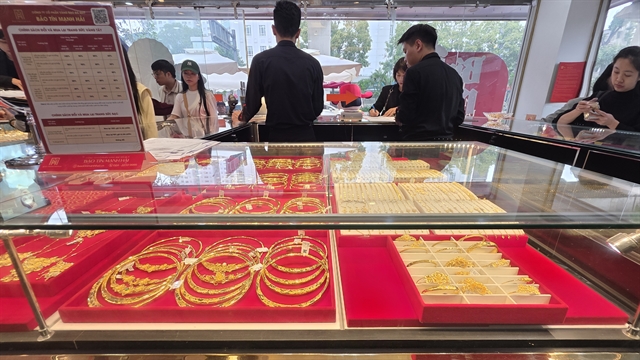
HÀ NỘI — Việt Nam's gold jewellery industry could face a major regulatory shift from July, as the State Bank of Vietnam (SBV) proposes removing all licensing requirements for the production, processing and trading of gold jewellery and fine-art gold products under a new amendment to Decree 24 on gold market management.
The proposal is part of a draft decree currently open for public consultation and represents the latest step in the Government's broader effort to revise the legal framework governing Việt Nam's gold market.
Under the draft, activities related to the production, processing, purchase and sale of gold jewellery and fine-art gold products would no longer be classified as conditional business sectors.
If approved, enterprises operating in these segments would no longer be required to obtain the certificate of eligibility for gold jewellery and fine-art gold production previously issued by the SBV.
Existing certificates granted before the new decree takes effect would also cease to be mandatory conditions for business operations.
The draft decree is expected to take effect on July 1.
At that point, pending applications for the issuance, amendment or supplementation of such certificates that have not yet been processed would no longer be considered under the transitional provisions proposed by regulators.
According to the draft amendment, enterprises and individuals involved in gold jewellery production and trading would instead be regulated through compliance requirements relating to product quality, technical standards, measurement rules, product labelling, price disclosure, invoicing, taxation, fire prevention, environmental protection, consumer rights, anti-money laundering regulations and other relevant legal provisions.
The proposal marks a significant departure from the current framework under Decree 24/2012/NĐ-CP, which treats gold jewellery production as a conditional business activity requiring approval from the central bank.
Under existing regulations, businesses must satisfy various requirements relating to facilities, equipment and operating conditions before receiving certification.
The latest amendment follows Decree 232/2025/NĐ-CP, issued in August 2025, which primarily revised regulations governing the production, trading and import of gold bars.
While previous amendments focused largely on the bullion market, the new draft shifts attention towards the jewellery segment and proposes a substantial reduction in administrative procedures.
The draft also introduces new provisions governing the temporary import of raw gold materials for export-oriented manufacturing.
Under the proposal, enterprises registered for gold jewellery production or processing and holding contracts with foreign partners could be considered by the SBV for permits to temporarily import raw gold materials for processing and subsequent re-export.
The volume of imported gold would need to correspond to contractual requirements and could only be used for the registered export-processing activities.
For foreign-invested enterprises, annual import permits for raw gold materials could be granted based on production capacity and export performance. Imported gold materials would be restricted to export production purposes and could not be transferred or sold on the domestic market without approval from the central bank.
While the draft proposes substantial deregulation for the jewellery segment, the SBV continues to maintain a stricter approach to the bullion market.
According to the proposal, the production and trading of gold bars would remain conditional business activities subject to licensing requirements from the central bank. Regulatory oversight of bullion transactions would continue under the existing management framework.
The draft amendment also contains additional provisions concerning payment methods and the responsibilities of licensed enterprises and financial institutions involved in gold import and export activities.
Notably, the proposal states that purchases of gold bars conducted through credit cards or payment methods linked to credit facilities must comply with regulations governing lending activities. — BIZHUB/VNS