SBV asks to place real estate credit growth under tight control
Credit flows will be guided towards projects with complete legal status, reputable developers, social housing and genuine housing demand.

HÀ NỘI — The State Bank of Vietnam (SBV) has asked commercial lenders to keep growth in real estate lending no higher than their overall credit growth ceilings, a move framed as tighter supervision rather than an outright restriction on property loans.
The request forms part of the SBV’s guidance on managing credit growth in 2026, which sets an overall system-wide target of about 15 per cent.
The central bank said the policy is intended to channel capital towards production and business activities and other priority sectors, while safeguarding the safety and stability of the banking system.
At the same time, banks are being directed to prioritise lending to projects with full legal status, reputable developers, social housing and genuine housing demand. Credit to speculative projects with a high risk of bad debts will be strictly limited, the SBV said.
The measure is aimed at curbing systemic risks as real estate lending has expanded rapidly in recent years, heightening concerns over liquidity pressures and a potential rise in non-performing loans.
A report by Vietcombank Securities (VCBS) showed that by the end of August 2025, outstanding loans linked to real estate, including home purchases and property-related business, exceeded VNĐ4 quadrillion (US$157 billion). This represented a year-on-year increase of 19 per cent and accounted for about 24 per cent of total credit in the economy.
VCBS also highlighted a shift in the structure of real estate lending, with credit to property developers accelerating sharply.
By the end of the third quarter of 2025, credit for real estate business had surpassed VNĐ1.82 quadrillion, up 35 per cent from the beginning of the year. Lending to developers alone jumped by nearly 40 per cent, far outpacing loans to individual homebuyers, which rose by just 12.4 per cent.
Most real estate credit has flowed into business activities, particularly transactions involving developers and secondary buyers, according to VCBS.
An SBV survey found that credit risk is currently highest in the real estate sector, exceeding risks in securities and import-export lending. As a result, tighter control of credit flows into property is seen as urgent to prevent a return of extreme boom-and-bust cycles.
Tight control, not restriction
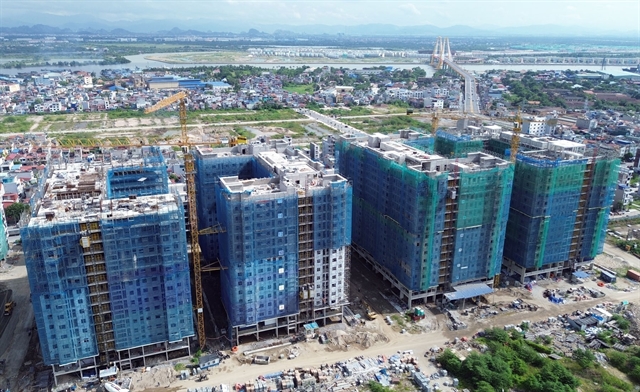
At a Government meeting on Tuesday, Prime Minister Phạm Minh Chính called for strong action to curb speculative capital and push commercial housing prices to more reasonable levels. He urged the SBV to tighten oversight of real estate credit.
In response, the SBV set an indicative credit growth target of about 15 per cent for 2026, while signalling to the property sector that lending will not be banned but will be closely controlled.
The central bank has asked commercial lenders to ensure that growth in real estate credit does not exceed their overall credit growth rates. Capital is to be channelled towards projects with clear legal status, reputable developers, social housing and genuine housing demand, while lending to speculative projects with a high risk of bad debts will be firmly limited.
Analysts said the sector is unlikely to face a credit squeeze, but capital flows are expected to shift, narrowing access for speculators while widening it for transparent projects and real homebuyers.
Cấn Văn Lực, chief economist at BIDV, warned that the high share of property loans, around 24 per cent of total credit, combined with aggressive expansion by some developers across multiple projects, could amplify risks if market conditions weaken.
Nguyễn Thế Minh of Yuanta Vietnam Securities said the cap on real estate credit growth should be viewed as a necessary step to bring order to the market after a year of strong recovery, rather than a restrictive measure as initially feared.
He noted that absolute capital flows into real estate are expected to remain high next year, estimated at VNĐ749 trillion, sufficient to maintain basic market liquidity.
The market should shift its focus from credit quotas to interest rates this year, Minh said, adding that rates of 8–9.5 per cent a year or higher are likely to dampen transaction volumes and weed out investors overly reliant on leverage.
Nguyễn Thuý Hạnh, director general of Standard Chartered Việt Nam, said that while real estate credit growth in 2025 was significantly higher than in previous years, the key challenge for 2026 will be to sustain economic and credit growth while containing risks.
Credit should be directed towards real estate projects that play a vital role in the economy, meet quality standards and serve genuine housing demand, she said, citing industrial parks, residential developments and especially social housing as priority segments.
Financial expert Nguyễn Quang Huy said it is necessary to clearly differentiate credit policies by segment to maintain macroeconomic stability without disrupting growth momentum.
As capital flowing into real estate is typically locked in over the long term, with limited mobility and little short-term value creation, interest rate policy should be applied flexibly and selectively rather than uniformly across the entire property market, Huy said.
High-risk speculative segments that rely heavily on leverage should face tighter controls, while projects serving real housing needs, such as social housing and homes for workers, should continue to have access to reasonably priced credit. — VNS