Rising tourism demand fails to translate into broad-based profit growth
The recovery in travel demand has created more business opportunities for hotel, resort, tour operator and entertainment companies, but financial results show that higher revenue has not translated into stronger profitability across the sector.
HÀ NỘI — The tourism industry continued to benefit from rising visitor numbers and revenue, but listed companies reported sharply different financial results in the first nine months of 2026, while their share prices also moved in contrasting directions.
The recovery in travel demand has created more business opportunities for hotel, resort, tour operator and entertainment companies. However, financial results show that higher revenue has not translated into stronger profitability across the sector, with differences in operating efficiency, cost structures and cash flow affecting individual businesses.
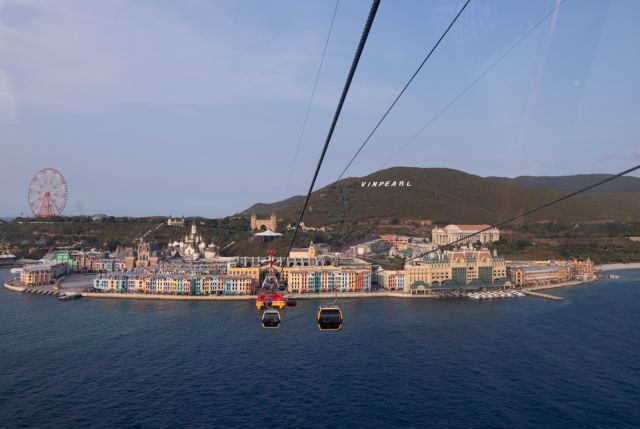
Vinpearl (VPL), one of Việt Nam's major resort operators, reported a net revenue of VNĐ10.7 trillion (US$415 million) in the first nine months, up nearly 19 per cent year on year. Profit after tax reached over VNĐ2.8 trillion, 6.6 times the level recorded in the same period last year and equivalent to around 94 per cent of its full-year target.
Its growth was supported by both higher room occupancy and improved room rates. Vinpearl sold more than 2.2 million room nights during the period, up 20 per cent year on year, while average room rates increased 12 per cent. Revenue per available room (RevPAR) consequently rose 29 per cent.
Average occupancy reached 64 per cent, 9 percentage points higher than a year earlier.
Ninh Vân Bay Travel Real Estate (NVT) also reported improved results. Its nine-month net revenue rose nearly 24 per cent year on year to approximately VNĐ453 billion, while its profit after tax increased about 59 per cent to nearly VNĐ107 billion.
However, the performance of other tourism companies was less positive.
Vietravel Tourism (VTR) recorded a net revenue of more than VNĐ5.76 trillion in the first nine months, up 6 per cent, but its profit after tax was only VNĐ5.72 billion.
In the third quarter alone, the company generated VNĐ137.8 billion in gross profit. However, financial expenses of around VNĐ16 billion, selling expenses of VNĐ21 billion and administrative expenses of VNĐ107 billion significantly reduced its earnings. Administrative expenses were equivalent to nearly 78 per cent of gross profit.
In the entertainment segment, Phú Thọ Tourist Service (DSP), which operates Đầm Sen Cultural Park, remained loss-making. Its nine-month net revenue increased 8 per cent to VNĐ147 billion, but it recorded a loss after tax of VNĐ28 billion.
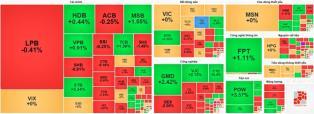
The divergence in corporate earnings was also reflected in the stock market.
VPL gained approximately 18.7 per cent over the past month, although it remained down around 0.4 per cent since the beginning of the year. Its market capitalisation stood at approximately VNĐ174.4 trillion.

Vietjet Aviation (VJC) traded at around VNĐ136,000 per share, up approximately 5.4 per cent over one month but still down more than 15 per cent year to date. Among smaller companies, VTR had fallen around 31.5 per cent over the past year, while DSP had gained approximately 7.7 per cent.
Market capitalisation in the tourism and entertainment sector is also concentrated among a small number of large companies. VPL accounted for around 46 per cent of the sector's market capitalisation in trading data for November 9.
Mauro Gasparotti, senior director of Savills Hotels for Southeast Asia, said the greater opportunity for the hotel and resort industry lay in upgrading existing assets and strengthening competitiveness rather than simply expanding room capacity.
Hotels and resorts with large room inventories do not necessarily have an advantage if occupancy remains low, service quality is inadequate or operating costs are high. Businesses that can raise room rates, improve occupancy and increase guest spending may strengthen profitability without expanding too quickly.
For tour operators, controlling customer sources and distribution channels is another challenge.
Thi Thị Capstan, head of corporate governance at BenThanh Tourist, said domestic destination management companies (DMCs) that directly organise tours in Việt Nam typically achieve net profit margins of around 5-8 per cent, while overseas partners can earn retail margins of 20-30 per cent.
Dependence on foreign partners and external distribution platforms can therefore limit domestic tour operators' ability to control selling prices, forcing them to compete on prices to maintain customer flows.
Competition from new hotel supply is another factor affecting the sector's outlook. According to Savills' 2026 hotel market report, new supply in Hà Nội continued to increase, while average occupancy in the second quarter stood at around 70 per cent across 65 surveyed hotels. — BIZHUB/VNS