Resolution 57 propels biotech growth through partnership between Government, industry
Recognised as strategic for the country, biotechnology is expected to become a new growth driver in the coming decade.
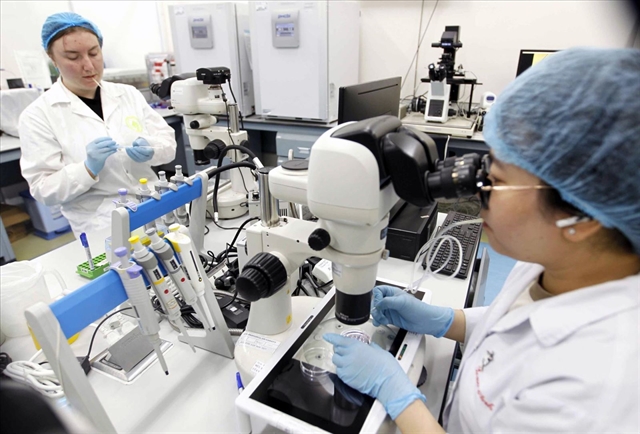
HCM CITY — Biotechnology is no longer confined to laboratories; it is emerging as a core technology platform shaping economic growth, food security, healthcare, environmental sustainability, and national security.
Recognised as strategic for the country, biotechnology is expected to become a new growth driver in the coming decade.
Realising this ambition requires stronger cooperation between the Government, research institutions and businesses — the so-called “three-party” linkage — to master core technologies and translate research results into commercially viable “Made in Vietnam” products.
Biotechnology now underpins sectors ranging from agriculture and food processing to pharmaceuticals, environmental management and defence.
Many developed economies have invested heavily in the field and generated substantial returns.
The Politburo’s Resolution No. 36-NQ/TW sets the goal of positioning Việt Nam among Asia’s leading biotech nations.
Resolution No. 57-NQ/TW on breakthroughs in science, technology, innovation, and digital transformation further identifies biotechnology as a priority investment area.
Under Decision 1131/QĐ-TTg approving the list of strategic technologies and products, biotechnology is classified as one of 12 strategic technologies for Việt Nam.
According to the Ministry of Science and Technology, supportive policies have enabled the nation to master several modern technologies and expand applications in agriculture, healthcare and environmental protection.
However, breakthrough research remains limited, technology transfer and commercialisation are modest and linkages between universities, research institutes, and enterprises have yet to generate a strong impact.
According to Professor Nguyễn Thị Thanh Mai, chancellor of the Việt Nam National University-HCM City (VNU-HCM), the global biotechnology market is valued at around US$1.8 trillion and is expected to double by 2030, driven by advances in artificial intelligence, gene editing and rising demand for innovative solutions in medicine and industry.
But Việt Nam’s share is only around $1.5 billion or less than 0.1 per cent.
“Stronger three-party cooperation is essential to pool resources and avoid missing out on the sector’s rapid expansion,” she said.
Professor Henry Nguyễn, director of the US Biology Centre, highlighted global trends such as genomics, robotics and automation, nanotechnology, bioinformatics, artificial intelligence, and machine learning, which are reshaping life sciences and human well-being.
In line with these trends, VNU-HCM is restructuring its biotechnology research around four pillars: healthcare and regenerative medicine, climate-resilient crops and sustainable bio-products, environmental technologies supporting Net Zero and circular economy goals, and bioinformatics and AI applications in drug and vaccine design.
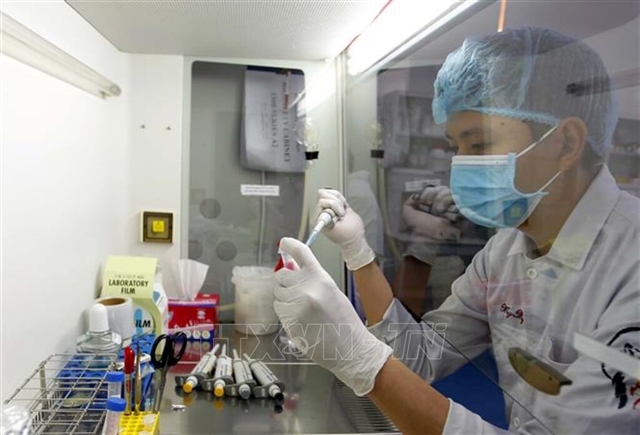
From research to ‘Made in Vietnam’
While both the volume and quality of research have improved and several core technologies have been developed, commercialisation of these outcomes remains limited.
Huỳnh Thành Đạt, deputy head of the Party Central Committee’s Commission for Information and Education and Mass Mobilisation, views biotechnology as a foundational knowledge platform underpinning health, food and environmental security, while also opening new economic space.
“Without translating research into products and production capacity, strategic targets will be difficult to achieve.”
Experts consider the 2026-30 period decisive.
They call for a complete value chain linking core research, product development, market formation, and demand-driven innovation, with businesses involved from the outset.
Priority sectors include pharmaceuticals, high-tech agriculture and environmental technologies.
To address bottlenecks, specialists propose piloting sandbox mechanisms to streamline licensing for key clinical trials, creating experimental frameworks for commercialising university research, and investing in standardised laboratories and national testing centres.
Enterprises are encouraged to move beyond placing research orders and become strategic investors accompanying projects from R&D to market launch.
Biotechnology has been identified as a strategic pillar by CT Group, focusing on biomedicine, precision agriculture, green energy, and bio-materials.
Trần Kim Chung, chairman of CT Group, said effective three-party cooperation would unlock breakthroughs in the biotech industry.
CT Group and VNU-HCM have established a comprehensive partnership covering joint research, development of national science and technology products and high-quality human resource training.
“The two sides are co-investing in applied laboratories, piloting product testing and supporting market-oriented research to accelerate commercialisation.”
The company has also pledged venture capital and long-term support for start-ups and spin-offs, contributing to a broader biotechnology ecosystem.
With closer coordination between the Government, academia and businesses, stakeholders expect Việt Nam to build a synchronised value chain centred on core technologies, create favourable mechanisms to attract experts and enterprises and position itself as an emerging regional biotechnology hub. — VNS