Resolution 57 enters acceleration phase
Fibre-optic connectivity now reaches every hamlet and residential cluster, ensuring broadband internet services are available across the province.
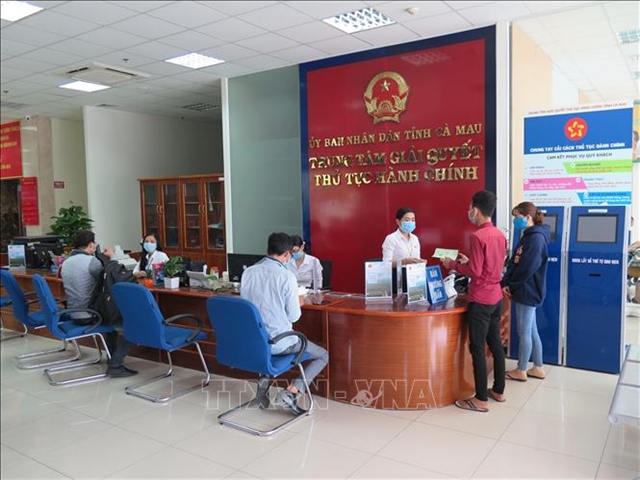
CÀ MAU — More than a year after Resolution No 57-NQ/TW was issued to promote breakthroughs in science, technology, innovation and digital transformation, the southernmost province of Cà Mau has accelerated efforts to turn the Party’s policy into practical results.
The provincial Party Committee and People's Committee have identified the resolution as a key driver of socio-economic development, with science, technology and digital transformation underpinning efforts to improve governance, boost productivity and enhance public services.
Vice Chairman of the provincial People’s Committee Lê Văn Sử said Cà Mau had completed 143 out of 273 tasks related to science, technology and digital transformation, or more than 52 per cent of the plan.
Another 32 tasks are on schedule, while 98 others are being implemented regularly, with no overdue assignments. The province has also completed all integrated digital transformation tasks.
Administrative reform and digital infrastructure development have also made progress, with more than 97 per cent of administrative applications processed on time and broadband coverage expanded to remote and coastal communities.
Cà Mau now ranks 20th among the country's 34 provinces and centrally governed cities in administrative reform and digital transformation.
Cà Mau has also strengthened digital skills development, with training programmes reaching more than 34,500 learners, while accelerating the adoption of new technologies such as artificial intelligence, biotechnology and digital platforms in key sectors, including aquaculture, logistics and fisheries management.
Chairman of the provincial People’s Committee Lữ Quang Ngời said Cà Mau had taken early steps to implement Resolution 57 with programmes suited to local conditions, focusing on digital infrastructure, digital government and innovation-driven development.
By 2030, the province targets the digital economy to account for about 20 per cent of its gross regional domestic product (GRDP) and total factor productivity (TFP) to contribute at least 55 per cent of economic growth.
Cà Mau also plans to strengthen digital platforms and databases, promote green and digital start-ups, and provide digital skills training for at least 100,000 people each year as part of efforts to build a more innovation-based economy.
Phạm Thống Nhất, deputy director of the provincial Department of Science and Technology, said the department would continue supporting technology enterprises through favourable policies while encouraging businesses to help train digital talent and enable officials to master emerging technologies.
To address these issues, Cà Mau plans to increase investment in science, technology and digital infrastructure, while attracting skilled workers and expanding training in areas such as big data and artificial intelligence.
The province will also focus on encouraging wider use of digital platforms and online public services, supporting businesses in digital adoption and improving integrated systems to better serve the new two-tier local government model.
Provincial Party Secretary Nguyễn Hồ Hải said economic growth should go hand in hand with cultural and social development, stressing the need for stronger innovation, greater accountability and more practical outcomes in implementing Resolution 57.
He called for clear and measurable targets, with the Department of Science and Technology playing a key role in coordinating breakthrough initiatives across the province. — VNS