Resolution 57 drives new policies to unlock resources for strategic technologies
Authorities expect the policies to encourage more scientists, enterprises and investors to participate in developing technologies that will underpin Việt Nam's future economic growth.
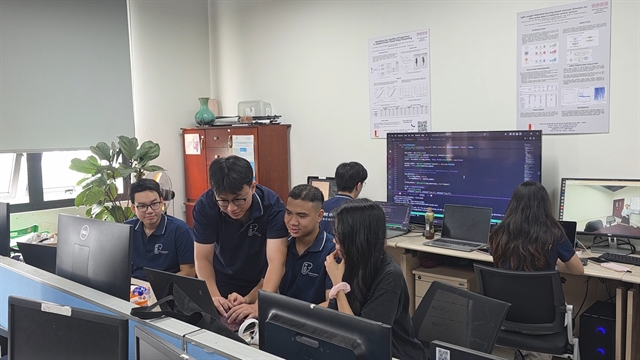
HÀ NỘI — A series of policies is being rolled out to attract talent, mobilise investment and accelerate the development of strategic technologies as the country implements Resolution No. 57-NQ/TW on breakthroughs in science, technology, innovation and national digital transformation.
The new mechanisms, many of which are designed to be competitive by regional and international standards, aim to unlock resources for strategic technology projects while fostering stronger links between government, research institutions and businesses.
Authorities expect the policies to encourage more scientists, enterprises and investors to participate in developing technologies that will underpin Việt Nam's future economic growth.
Resolution No. 57 calls for special policies to attract leading scientists, technology experts and chief engineers from both Việt Nam and abroad through competitive remuneration, improved working conditions and better living environments.
To support that objective, the National Foundation for Science and Technology Development under the Ministry of Science and Technology has drafted a circular guiding the budgeting, management and settlement of state funding for strategic technology projects under the National Science, Technology and Innovation Programme on Strategic Technologies, in accordance with Decree No. 260/2026/NĐ-CP.
The draft introduces six major financial mechanisms designed to make research and technology development more flexible and results-oriented.
They include competitive remuneration for strategic technology personnel, a contingency budget of up to 10 per cent of total project funding, performance-based financial management, permission for multiple independent research approaches, greater autonomy in selecting suppliers and management based on interconnected project chains.
One of the most notable proposals is the introduction of a competitive income framework for key personnel involved in strategic technology projects, benchmarked against remuneration practices in Singapore and other countries with advanced science and technology sectors while adjusted for Việt Nam's purchasing power.
Under the proposal, chief engineers could receive up to VNĐ300 million (US$11,500) per month, chief architects up to VNĐ250 million, project leaders or council chairpersons up to VNĐ150 million, and participating scientists and experts up to VNĐ40 million per month.
The proposed ceiling for chief engineers exceeds the purchasing-power-adjusted benchmark in recognition of the severe shortage of highly qualified specialists in strategic technologies.
Associate Professor Đào Ngọc Chiến, director of the National Foundation for Science and Technology Development, said the draft circular represents a fundamental shift in the country's approach to science and technology management.
The draft circular marks a change in management thinking and financial mechanisms, shifting from managing research tasks to developing technology projects linked to products and markets. It lays the foundation for attracting talent, mastering technologies and enhancing national competitiveness, Chiến said.
Alongside national policies, local authorities are introducing their own incentives to attract investment in high-tech industries.
HCM City is laying the groundwork for the quantum technology era.
Recognised as one of Việt Nam's ten strategic technology groups, quantum technology is expected to strengthen the country's technological self-reliance and global competitiveness as it moves from laboratory research toward commercial applications worldwide.
The city is developing networks of quantum experts, designing short-term interdisciplinary training programmes, identifying pilot projects for businesses and public agencies, and raising awareness of post-quantum cybersecurity for critical data systems.
Major universities are expected to play a central role in training specialists, establishing research groups and connecting academic research with industry.
Vietnam National University, HCM City, has already launched a quantum computing specialisation within its physics programme at the University of Science beginning with the 2025 intake. The university also plans to introduce quantum technology and quantum engineering programmes from 2027.
At postgraduate level, research will focus on quantum simulation, algorithms, software, data science, machine learning and optimisation, while future priorities include quantum security, photonics, quantum materials and sensors, alongside fundamental research in quantum physics. — BIZHUB/VNS