Railway investment boom must translate into domestic industrial capacity
Several Vietnamese companies have begun investing in capabilities that could support the railway programme.
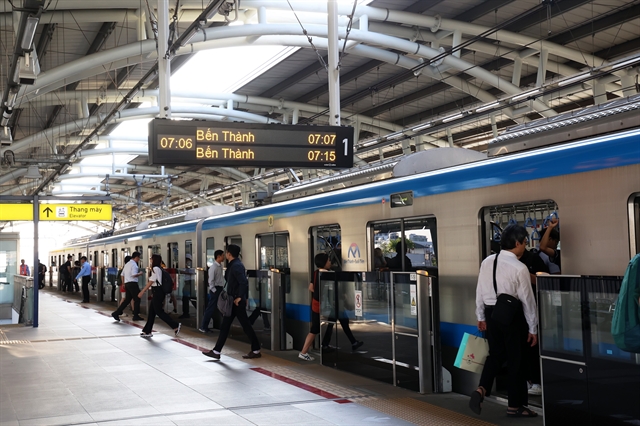
HÀ NỘI — As Việt Nam prepares to invest billions of dollars in an ambitious railway network, a much bigger opportunity is emerging beyond the tracks: the chance to build a domestic railway industry. Yet the real test will be whether this unprecedented investment can translate into lasting capabilities in manufacturing, engineering, technology and maintenance.
At the heart of the programme is the 1,541-kilometre North–South high-speed railway, with a preliminary investment estimate of more than VNĐ1.7 quadrillion (US$67 billion). Designed for speeds of up to 350km/h, the line is scheduled to begin construction in December 2027 and be substantially completed by 2035.
Together with urban rail networks in Hà Nội and HCM City and other railway links connecting major economic hubs, the project is expected to generate substantial demand for steel, rolling stock, signalling systems, electrical equipment and technical services.
The market for railway-related products and services in Việt Nam could be worth more than VNĐ2.3 quadrillion ($90 billion) between now and 2050, according to estimates by the Ministry of Industry and Trade’s Industrial Agency. Beyond transport infrastructure, the sector could generate wider economic benefits by stimulating growth in related industries.
Việt Nam is seeking to leverage this demand to develop domestic suppliers and strengthen local manufacturing and engineering capabilities while reducing reliance on imported equipment and foreign expertise.
Deputy Prime Minister Phạm Gia Túc signed a document on October 7 directing preparations for a pre-feasibility study for a railway industrial complex which could support the manufacture, assembly, repair and testing of railway equipment, as well as workforce training.
Early preparations
According to Lê Văn Dương, director of the Department of Science and Technology, Environment and Construction Materials at the Ministry of Construction, businesses should be placed at the centre of efforts to promote the localisation and development of the railway industry.
Several Vietnamese companies have begun investing in capabilities that could support the railway programme.
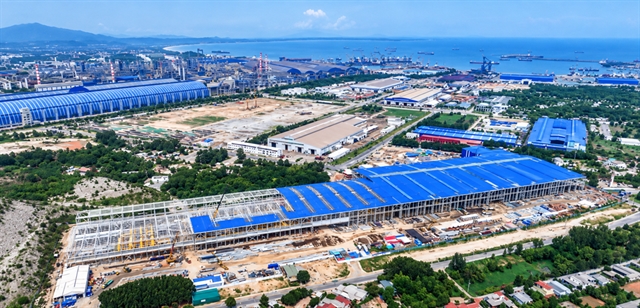
Steelmaker Hòa Phát Group has invested more than VNĐ10 trillion ($390 million) in a rail and special steel plant at the Dung Quất Economic Zone, with a designed annual production capacity of 700,000 tonnes.
Automaker THACO is developing domestic rolling-stock manufacturing through cooperation with South Korea's Hyundai Rotem, including arrangements involving 162 locomotives and rail vehicles, technology transfer and localisation. The company is also developing a 320ha railway and general mechanical engineering industrial complex in HCM City.
Việt Nam has a major opportunity not only to expand its railway network but also to develop a domestic ecosystem of railway manufacturing and engineering services, according to Lê Đăng Khoa, general director of Pontech, a consultancy specialising in structural design for railway and transport infrastructure.
The key lies not simply in the scale of investment but also in the establishment of a continuous pipeline of projects that allows domestic companies to build up their capabilities.
Existing government policies and support mechanisms needed to be translated into clear plans and defined scopes of work across successive projects to give businesses the confidence to invest in skilled workers, research and specialised engineering capabilities over the long term, Khoa said.
Dương Như Hùng, head of the Faculty of Industrial Management at HCM City University of Technology, however, cautioned against pursuing localisation at any cost.
Việt Nam should concentrate on areas where domestic businesses could establish sustainable competitive advantages, rather than impose rigid local-content requirements on products that cannot yet be manufactured efficiently at home, he said.
Addressing constraints
The railway programme will require a substantial expansion of the country's technical workforce.
The Ministry of Construction estimates that the North-South high-speed railway alone could require about 254,400 workers by 2035, including approximately 73,600 during 2025-30.
Việt Nam is expected to need at least 35,000 newly trained workers during 2025-30 and another 70,000 during 2031-35, alongside retraining for existing railway employees.
Demand will extend beyond construction workers to civil and geotechnical engineers, electrical and automation specialists, signalling experts, rolling-stock engineers, maintenance technicians and railway data professionals.
Some institutions have already begun preparing.
HCM City University of Transport has enrolled more than 400 students in programmes related to high-speed and urban railways and is developing a second-degree programme for 40 students in response to business demand.
The University of Transport Technology has trained 76 students in high-speed railway studies.
Vietnam Railways has organised training courses involving about 180 participants in cooperation with railway institutes in China while also working with the Korea Railroad Corporation on workforce development.
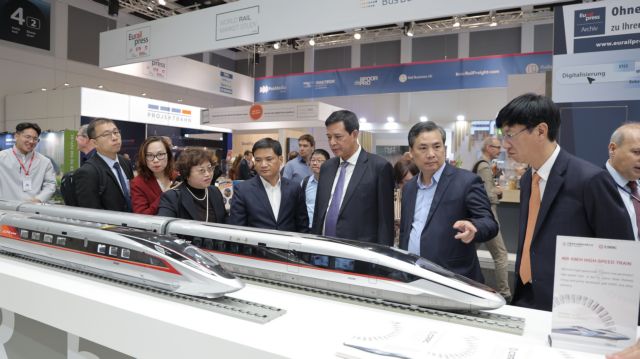
Bjorn Koslowski of the German Chamber of Industry and Commerce in Việt Nam has stressed the need for early workforce planning, particularly for engineers, technical specialists and maintenance personnel.
Funding constraints also need to be addressed. It is estimated that Việt Nam will need to mobilise about $1 billion annually for its railway sector over the next decade, according to Nguyễn Tiến Thịnh, deputy director of the Vietnam Railway Authority.
Public funding will remain central, but additional resources must be raised from local authorities, private investors and international partners.
The Government has introduced special mechanisms to accelerate railway projects, attract investment and support workforce development through the revised Railway Law, which provides a framework for policies covering planning, land, investor selection and technology transfer.
But companies need greater certainty about demand beyond the initial wave of major projects.
Procurement orders and other mechanisms to provide a predictable market are necessary to encourage businesses to invest in machinery, production lines and workforce training.
Thịnh also urged attention to the selection of technology options and the establishment of technical specifications that ensure interoperability and allow future adjustments to avoid technological lock-in as systems evolve.
According to Hùng, technology transfer and the allocation of risks between the State and businesses should be addressed from the outset to limit cost overruns, delays and inefficiencies.
Contracts with international partners should therefore include specific requirements for technology transfer and workforce training and create opportunities for domestic businesses to manufacture components and provide maintenance and repair services.
Developing closer links between businesses, universities and research institutions will be essential to fostering innovation and strengthening domestic capabilities.
Ultimately, the success of Việt Nam’s railway ambitions will be measured not only by the kilometres of track laid or the speed of its trains, but also by the industrial capabilities the country builds along the way. If the investment can nurture skilled workers, competitive manufacturers and home-grown engineering expertise, the railway programme could leave a legacy that extends far beyond the tracks. — VNS