Measures sought to remove bottlenecks to reduce logistics costs
Experts emphasise that reducing logistics costs requires integrated planning, investment, operations and data sharing. Developing infrastructure projects separately, without considering regional demand and stable cargo flows, risks duplication and wasted resources.
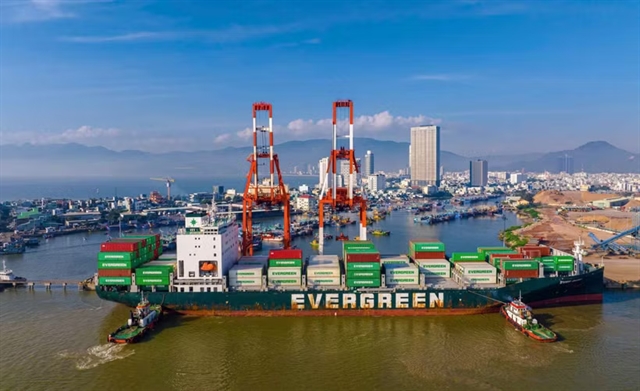
HÀ NỘI — Amid the restructuring of global trade, shifting supply chains and intensifying competition, logistics has become a decisive factor in national economic competitiveness rather than merely a support service for production and business.
With logistics costs estimated at 16–17 per cent of gross domestic product (GDP), Việt Nam is facing a major challenge that it must ensure its goods reach markets faster and at lower costs while meeting increasingly stringent international trade standards.
Road transport accounts for 80–90 per cent of logistics costs
In recent years, Việt Nam has expanded its transport infrastructure, including expressways, deep-water seaports, transport hubs, warehouses and distribution centres, facilitating goods circulation and international trade. New projects increasingly integrate multiple transport modes.
In Lạng Sơn Province, Viettel Logistics Park, covering 143.7 hectares with an investment of nearly VNĐ3.3 trillion (US$127.7 million), connects National Highway 1A, Hà Nội – Lạng Sơn–Cao Bằng Expressway and an international railway. It can handle customs clearance for 1,500 vehicles daily.
Meanwhile, the Bắc Giang International Logistics Centre in Bắc Ninh city covers 67 hectares with an investment of nearly VNĐ4.2 trillion. It integrates a range of facilities, including general warehouses, customs-controlled warehouses, non-tariff warehouses, e-commerce warehouses, and cold storage, alongside modern technological solutions.
In Huế city, the Chân Mây Logistics Centre, invested with over VNĐ1.5 trillion, began construction in March last year. The facility is strategically located to connect National Highway 1A, the North–South Railway, and La Sơn–Túy Loan Expressway, which links Huế with Đà Nẵng.
These projects reflect a shift towards integrated logistics hubs linking different transport modes and economic regions.
The Vietnam Logistics Report 2025 estimates that logistics costs remain at 16–17 per cent of GDP, considerably higher than the global average of around 10.6–11.6 per cent, Singapore's 8.5 per cent and Malaysia's 13 per cent.
Dr Bùi Bá Nghiêm, a senior expert at the Ministry of Industry and Trade's Agency of Foreign Trade, said connectivity and operational coordination remain major bottlenecks. Even modern ports and large logistics centres could not operate at full capacity without efficient links to industrial parks, production areas and other transport hubs.
Trần Ngọc Khánh, CEO of OCL Logistics JSC, noted that road transport accounts for around 80–90 per cent of logistics costs, while the underutilisation and poor coordination of other means of transport such as railways and domestic maritime transport further increases expenses.
Coordinated planning is key to efficiency
Experts emphasise that reducing logistics costs requires integrated planning, investment, operations and data sharing. Developing infrastructure projects separately, without considering regional demand and stable cargo flows, risks duplication and wasted resources.
Khánh said logistics planning should be designed within a national network, clearly defining each facility's role and scale. Particular attention should be paid to last-mile connectivity between industrial parks, corporate warehouses, cargo consolidation points and major logistics centres.
Organising concentrated cargo collection points and connecting them directly with seaports, border gates and major transport hubs will reduce fragmented shipments, unnecessary handling and waiting times, he added.
Nguyễn Thế Thi, deputy director of the Bắc Ninh municipal Department of Industry and Trade, stressed that logistics centres should be planned according to cargo demand, supply chains and connectivity with production zones, markets, airports, seaports and border gates. Localities should coordinate to build complementary interprovincial and interregional networks rather than develop isolated systems.
Nghiêm shared that the Ministry of Industry and Trade is developing a scheme to establish a nationwide logistics centre network to strengthen connectivity, improve operational efficiency and prevent scattered investment.
The national logistics development strategy, approved by the Prime Minister in October last year, sets a target of developing at least five international logistics service centres by 2030, focusing on major cities including Hà Nội, HCM City, Hải Phòng and Đà Nẵng, with potential expansion to emerging urban centres such as Đồng Nai, Bắc Ninh and Quảng Ninh.
Reducing logistics costs requires coordinated action by central and local authorities, investors, transport operators and cargo owners. Only when infrastructure investments are aligned with actual cargo flows, transport modes are used to their strengths and regional networks operate cohesively can Việt Nam achieve sustainable cost reductions and strengthen its competitiveness in global supply chains. — VNA/VNS