Property market faces supply-demand mismatch, deputy minister says
The Vietnam Real Estate Forum 2026 took place on Tuesday, bringing together policymakers, industry experts and businesses to discuss the future of the property market.

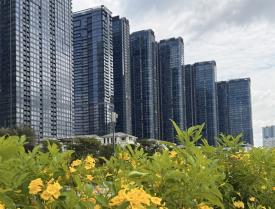
HÀ NỘI — Việt Nam’s real estate market is facing a major imbalance, with an oversupply of high-end properties while affordable housing remains in short supply. The market structure continues to favour home sales over rental housing.
The Vietnam Real Estate Forum 2026 took place on Tuesday, bringing together policymakers, industry experts and businesses to discuss the future of the property market.
Addressing the forum, Deputy Minister of Construction Nguyễn Văn Sinh stressed that the real estate sector played a vital role in the economy, generating spillover effects across numerous sectors, including labour, finance and securities.
The sector helped mobilise resources for infrastructure and housing development, create large-scale fixed assets, meet housing needs, safeguard social welfare and contribute to economic growth, structural transformation, industrialisation, modernisation, urban development and tourism development.
In recent years, in pursuit of the goal of achieving double-digit economic growth while maintaining macroeconomic stability and controlling inflation, the Party, the National Assembly, the Government and the Prime Minister had introduced a range of timely and decisive policies.
Particular emphasis had been placed on fostering a stable, healthy and sustainable real estate market.
On the institutional front, a number of key laws had been developed and refined, including the Investment Law, Land Law, Urban and Rural Planning Law, Construction Law, Housing Law, Real Estate Business Law and the Law on Credit Institutions, along with implementing decrees and circulars.
New policies aimed at greater decentralisation and administrative reform had helped remove bottlenecks and create a more favourable environment for both businesses and citizens.
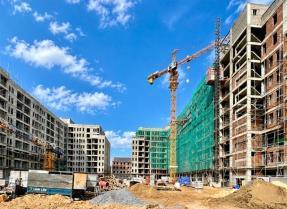
Market supply had also improved as more real estate and urban development projects had received investment approval and commenced construction, Sinh said.
Localities such as Hà Nội, HCM City, Đà Nẵng, Hải Phòng, Hưng Yên, Khánh Hòa and Đồng Nai had all recorded increases in housing supply compared with the previous year.
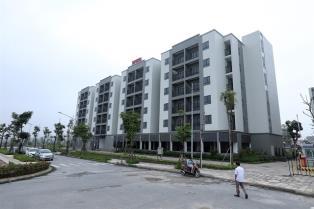
Regarding social housing, 781 projects comprising 720,055 units are currently under development nationwide, achieving 72 per cent of the target of one million social housing units by 2030, according to Sinh.
Of these, 231 projects with 180,850 units have been completed, 234 projects with 233,962 units are under construction and 316 projects with 305,243 units have received investment approval.
At the same time, efforts to resolve obstacles facing stalled projects have been intensified. To date, difficulties affecting 3,289 projects involving investment capital worth millions of billions of đồng and covering more than 70,000 hectares of land have been addressed, allowing these projects to resume implementation.
However, the deputy minister pointed out that the market still faced several major bottlenecks. Most notably, there was a significant mismatch between supply and demand, with an oversupply of high-end products and a shortage of affordable housing.
The market structure remained biased towards sales rather than rentals, housing prices far exceeded income levels, incentives for rental housing investment remained insufficient and the market data system was still fragmented.
These were long-standing issues that would require coordinated and decisive solutions, Sinh said.
In the coming period, the Ministry of Construction would focus on improving the legal framework, revising relevant legislation, restructuring supply and prioritising social housing, affordable housing and rental housing.
For the rental housing segment, local authorities had been instructed to assess demand among different population groups, allocate appropriate land resources, promote investment through both public and private capital and strengthen local housing funds to support the development of long-term rental housing stock.
For social housing, implementation must be accelerated, capable investors selected and green lane mechanisms applied to administrative procedures to exceed planned targets in the coming years.
The ministry would also continue addressing obstacles facing delayed projects, improve information transparency, develop a comprehensive market database and accelerate digital transformation in market management.
Sharing the same view, Dr Nguyễn Văn Khôi, chairman of the Vietnam National Real Estate Association, noted that real estate had strong linkages with more than 40 industries.
Nevertheless, the market continued to face unsustainable development patterns, supply-demand imbalances, speculation, inflated prices as well as capital and legal challenges, he said.
He argued that under the new growth model, the sector should shift from extensive to intensive development, from speculation to meeting genuine housing demand and from isolated projects to integrated, green and smart urban ecosystems.
Khôi highlighted two key priorities: developing affordable rental housing and restructuring real estate enterprises to ensure more sustainable growth.
Developers should place market demand at the centre of their strategies, improve product quality, adopt new technologies and expand into segments such as industrial real estate, logistics properties, rental housing and smart urban developments.
At the same time, stronger policy mechanisms were needed to support the rental housing market, including incentives related to land, credit and taxation; the development of investment funds; greater promotion of public-private partnerships; enhanced attraction of foreign investors; and the cultivation of a more professional rental housing culture. — VNS