Productivity, innovation push needed to raise domestic value
Việt Nam's share of global manufactured-goods exports has nearly quadrupled over the past three decades, overtaking Malaysia in 2017 to become the largest in ASEAN.
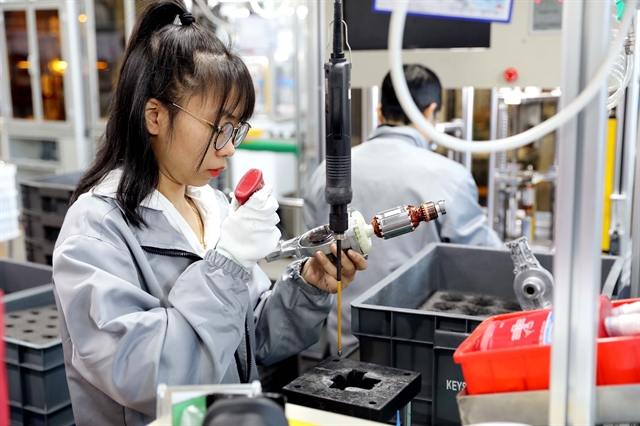
HÀ NỘI — Việt Nam needs to shift its growth model from reliance on capital, labour and contract manufacturing toward productivity, innovation and domestic value creation as links between foreign-invested and local firms remain limited, economists said.
Despite robust foreign investment inflows into manufacturing, connections between foreign and domestic enterprises are weak, limiting technology and knowledge spillovers to Vietnamese companies, particularly small and medium-sized enterprises (SMEs).
Professor Dr Nguyễn Trọng Hoài at the University of Economics Ho Chi Minh City, said Việt Nam is at a critical point in its economic development as productivity gains from workers moving from agriculture into manufacturing and services have slowed significantly since the global financial crisis.
Notably, Việt Nam's share of global manufactured-goods exports has nearly quadrupled over the past three decades, overtaking Malaysia in 2017 to become the largest in ASEAN, Hoài said.
But the increase in domestic value added has not kept pace with the expansion of exports, he spoke to thoibaonganhang.vn.
The gap reflects an increasingly pronounced dual economy, with the foreign-invested sector expanding rapidly while remaining relatively disconnected from domestic enterprises, Hoài said.
Foreign-invested companies have largely focused on processing and assembly, while their role in transferring technology and knowledge to domestic SMEs remains limited, he added.
Growth in value added and employment in tradable sectors also lagged that of non-tradable sectors between 2010 and 2023, highlighting the need for Việt Nam to move beyond exploiting existing advantages and strengthen productivity and domestic economic capacity, Hoài said.
Two growth scenarios
Hoài outlined two possible growth scenarios for Việt Nam between now and 2050.
Under a 'Business-as-Usual' scenario, with no major institutional or growth-model reforms, average annual GDP growth would be about 4 per cent. Labour quality, information-technology (IT) capital, total factor productivity (TFP) and non-IT capital would contribute 0.2 per cent, 0.3 per cent, 0.2 per cent and 3.1 per cent, respectively.
Such a trajectory would increase the risk of Việt Nam falling into the middle-income trap, he said.
Under a 'Reform' scenario, average annual GDP growth could reach 7.7 per cent over the same period, with TFP contributing 2 per cent, labour quality 0.5 per cent, IT capital 0.6 per cent and non-IT capital 4.3 per cent.
Such a path would be essential for Việt Nam to achieve its goal of becoming a high-income economy by 2045, Hoài said.
To achieve the reform scenario, Việt Nam should move from a '1i' model centred on investment toward a '3i' model.
Investment would remain important, but the emphasis should shift from simply attracting capital to attracting high-quality foreign investment capable of creating stronger linkages with domestic firms and generating technology spillovers.
Domestic companies, meanwhile, need to strengthen their ability to absorb and master new technologies by upgrading digital infrastructure, production processes and management capabilities.
Innovation should ultimately become a core growth driver through greater research and development, higher domestic value creation and deeper participation by Vietnamese companies in knowledge-intensive segments of global value chains, he said.
Unlocking domestic growth potential
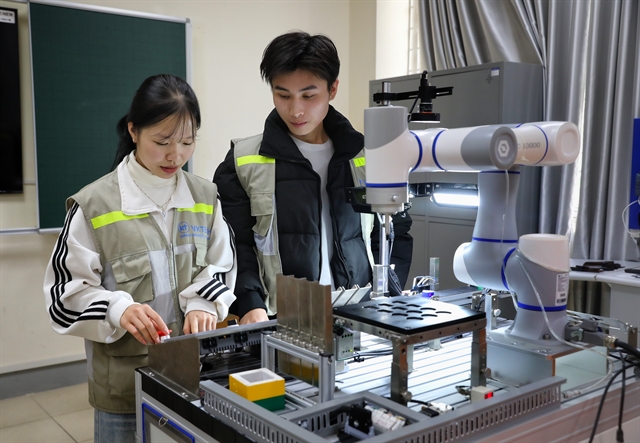
For the '3i' model to become a genuine growth driver, Việt Nam should draw up policies centred on five key pillars, with science, technology, engineering and mathematics (STEM) education at the core of human resource development, Hoài suggested.
STEM development would help strengthen the country's capacity to absorb technology and produce 'Made by Vietnam' products, he said, adding that Việt Nam should build closer cooperation among universities, businesses, including foreign-invested firms and SMEs, and the State to train workers in core technologies and artificial intelligence.
The country should also reform research and development funding mechanisms by linking national productivity targets with research at universities and institutes, he added.
Dr Cấn Văn Lực, chief economist at BIDV, said Việt Nam in 2026 needs to reduce its reliance on credit expansion and capital-intensive investment and instead focus on improving productivity and the efficiency of resource use.
Labour productivity and total factor productivity should become key indicators of the new growth model, providing a foundation for improving growth quality and supporting sustainable expansion rather than relying on continued increases in capital and credit, Lực told thoibaonganhang.vn.
Diversifying the sources of finance should also be included, as the banking system currently dominates credit provision to the economy, making growth heavily dependent on bank lending.
Developing capital markets, particularly the stock and corporate bond markets, would help mobilise long-term funds from the public and domestic institutional investors, easing pressure on banks and creating conditions for safer and more sustainable growth, Lực said.
Dr. Hoàng Văn Cường, a member of the National Assembly's Finance and Budget Committee, described institutional reform as one of Việt Nam's biggest sources of untapped domestic growth potential.
Large amounts of capital held by the public, as well as public assets and other social resources, remain underutilised because of legal constraints and administrative bottlenecks, Cường said.
Further institutional reforms are necessary to remove those barriers, unlock capital flows and turn them into productive capacity, while priority should be given to addressing bottlenecks in public investment disbursement, land and energy projects, as well as other sectors where resources remain underused, he said. — VNS