Việt Nam should retain FDI investors rather than prioritising quantity: professor
Professor Ngô Thắng Lợi, senior lecturer at the National Economics University, speaks with Việt Nam News reporter Khánh Dương about Việt Nam's economic achievements over 40 years of Đổi mới (Renewal) and future development orientations.
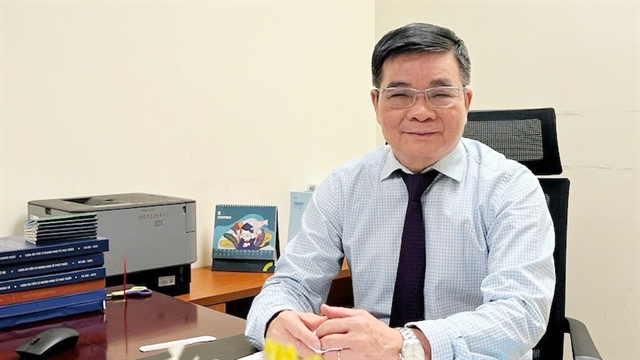
Professor Ngô Thắng Lợi, senior lecturer at the National Economics University, speaks with Việt Nam News reporter Khánh Dương about Việt Nam's economic achievements over 40 years of Đổi mới (Renewal) and future development orientations.
After 40 years of Đổi mới, Việt Nam’s economy has made major achievements in terms of both economic scale and level of international integration. In your view, if you had to identify the three most fundamental achievements of Việt Nam's economy over the past 40 years, what would they be? Which of these achievements is of decisive significance for Việt Nam's current stage of development?
After 40 years of Đổi mới, based on my research, I can identify three major achievements.
First, after 40 years, Việt Nam has become one of the world's leading countries in terms of Gross Domestic Product (GDP) growth.
Over the past 40 years, our average GDP growth rate has stood at 6.4 per cent, twice the global average and significantly higher than that of neighbouring countries.
Next, in that same time period Việt Nam has moved from a country with one of the world's lowest per capita income levels, ranking 122nd among 130 countries, to a middle-income country, and is now working toward becoming a high-income economy.
The third achievement, which I believe is a particularly important milestone and the most fundamental foundation for moving to a new development model, is the positive progress made in social development. This is reflected particularly in human development and social equity in the distribution of the benefits of economic development.
Việt Nam is now entering the group of upper middle-income countries, with the goal of becoming a high-income developed country by 2045. What does Việt Nam need to change to realise that goal and avoid the middle-income trap?
In my view, one point we need to emphasise is that although Việt Nam has achieved a high GDP growth rate, the level of growth has not yet been sufficient to provide a strong enough impetus for progress in technology and social development. The number one priority, in my opinion, is to achieve the goal of rapid development.
However, rapid growth should not come at any cost. It must be driven by new growth engines, namely science and technology, innovation and digital transformation.
What changes should be made to remove current bottlenecks in the economy?
In my view, there are four issues that we need to address.
First, we need to increase the contribution of Total Factor Productivity (TFP) to Việt Nam's GDP growth.
In recent years, TFP growth has remained very low, at only about one-third of the average growth rate. If we can accelerate TFP growth, our overall economic growth rate will also increase.
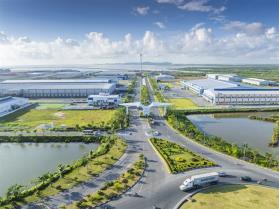
Next, we need to change our approach to attracting Foreign Direct Investment (FDI). Việt Nam's economic growth in recent years has been heavily dependent on FDI, but the FDI attracted so far has not really been of high quality.
We need to change our thinking about FDI, moving from simply promoting the attraction of FDI to promoting retention and reinvestment by existing FDI enterprises.
We do not necessarily need to prioritise the quantity of FDI. More importantly, we need to select strategic foreign investors, retain them and encourage them to continue investing in Việt Nam.
On that basis, they can transfer technology to Vietnamese enterprises and strengthen links with the domestic economy to drive growth.
After that, there needs to be stronger links among the different components of the private business sector.
Large enterprises should serve as leading companies, but they must be able to bring along small and medium-sized enterprises, particularly small and micro enterprises.
Finally, we need to clearly define the respective roles and playing fields of the three economic sectors: the State, the private sector and the FDI sector.
The State sector should truly play a leading role, while the private sector should serve as the most important driver of growth and the FDI sector should play an important supporting role. — VNS