Power saving emerges as a long-term energy security strategy
Experts said the challenge of ensuring sufficient electricity supply is becoming more complex as Việt Nam pursues ambitious economic growth targets while grappling with geopolitical uncertainties, climate change and growing pressure to reduce carbon emissions.
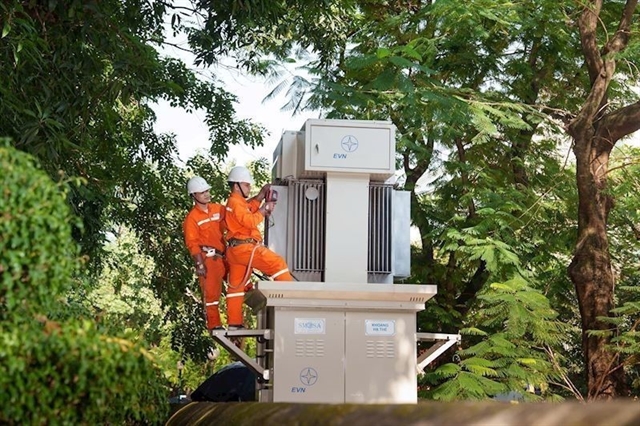
HÀ NỘI — Energy saving is emerging as a strategic requirement for the national energy security and sustainable development goals rather than a short-term solution to electricity shortage, experts told an online conference held on the Government’s e-portal on June 22.
The discussion comes as Việt Nam experiences record levels of electricity consumption amid rapid industrialisation, urbanisation and digital transformation with the national power system recently surpassing 58,000 megawatts in peak demand and daily electricity consumption hitting one billion KWh.
Experts said the challenge of ensuring sufficient electricity supply is becoming more complex as Việt Nam pursues ambitious economic growth targets while grappling with geopolitical uncertainties, climate change and growing pressure to reduce carbon emissions.
"Energy saving and electricity conservation are no longer short-term measures. They are among the country's strategic priorities for the coming decades," said Đặng Hải Dũng, deputy director of the Agency of Innovation, Green Transition and Industry Promotion under the Ministry of Industry and Trade.
The shift is reflected in the Politburo’s Resolution 70 on national energy security through 2030 with a vision to 2045 which has repeatedly emphasised energy efficiency and sets a target of reducing final energy consumption by 8-10 per cent compared with a business-as-usual scenario.
According to Dũng, recent geopolitical tensions have highlighted the risks associated with fuel imports, while stricter environmental regulations in export markets are adding pressure on manufacturers to improve energy efficiency.
The European Union's Carbon Border Adjustment Mechanism (CBAM) and other green trade policies are expected to make energy consumption and emissions performance increasingly important factors for Vietnamese exporters seeking to maintain access to international markets.
"Whether we want to or not, energy efficiency has become a mandatory trend because Việt Nam is integrated into global supply chains," he said.
Despite years of public awareness campaigns, experts said power saving has yet to become a widespread social habit, particularly among households, which account for around 30 per cent of national power consumption.
According to Hà Đăng Sơn, chairman of the Centre for Energy and Green Growth Research, said many consumers still viewed electricity simply as a commodity they could use freely as long as they paid the bill.
Many people do not fully understand that excessive consumption creates additional costs for the entire system and ultimately for society, he said.
He added that households and businesses often prioritise low-cost appliances over energy-efficient alternatives, while few regularly monitor their electricity consumption data despite the availability of digital tools.
Sơn encouraged households to adopt practical measures such as setting air conditioners at around 26 degrees Celsius, improving insulation and reducing heat gain from sunlight to lower electricity use without sacrificing comfort.
First fuel

Experts noted that energy efficiency is often referred to internationally as the 'first fuel' because reducing consumption can be cheaper and faster than developing new power generation projects.
Ngô Sơn Hải, Deputy Director of Vietnam Electricity (EVN), said the country needs to add between 4,000 MW and 5,000 MW of new generation capacity each year to keep pace with demand growth.
However, reducing peak consumption by around 2 per cent could eliminate the need for roughly 1,000 MW of new capacity, equivalent to a major power project that could take years to develop, Hải said.
"Every kilowatt-hour saved not only lowers electricity bills for consumers but also reduces costs for the entire power system," he said.
Đặng Nguyễn Ngữ, director general of Schneider Electric Việt Nam and Cambodia, said energy saving should no longer be viewed as cutting consumption but as improving efficiency through smarter management and technology.
"Energy efficiency is no longer a cost. It is an investment," he said.
Technology: central role
Technology is expected to play a central role in the next phase of energy conservation efforts.
Industry experts said advances in artificial intelligence, digitalisation and the Internet of Things are enabling real-time monitoring and optimisation of energy consumption across homes, buildings, factories and power networks.
Ngữ said technologies such as smart buildings, smart factories and smart grids can help optimise energy use while maintaining or even improving productivity. The rapid development of AI is also shortening the time needed to deploy and scale new energy-saving solutions.
He noted that many investments in energy efficiency now have payback periods of around two years, significantly shorter than in the past when returns often took five to ten years.
New technologies are transforming the way energy systems are designed and operated. Building Information Modelling, AI-driven energy management systems and advanced sensors are helping improve efficiency from the design stage through to daily operations.
According to Sơn, international experience suggests energy consumption in commercial and office buildings can be reduced by as much as 40 to 60 per cent when energy-efficient technologies are incorporated from the outset.
Sơn also stressed the importance of developing new technical standards and guidelines to keep pace with emerging technologies and changing energy demand.
Dũng said that efforts are being hasten to develop financial support mechanisms to accelerate adoption of energy-saving technologies.
He pointed out that the Law on Economical and Efficient Use of Energy have created a legal framework for green credit, green bonds and other financing tools aimed at supporting businesses investing in energy efficiency and emissions reduction.
The Ministry of Industry and Trade is also working to establish a national energy efficiency fund later this year to mobilise additional resources and support energy service companies (ESCOs) which help businesses implement efficiency projects. — VNS