Politburo resolution driving restructuring of HCM City’s state firms
Resolution No. 79-NQ/TW is emerging as a key catalyst for restructuring state-owned enterprises in HCM City, as the city accelerates efforts to consolidate resources, build large public sector corporations and enable them to drive growth in an increasingly competitive economic landscape, according to experts.
HCM CITY — Resolution No 79-NQ/TW is emerging as a key catalyst for restructuring state-owned enterprises in HCM City, as the city accelerates efforts to consolidate resources, build large public sector corporations and enable them to drive growth in an increasingly competitive economic landscape, according to experts.
The Politburo recently issued the resolution on the development of the state sector, a policy document of particular significance as Việt Nam enters a phase of deep economic restructuring aimed at faster and more sustainable growth.
The resolution emphasises the leading role of the public sector while setting ambitious targets: by 2030 around 50 SOEs should rank among the largest in Southeast Asia, with one to three entering the global Top 500.
It is widely seen as a critical framework for local governments to reorganise and optimise public resources.
For HCM City, the country’s economic engine and commercial hub, the resolution serves as a catalyst for accelerating SOE restructuring with the aim of creating large corporations capable of steering development in a changing economic context.
Despite its vast market and enormous development potential, until July 1, 2025, HCM City lacked SOEs that truly functioned as “locomotives” for economic growth or urban infrastructure development.
The equitisation process progressed slowly, with many enterprises maintaining high levels of state ownership, resulting in fragmented resources and efficiency levels that fell short of expectations.
Under the SOE restructuring plan through the end of 2025, the former HCM City administration planned to equitise 10 of its 46 existing SOEs.
These operate in key sectors such as services, tourism, industrial park infrastructure, engineering, transport, construction and real estate, culture, and pharmaceuticals.
Following equitisation, the city intends to retain 50-65 per cent of ownership to ensure government control over essential sectors while creating space for private-sector participation in governance and investment.
Following the merger with Bình Dương and Bà Rịa–Vũng Tàu provinces, HCM City’s SOE numbers have surged, and it now has large enterprises such as Becamex IDC, an SOE that has played a leading role in industrial–urban development, while generating strong spillover effects for the private sector.
Nguyễn Văn Được, chairman of the city People’s Committee, has repeatedly emphasised the need to accelerate SOE restructuring to form state corporations with sufficient financial strength and governance capacity to act as growth engines in the coming period.
According to restructuring scenarios under consideration, the city plans to reorganise dozens of SOEs into some six or seven large conglomerates operating in specialised fields such as infrastructure and urban development, finance and investment, trade and services, and industry and logistics.
The objective is to address the long-standing problem of fragmented and small-scale SOE operations, which disperses state resources too widely and constrains overall efficiency.
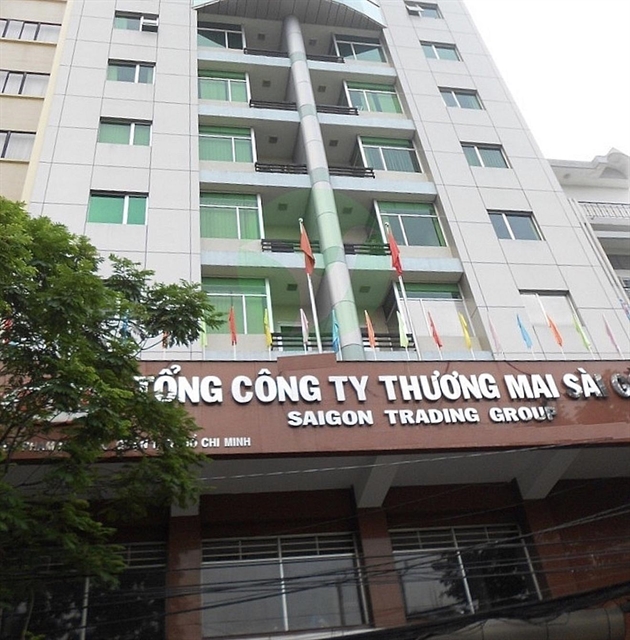
Within the broader restructuring agenda, the cluster of former district-level SOEs is regarded as a major bottleneck. Previously these focused on public utilities, urban services, traditional market management, land and housing management, and small-scale infrastructure under district people’s committees.
However, the implementation of the urban government model has removed district authorities as enterprise managers, leaving many entities uncertain about their supervisory bodies, organisational structures and development orientation, according to insiders.
Experts warned that, without timely reorganisation, this group will continue to dissipate state resources, reduce the efficiency of public capital and asset utilisation, and increase the risk of loss and waste.
There is therefore an urgent need to clearly distinguish between purely public service enterprises and those with production, business or market roles, and to apply appropriate management, financial and performance evaluation mechanisms to each group.
This step is seen as pivotal for HCM City’s transition from a model characterised by “many small enterprises” to a system of strong corporations aligned with the spirit of Resolution No 79-NQ/TW, they added.
Launchpad for SOE transformation
Speaking to the media on the sidelines of a recent conference, Nguyễn Ngọc Hoà, interim chairman of the HCM City Union of Business Associations and chairman of the members’ council of the HCM City Finance and Investment State-Owned Company (HFIC), said: “The state economy currently controls critical resources ranging from capital and land to infrastructure. The core issue is not expansion at all costs, but the more effective organisation and use of these resources.”
Each group of SOEs must be correctly positioned within the broader economic structure, he said.
Public service enterprises should focus on providing stable and efficient services, while SOEs with leading roles, particularly in infrastructure and finance, need greater flexibility to operate under market principles and generate spillover effects for the private sector.
As a financial institution wholly owned by the city People’s Committee, the HFIC defines its mission as investing and managing government capital.
During the SOE restructuring process, it may be assigned the responsibility of managing the government’s stakes in some enterprises, not merely overseeing them but integrating and connecting resources to generate synergies and improve overall efficiency, he said.
The HFIC also manages the HCM City Development Investment Fund, through which it participates in lending, development investment and mobilisation of financial resources for the city’s large-scale projects.
To fulfil this role effectively, Hoà said the HFIC must proactively reform its organisational structure and governance model, while participating in international credit rating assessments.
Only with a recognised credit rating will investors have sufficient confidence to commit capital.
Beyond the HFIC, the broader SOE community is also placing high expectations on the momentum generated by Resolution No 79-NQ/TW.
A widely welcomed feature is the resolution’s emphasis on decentralisation, with greater authority delegated to members’ councils at state-owned groups and corporations.
“Expanded decision-making powers are expected to shorten administrative processing times and improve enterprises’ ability to respond swiftly to market fluctuations,” Hoà said.
At the same time the operational scope of SOEs is being broadened, with enterprises now permitted to invest in joint-stock companies and securities firms, and members’ councils are empowered to decide on capital increases, reductions or divestments when necessary, bringing SOE governance closer to private-sector practices, he explained.
“Under the new mechanisms, state-owned enterprises are better positioned to proactively restructure their investment portfolios in line with strategic objectives, optimising resources and improving operational efficiency.” — VNS